
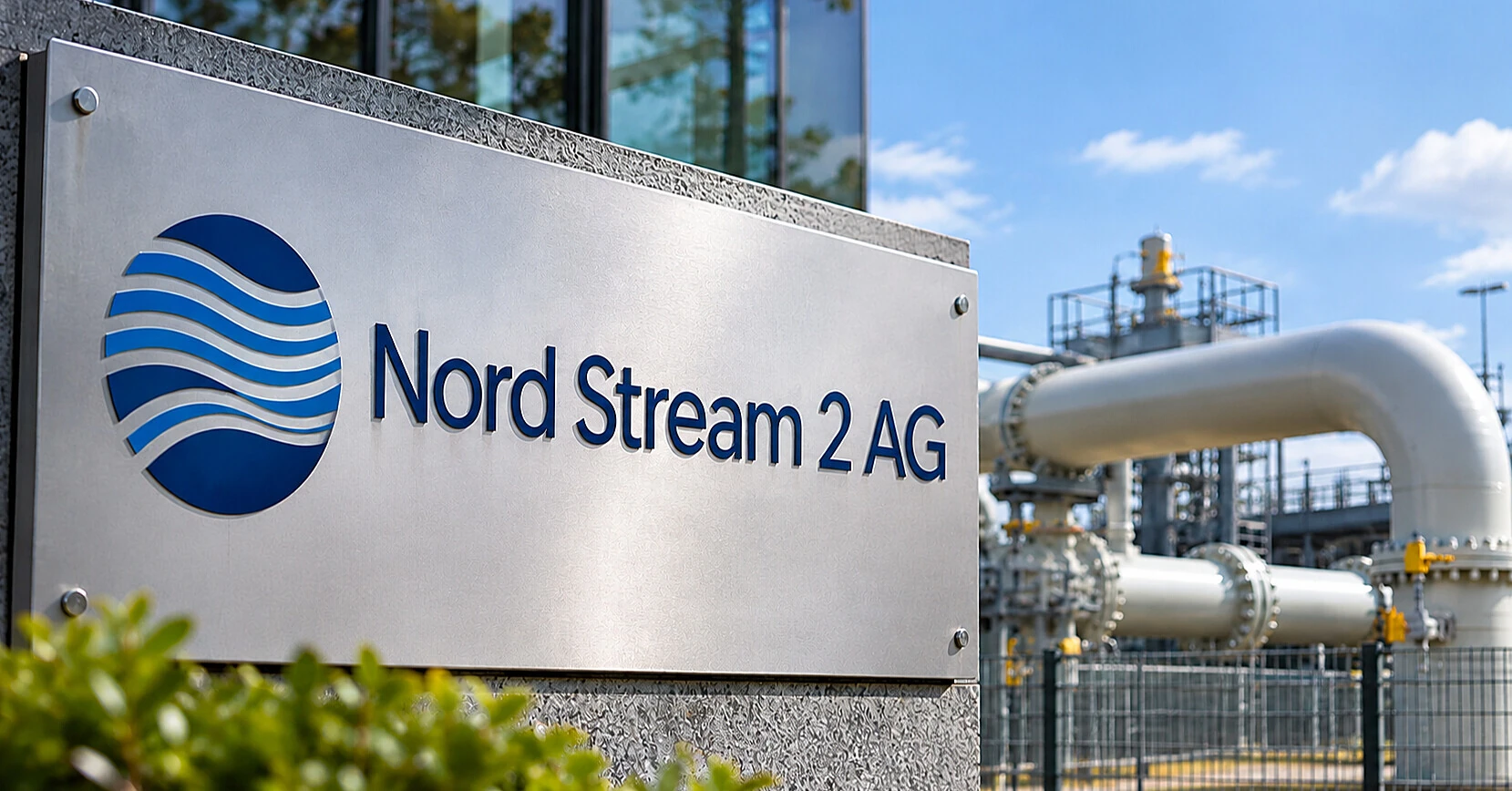
The Court of Justice of the European Union has definitively dismissed the appeal of Nord Stream 2 AG, which sought to challenge the extension of European gas market rules to pipelines from third countries. The ruling upholds EU requirements, including the separation of gas supply from gas transmission system operation and ensuring access for other suppliers.
The relevant decision in Case C-118/25 P was rendered by the EU Court on 5 November 2026. This is stated in the court's official press release No. 160/26.
The Court dismissed the appeal of Nord Stream 2 AG and upheld the decision of the General Court of the EU of 27 November 2024, which dismissed the action of the Russian gas pipeline operator. Thus, the company has exhausted the possibilities of challenging the respective decision within the EU judicial system.
Why the legal dispute arose
In 2019, the European Union adopted amendments to the Gas Directive, extending part of the internal energy market rules to gas pipelines connecting EU member states with third countries.
These rules provide for the separation of gas production and supply activities from the management of gas transmission systems, ensuring access for independent suppliers to pipelines, and transparency of their operation.
At the same time, EU legislation allowed member states, under certain conditions, to grant exemptions for pipelines completed before 23 May 2019.
Nord Stream 2 AG challenged those amendments, arguing that they violate the principles of legal certainty, equal treatment, and protection of legitimate expectations of investors.
The legal proceedings lasted several years. Initially, the General Court of the EU found the action inadmissible. In July 2022, the EU Court partially set aside that ruling, allowing consideration of the question of exemptions for pipelines completed by the specified date.
However, in November 2024, the General Court dismissed the claims of Nord Stream 2 AG. The company filed an appeal, which has now been definitively dismissed.
Court saw no grounds for special treatment
The EU Court found that the European institutions never provided Nord Stream 2 AG with specific guarantees that the gas market rules would not apply to its pipeline.
On the contrary, according to the court, for several years there had been clear signals of the EU's intentions to apply uniform requirements to pipelines from third countries, including Nord Stream 2.
Therefore, the court rejected the company's argument regarding the need to grant it a special transitional period or compensation mechanism due to the legislative change.
Separately, the judges confirmed the validity of the requirement to separate gas suppliers from gas transmission system operators. In the court's view, this principle is necessary to prevent abuse of a dominant position in the energy market.
The Court also stressed that the right of third parties to access the pipeline concerns not only physical connection but also utilisation of its transport capacities. Even if demand from other suppliers is unlikely, that is not a ground for annulling the relevant requirement.
Moreover, Nord Stream 2 AG cannot avoid the obligation of separation by referring to the particularities of its corporate structure.
Consequences for the Russian pipeline
The decision of 5 November means that the operator of Nord Stream 2 failed to secure the annulment of the contested provisions of European gas law. The rules applicable to the relevant sections of pipelines from third countries remain in force.
At the same time, this legal dispute did not directly concern permission to resume operation of the pipeline or its damage as a result of the explosions in the Baltic Sea in September 2022.
Apart from gas law requirements, the use of Nord Stream 2 is restricted by certain EU sanctions.
On 18 July 2025, the Council of the EU approved the 18th package of sanctions against Russia, which provides for a prohibition on operations related to the Nord Stream 1 and Nord Stream 2 pipelines.
The restrictions cover, in particular, the provision of goods and services for completing construction, maintenance, operation, and future use of the pipelines.
Thus, even a hypothetical resolution of gas regulation issues would not by itself create a legal basis for resuming the supply of Russian gas via those routes. Separate sanctions and other regulatory obstacles would also need to be removed.
