
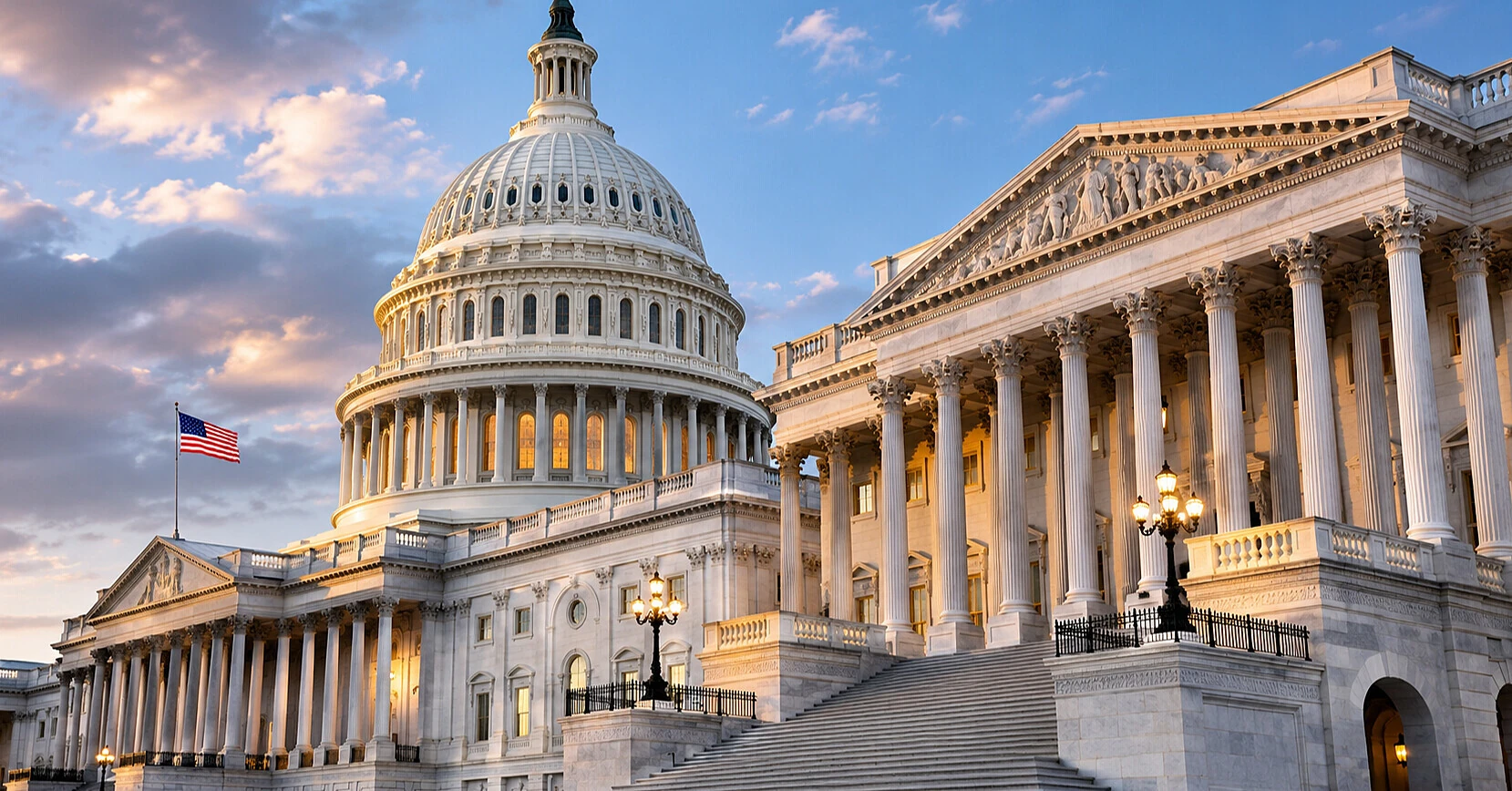
The U.S. Democratic Party continues to increase its representation in the House of Representatives following the November 3 midterm elections. Republicans lost the majority in both chambers of Congress, and the large-scale defeat sparked an intra-party conflict, mutual accusations, and a fight for leadership positions.
This is reported by CNN, which is tracking the vote counting results and the reaction of American politicians.
Democrats have already guaranteed themselves control of the House of Representatives and the Senate, but the final scale of their victory remains unknown. Vote counting continues in several dozen electoral districts.
Democrats continue to increase their majority
According to Al Jazeera, by the morning of November 5, Democrats had won at least 240 seats in the House of Representatives, Republicans – 147. The results in another 48 districts remained undetermined at that time. Control of the lower chamber of Congress requires 218 mandates.
In the Senate, Democrats secured at least 54 seats, Republicans – 44. The voting results in Alaska and Mississippi were not yet finally established.
Democrats achieved success not only in traditionally competitive districts but also in regions where Republicans previously had stable support. According to Associated Press, the party gained additional seats in Iowa, Texas, Florida, and Pennsylvania, and also won victories in individual districts of Kentucky, Missouri, Nebraska, Ohio, and Utah.
Particularly notable were the results in Iowa. Before the elections, all of the state's seats in the House of Representatives belonged to Republicans. Now three districts will be represented by Democrats.
Among other results:
- In New York's 17th district, Democrat Kate Conley defeated incumbent Republican Congressman Mike Lawler.
- In New Jersey's 7th district, Rebecca Bennett surpassed Republican Thomas Kean Jr.
- In Virginia's 2nd district, Democrat Elaine Luria defeated Jen Kiggans.
- In Wisconsin's 3rd district, Rebecca Cooke won over Republican Derrick Van Orden.
- In Michigan's 4th district, Democrat Sean McCann defeated Congressman Bill Huizenga, who had held the seat for eight terms.
Additional Democratic victories complicated the situation for Republicans, who had hoped to maintain influence in the lower chamber through changes to electoral district boundaries.
Redistricting did not help Republicans
Before the elections, Republicans initiated a review of district boundaries in several states, hoping to increase the number of potentially winnable seats.
This process was particularly active in Texas, where, at the initiative of President Donald Trump, Republican state leadership sought to create additional districts favorable to the party.
In response, California authorities also changed the electoral map to increase Democrats' chances of winning five districts previously controlled by Republicans.
However, as ABC News notes, the Republican strategy did not produce the expected result. Of the 15 districts whose boundaries were changed to strengthen the party's position, about two-thirds were expected to go to Democrats by the evening of November 4.
As a result, Democrats were able not only to retain some previous positions but also to gain additional mandates in districts that Republicans had hoped to win.
Republicans begin a struggle for party leadership
After the first results were announced, Republican lawmakers began publicly criticizing the party leadership and campaign organizers.
As Axios reports, Florida Congressman Greg Steube accused Republican leaders of failing to achieve an acceptable result even with significant financial resources. He called on current leaders to step aside for new politicians.
One of the main consequences of the defeat was the decision of House Speaker Mike Johnson to withdraw from the race for the position of Republican minority leader in the new Congress.
Two influential party representatives intend to compete for this position:
- Steve Scalise – current House majority leader, with many years of leadership experience in the caucus.
- Jim Jordan – chairman of the House Judiciary Committee, known for support from the conservative wing of the Republican Party.
Both politicians previously vied for leadership of the House in 2023. At that time, Scalise defeated Jordan in the internal party vote, but later withdrew from the race for speaker due to insufficient support.
Divisions also affected other leadership positions. Current party whip Tom Emmer faced competition from Texas Congressman August Pfluger.
Several politicians are also vying for the chairmanship of the National Republican Congressional Committee. This body is responsible for organizing the election campaigns of Republican candidates for the House of Representatives.
The internal party elections for the new Republican leadership are scheduled for November 10. Candidates must declare their participation by November 6.
Vance called the war with Iran the reason for the defeat
A separate conflict within the Republican Party arose over the assessment of the policies of Donald Trump's administration.
U.S. Vice President J.D. Vance publicly stated that the main reason for the Republican defeat was the war against Iran.
According to Vance, voters were dissatisfied with the continuation of the military operation, the rising cost of living, and inflation. He also said that some Trump supporters who voted for him in the 2024 presidential election now supported the Democrats.
The vice president identified four demands that, in his information, disgruntled voters expressed: end the war, focus on lowering the cost of living, pay more attention to U.S. domestic interests, and review relations with Israel.
Trump acknowledged that the war with Iran and the subsequent rise in gasoline prices negatively affected Republican positions. However, the president stressed that he still considers the decision to launch the military operation correct.
Other party representatives cite a broader range of reasons for the defeat. In conversations with Axios, Republican lawmakers pointed to inflation, fuel costs, immigration policy, and the administration's insufficient attention to the everyday financial problems of Americans.
Criticism targeted the Pentagon chief
After the elections, pressure on U.S. Secretary of Defense Pete Hegseth increased.
According to CNN, a number of Republican lawmakers and members of the president's circle believe that Hegseth played a significant role in the decision to start the war with Iran, without providing a clear strategy for ending the conflict.
Republican Congressman Thomas Massie announced his intention to initiate a vote on the impeachment of the Secretary of Defense after lawmakers return to work.
However, this is still a political initiative, not a decision to remove Hegseth.
Trump himself continues to support the Secretary of Defense. The president stated that Hegseth is doing a good job and denied reports of plans to fire him.
Democrats prepare to strengthen control over the Trump administration
The victory in the midterm elections will give the Democratic Party the ability to set the agenda for both chambers of Congress after the start of the new parliamentary term.
House Democratic leader Hakeem Jeffries presented a program for the first 100 days of the new majority. Among its main directions are lowering the cost of living, reviewing Republican decisions in healthcare, and strengthening parliamentary oversight of the executive branch.
Democrats also plan to initiate investigations into the activities of individual members of the presidential administration and examine issues related to the Trump family's financial interests.
Control of the committees will allow the new parliamentary power to hold hearings, request documents, and summon administration officials to testify.
However, the transition of both chambers of Congress to Democratic control does not mean automatic adoption of all their legislative initiatives. The president retains the right to veto, and overriding a presidential veto requires a two-thirds majority in each chamber.
In addition, passing some bills through the Senate will require additional support due to the current procedural rules of the upper chamber.
The new Congress will begin work on January 3, 2027. Until then, current representatives of both chambers will retain legislative powers.
The final distribution of mandates will be known after the completion of vote counting and the procedures required by law in the remaining electoral districts.
