
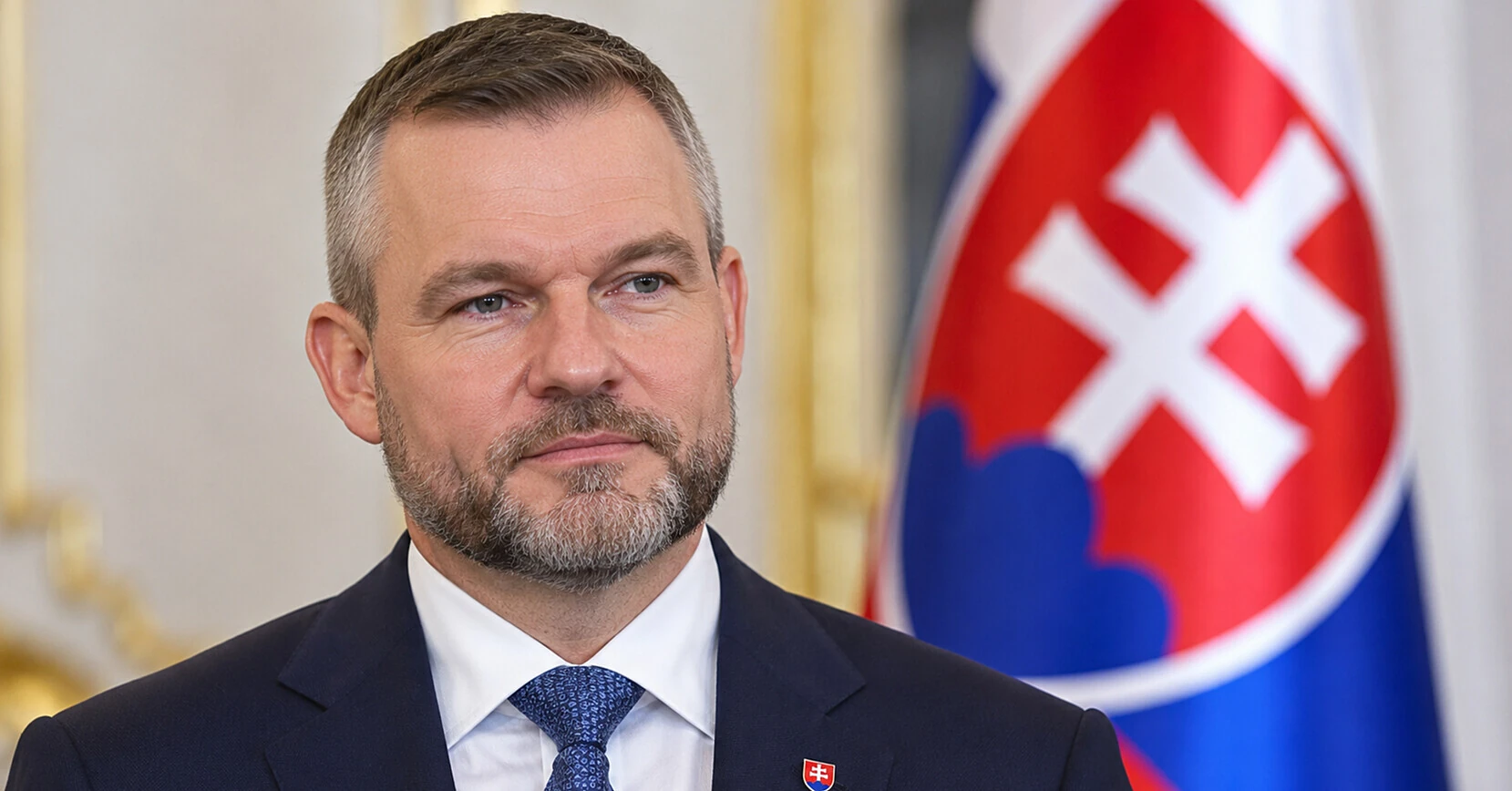
President of Slovakia Peter Pellegrini stated that the continuation of Russia's war against Ukraine is placing increasing economic and social burden on European states. In his view, the European Union must directly participate in negotiations on ending hostilities, as their results will determine the future of European security.
Pellegrini stated this on November 5 at a press conference following the summit of the presidents of the Visegrád Group (V4) in Trenčín, Slovakia, according to Czech agency ČTK.
According to the Slovak president's assessment, the war is beginning to exhaust European countries both economically and morally. Funds that states direct to support Ukraine in opposing Russian aggression could be used to finance hospitals, schools, and infrastructure projects within the EU.
Pellegrini linked the shortage of budget resources to rising public discontent over the cost of living and protests in individual European states. However, he did not present calculations confirming a direct link between spending on aid to Ukraine and financing social programs.
The Slovak head also stated that European states cannot spend up to 100 billion euros annually on a prolonged war of attrition without simultaneously making efforts to end hostilities. This amount is an estimate by Pellegrini, not a confirmed figure of the EU's annual expenditures.
Pellegrini advocated for direct EU participation in peace negotiations on Ukraine. In his opinion, European states must have the ability to influence decisions affecting their security and long-term economic interests.
A similar position was expressed by Czech President Petr Pavel. According to iROZHLAS information, he urged European countries to form a unified negotiating position and determine who will represent Europe at future consultations.
Pavel warned that insufficient coordination weakens the positions of European states in relations with Russia and other international partners.
According to the Czech president, summit participants generally agreed on the need to achieve a just peace, the inadmissibility of rewarding the aggressor, and maintaining sanctions pressure on Russia.
Despite Pellegrini's statements about the economic impact of the war, the presidents of Slovakia, the Czech Republic, Poland, and Hungary adopted a joint declaration in support of Ukraine.
As reported by Slovak agency TASR, in the document the heads of state reaffirmed support for Ukraine's sovereignty, territorial integrity, European future, and its right to defend itself against Russian aggression.
The parties also emphasized the need to continue political, financial, humanitarian, economic, and military assistance to Ukraine, taking into account the interests and defense policies of individual states.
Special attention was paid by summit participants to the European Union's enlargement. The presidents supported the future accession of new states, but emphasized that candidates must meet established requirements and implement necessary reforms.
Pellegrini opposed granting individual countries advantages in EU accession. In his words, the enlargement process must remain fair and based on fulfilling agreed criteria.
European Commission President Ursula von der Leyen also took part in the summit. In addition to the war in Ukraine and EU enlargement, the parties discussed energy availability, the resilience of the European economy, and strengthening energy security.
Following the meeting, no agreement was reported on a new negotiating format with EU participation or changes in the conditions for assisting Ukraine.
