
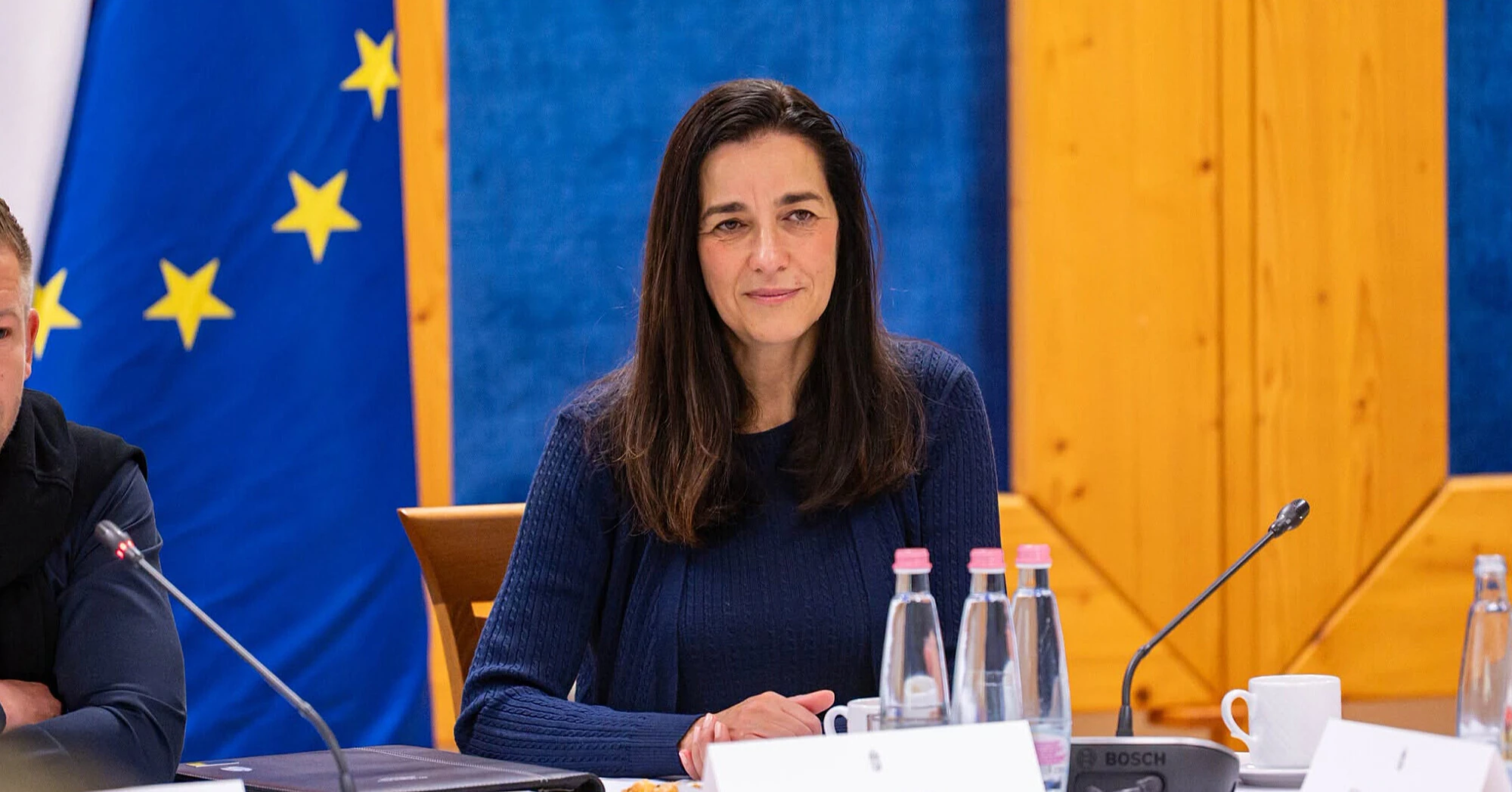
Hungary does not consider Ukraine's accession to the European Union before 2030 realistic and opposes an accelerated accession procedure. At the same time, Budapest declares support for Ukraine's European integration provided that all established requirements are met.
This was stated on November 5 by Hungarian Foreign Minister Anita Orban during a visit to Vilnius, reports Lithuanian outlet LRT.
At a joint press conference with Lithuanian Foreign Minister Kęstutis Budrys, the Hungarian minister was asked whether Ukraine could become a full member of the European Union by 2030.
"We do not consider this realistic. We strongly support a merit-based process, and I think we agree with Lithuania on this issue," — Orban stated.
According to her, all states aspiring to EU membership must undergo the same procedures and meet the established criteria. Hungary does not support granting Ukraine a special accession procedure.
"Every country must go through the same procedure that we went through. We also do not support any accelerated accession," — the Hungarian foreign minister emphasized.
At the same time, Orban acknowledged that Ukraine has made significant progress on the path to EU membership. According to her, four of the six negotiation clusters have already been opened.
The minister linked the advancement of the negotiation process, among other things, to the improvement of relations between Kyiv and Budapest. She noted the agreements reached regarding the protection of the rights of the Hungarian national minority living in the Zakarpattia region.
In October, Ukraine adopted legislative changes concerning the rights of national minorities. After that, Hungary agreed to unblock the advancement of negotiations on additional areas of European integration.
Lithuanian Foreign Minister Kęstutis Budrys expressed the opposite position regarding the timing of Ukraine's EU accession. In his opinion, completing the necessary procedures by 2030 is theoretically possible.
"We are more optimistic about the timeline. We believe that a target date can and should be set," — Budrys stated.
He emphasized that to realize such a scenario, simultaneous efforts by Ukraine and the European Union are needed. Kyiv must accelerate reforms, while European institutions must timely carry out the necessary enlargement procedures.
"We believe that completing all processes by 2030 is still possible. If the European Union can act quickly enough, and Ukraine implements reforms, this is theoretically possible," — the Lithuanian diplomacy chief said.
The statements came a day after the European Commission published its annual EU enlargement report for 2026.
As previously reported by "Kurs Ukrainy", the European Commission confirmed Ukraine's progress in fulfilling membership conditions and readiness to open the remaining negotiation clusters.
At the same time, Brussels pointed to the need to accelerate judicial reform, strengthen anti-corruption mechanisms, and meet rule of law requirements.
The European Commission supported Ukraine's aspiration to complete accession negotiations by the end of 2028, but emphasized that achieving this goal depends on the pace of reforms.
Even the successful completion of negotiations does not mean automatic EU membership. To obtain full membership, the accession treaty must be agreed upon and ratified.
Thus, the positions of Hungary and Lithuania differ primarily in their assessment of possible timelines. Budapest opposes accelerated accession of Ukraine, while Vilnius considers it necessary to set a specific target date and maintain a high pace of the negotiation process.
