
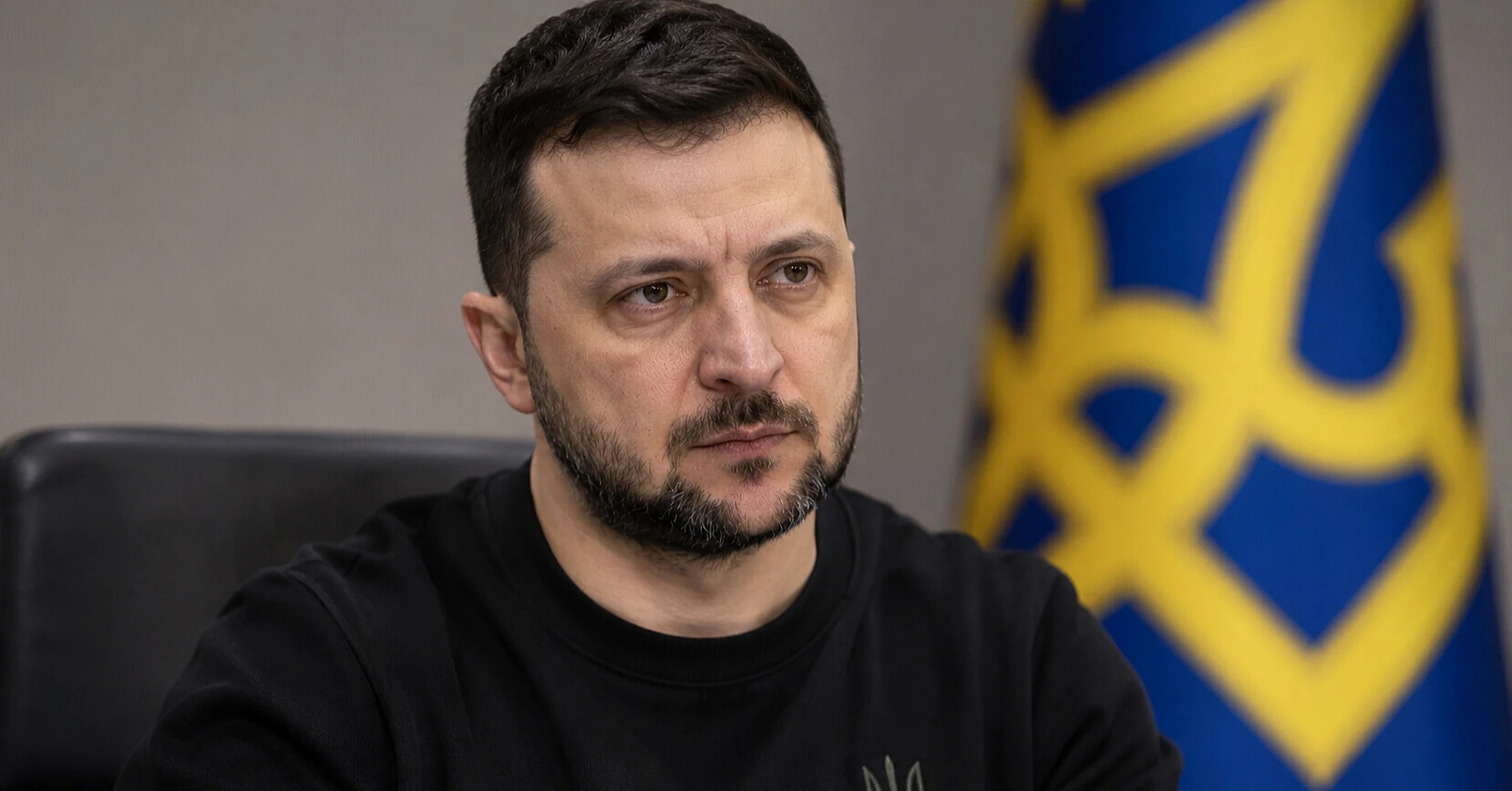
President of Ukraine Volodymyr Zelensky allowed the possibility of holding elections using online voting. However, according to him, during the war it is extremely difficult to organize such a process, primarily due to the impossibility of ensuring the full participation of military personnel at the front.
The head of state said this in an interview with the German TV channel ZDF, published on November 4. His words are also reported by RBC-Ukraine.
Zelensky emphasized that when holding elections during the war, a significant part of Ukrainian citizens will not be able to exercise their right to vote on equal terms. In particular, this applies to military personnel performing combat tasks.
“The armed forces are at the front, they are also against elections because they do not have the opportunity to vote. Is that fair? Millions of people are in the trenches, and it is technically impossible to organize it,” the president said.
According to Zelensky, it is especially important to ensure the participation of the military in the presidential election, since they are the ones defending the independence of the state.
The head of state noted that he respects representatives of all professions, but in wartime, military personnel bear special responsibility and risk their own lives.
“Holding elections in which soldiers cannot vote is unfair. It is one hundred percent unfair,” he emphasized.
Answering a question about the possibility of holding elections electronically, Zelensky did not rule out such an option, but pointed out the need for a legislative solution.
“It is possible, but then parliament will have to seek and find a solution,” the president said.
Thus, it is a matter of a potential option for organizing voting, but not of a decision already made regarding holding online elections.
What obstacles exist for online voting
The current legislation of Ukraine prohibits holding elections during martial law. The relevant norm is enshrined in Article 19 of the Law “On the Legal Regime of Martial Law”.
The restriction applies to presidential, parliamentary and local elections. The transition to remote voting as such does not lift this ban.
In addition, electronic elections require solving issues of voter identification, personal data protection, ballot secrecy, cybersecurity, and the possibility of independent verification of results.
A particular difficulty is ensuring equal access to voting for military personnel, residents of front-line territories, and Ukrainians abroad.
Earlier, Chairman of the Verkhovna Rada Ruslan Stefanchuk stated that the introduction of electronic voting is unlikely in the near future.
According to him, it is necessary to simultaneously guarantee democracy, security and trust in the electoral process. Ensuring compliance with these conditions during a war is extremely difficult.
Stefanchuk also expressed doubts about the possibility of holding nationwide elections through the “Diia” application, reminding about technical problems that arose during mass voting in the service.
To date, there is no official decision to hold elections online. Neither the mechanism of electronic voting nor the timing of its implementation has been approved. Implementation of such a format will require legislative changes and guarantees of respect for citizens’ electoral rights.
