
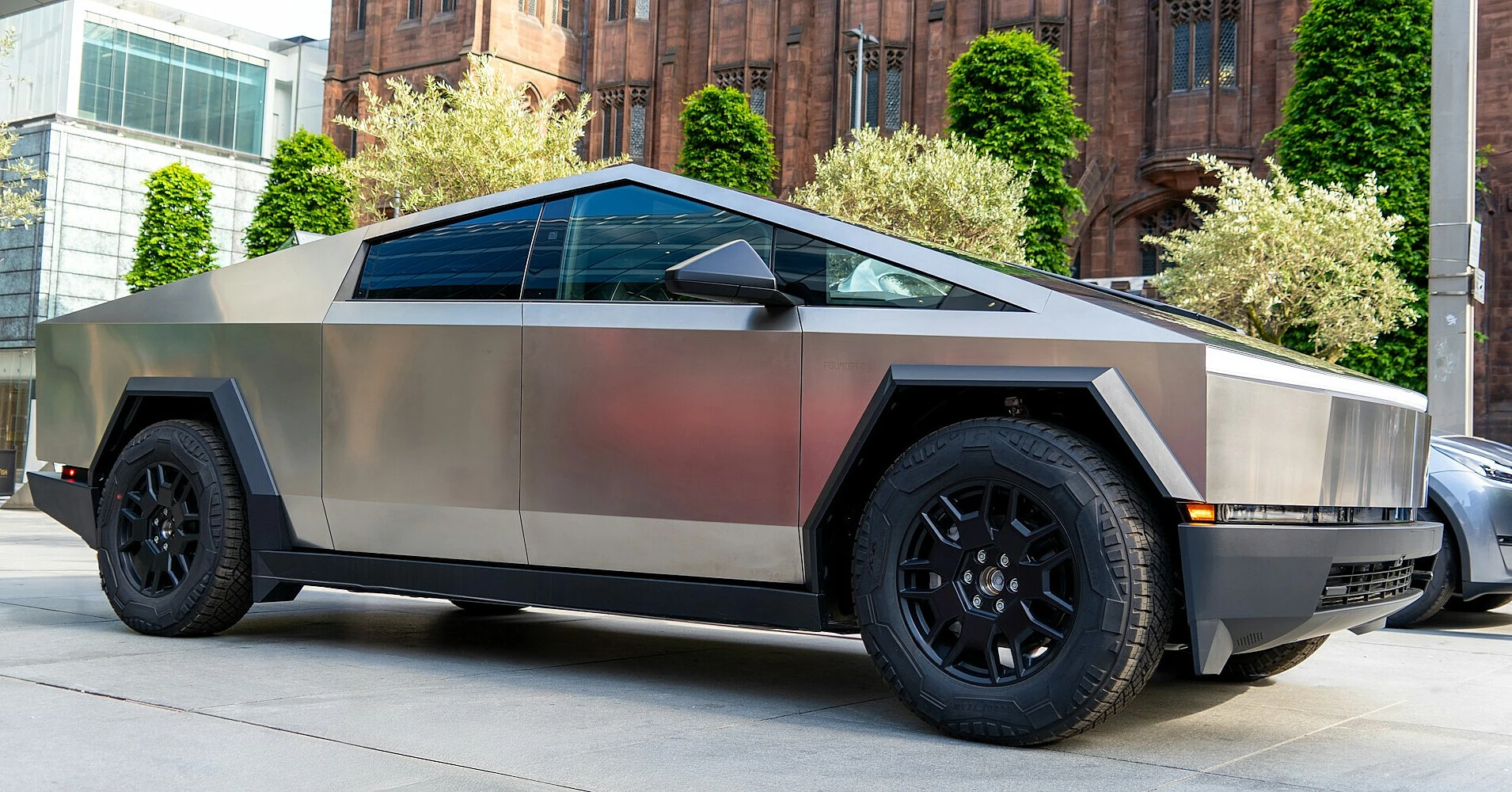
American company Tesla plans to wind down production of its electric pickup Cybertruck at its Austin, Texas plant around mid-2027. The freed-up production capacity will be used to ramp up output of its driverless Cybercab vehicles.
Tesla CEO Elon Musk announced this on November 6 on social media platform X. The information was also confirmed by BBC, The Verge, and Financial Times.
Musk did not specify whether the company would permanently stop making the Cybertruck or move its production to another facility. The Gigafactory Texas in Austin remains the only known Tesla production site equipped to assemble this model and manufacture its specialized components.
Meanwhile, Cybertruck engineering team lead Wes Morrill, in his post on X, called the electric pickup an important platform for developing technologies that will continue to be used in the Cybercab. According to the BBC, such comments may indicate preparation for a final end to production of the model.
The Cybertruck came to market at the end of 2023 after several years of delays. Tesla had hoped the electric pickup could compete with traditional American models, but actual demand turned out significantly lower than the company's initial expectations.
According to Financial Times citing Cox Automotive estimates, about 11.6 thousand Cybertrucks were sold in the U.S. in the first nine months of 2026, down 28% from the same period the previous year. Musk had previously spoken of annual sales of 250 thousand vehicles as a prospect.
As The Verge notes, the Cybertruck's commercial prospects were hampered by its high cost, mixed reception of its unusual design, and repeated vehicle recalls due to technical faults. In addition, the model's design features limited its sales potential in some international markets.
Taking the Cybertruck's place as one of the company's production priorities is the Cybercab – a two-seat electric vehicle designed for fully autonomous ride-hailing. Its construction does not include a traditional steering wheel or pedals, as the vehicle is intended to operate without a driver.
Expanding Cybercab production aligns with Tesla's strategy to develop autonomous transport, artificial intelligence, and robotics. The company aims to gradually increase the share of these areas in its business amid intensifying competition in the global electric vehicle market.
Musk did not give specific production targets for the Cybercab at the Texas plant in his announcement. It has also not been announced how many Cybertrucks the company plans to produce before mid-2027.
Based on materials from: BBC, The Verge, Financial Times
