
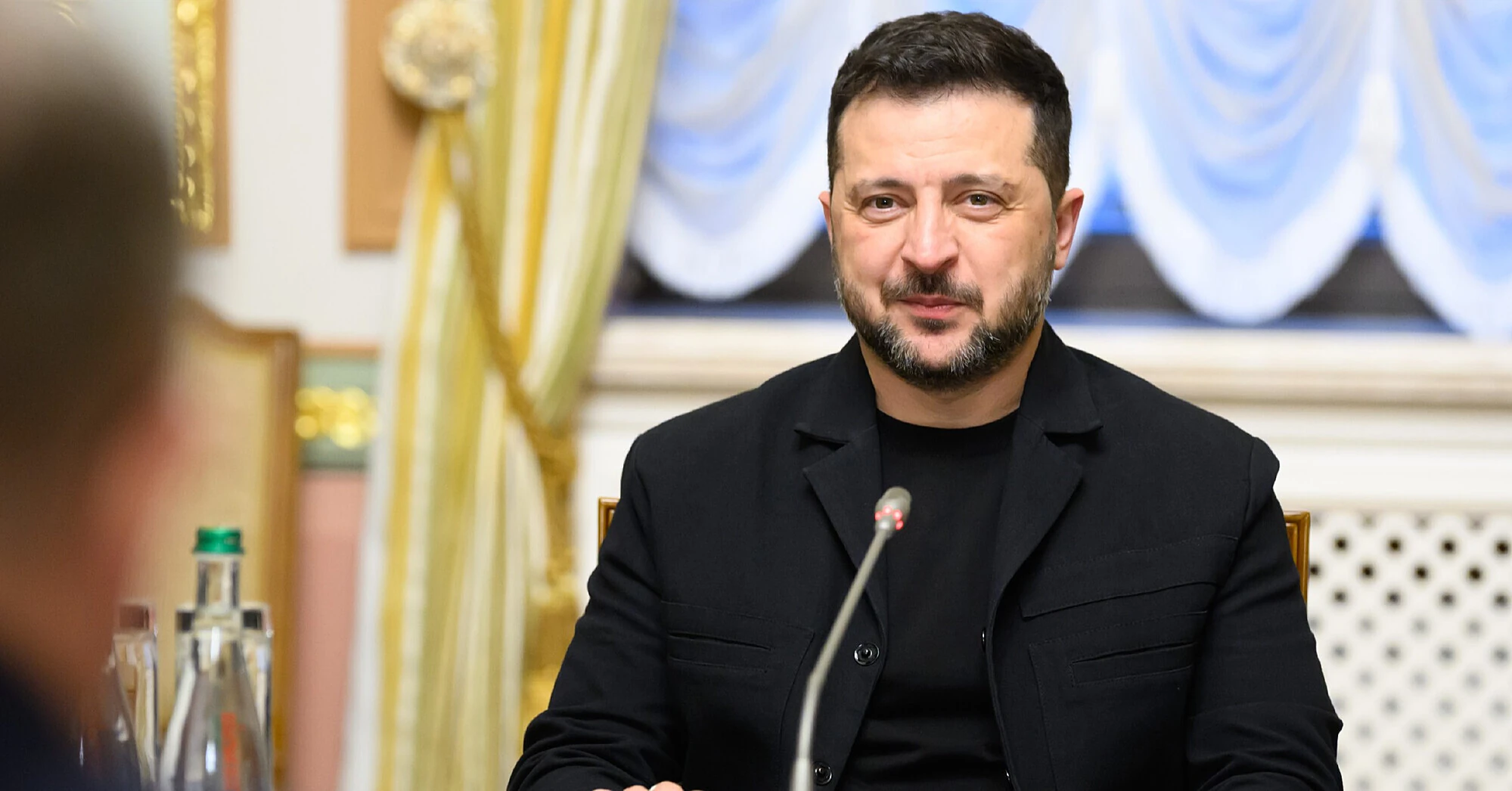
President of Ukraine Volodymyr Zelensky called the situation with electricity and water supply in Kyiv the most difficult among the country's regions. According to him, prolonged outages in the capital are related not only to Russian attacks on energy infrastructure, but also to failure to implement decisions at the city level during preparation for the heating season.
The head of state reported this on November 6 following a conference call on eliminating the consequences of Russian strikes and the state of energy supply in the regions.
"The worst situation is in Kyiv: people and companies have prolonged power and water outages, and the challenges are very serious", Zelensky said.
The president linked the capital's problems to two factors: the consequences of Russian attacks on energy infrastructure and insufficient implementation of city decisions on winter preparation.
According to him, the situation actually became the result of failure to implement relevant decisions at the city level and the Russian operation against the Ukrainian energy system.
Specific unimplemented measures or responsible officials were not named by Zelensky in the November 6 message.
The government must accelerate restoration of energy supply
Following the meeting, the president announced additional government measures aimed at restoring damaged infrastructure and reducing outage durations.
In particular, representatives of state and private energy companies discussed the need to involve additional repair crews and accelerate work on energy facilities.
Zelensky also said that identified capabilities of the Armed Forces of Ukraine are being used to restore power grids and energy facilities. The president did not provide details on such involvement.
In addition, the Prime Minister of Ukraine reported on the launch of a program of monthly bonuses for workers participating in infrastructure restoration. This includes, in particular, energy workers, utility workers, railway workers, and employees of water treatment and water supply facilities.
Separately, the president announced agreements with Germany and Spain on the supply of generators, cables, and other equipment needed to restore the Ukrainian energy system.
According to him, relevant issues were discussed with the leaders of the countries and company representatives during recent international visits. Specific quantities of equipment and delivery dates are not specified in the message.
The situation with restoration of energy supply was also considered in Dnipro, Kharkiv, Odesa, as well as in Poltava, Cherkasy, Vinnytsia, Zhytomyr, Sumy, Kyiv, and Odesa regions.
Kyiv authorities previously rejected claims about winter preparation
Zelensky's statement came amid large-scale electricity supply restrictions in the capital. As reported by "Kurs Ukrainy", on November 6 emergency outages of five stages of consumers were introduced in Kyiv and four regions.
Due to the difficult situation in the energy system, previously published schedules may not correspond to the actual duration of outages. Energy workers are working to stabilize the grid and return to predictable hourly restrictions.
Criticism of Kyiv's preparation for the heating season by the president is not the first. Back on October 9, Zelensky stated about the capital's significant lag in implementing the Energy Resilience Plan.
Meanwhile, Mayor Vitali Klitschko in an interview with Suspilne on November 3 rejected accusations of inaction by the city authorities. According to him, the capital performed the necessary preparatory work, including repairing thermal power plants and preparing the heat supply system for launch.
Klitschko also emphasized that creating fully autonomous backup power supply for the entire city is practically impossible due to the scale of consumption and Kyiv's dependence on the unified energy system of Ukraine.
The day before, on November 5, Acting First Deputy Head of the Kyiv City State Administration Petro Panteleiev reported that connecting residential buildings to heating continues in all districts of the capital. According to city plans, most buildings should receive heat by November 12, except facilities where accidents or additional repairs occur.
The Kyiv City State Administration also reported creating backup power sources for critical infrastructure. At the same time, the city acknowledges that a significant portion of large water supply facilities needs more powerful autonomous power stations, the construction of which is still ongoing.
Thus, despite the city authorities' assurances about the preparation carried out, the situation with Kyiv's electricity supply remains difficult. The president insists on accelerating restoration works and strengthening support for energy infrastructure from the government and international partners.
Based on materials: Volodymyr Zelensky, Suspilne
