
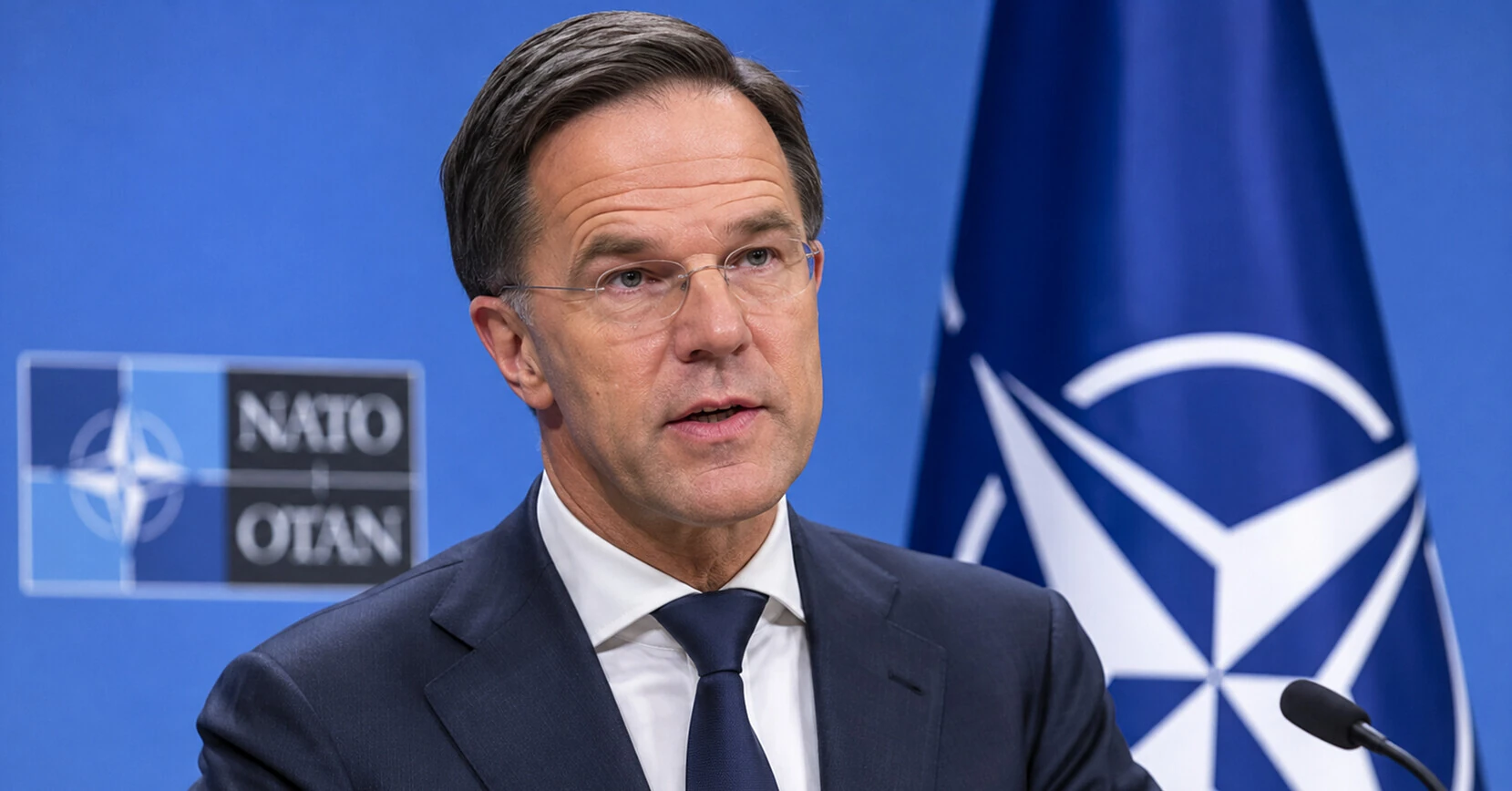
NATO Secretary General Mark Rutte considers an outright victory for either side in Russia's war against Ukraine unlikely. In his opinion, hostilities will most likely end with a peace agreement that involves some sort of compromise. At the same time, he warned that the cessation of the war does not mean the disappearance of the Russian military threat to Europe.
Rutte said this on November 5 on the Dutch program Pauw & De Wit, reports Bloomberg.
During the interview, the NATO Secretary General was asked whether one side could achieve victory in the war that Russia started against Ukraine.
"I don't think that is very likely. Such wars always end with a peace agreement, which is often a peculiar compromise", – Rutte replied.
However, the head of the Alliance did not specify on what terms a future agreement between Ukraine and Russia could be reached.
In particular, he did not discuss specific territorial concessions, did not name possible parameters of a ceasefire, and did not present a new peace plan.
Thus, his words were an assessment of the likely scenario for ending the war, not a statement about agreed negotiating positions.
Russian threat to Europe after the war may increase
Rutte paid particular attention to the consequences of a possible cessation of hostilities for the security of European states.
According to him, currently a significant part of the Russian army is engaged in the war against Ukraine, so Moscow cannot use these forces to directly exert military pressure on other European countries to the same extent.
However, after the war ends, Russia will retain a large army that it can use for other tasks.
Rutte emphasized that the current Russian military threat is not directly manifested on NATO's borders to a large extent because many Russian troops are in Ukraine.
At the same time, after the cessation of hostilities, these forces will not disappear. The NATO Secretary General warned that Europe should take this risk into account in long-term defense planning.
Therefore, even the conclusion of a peace agreement between Ukraine and Russia, according to Rutte, will not eliminate the need to strengthen the defense capabilities of European states.
The US role in supporting Ukraine remains critical
During the interview, Rutte also emphasized the importance of the United States for the defense of Europe and the continuation of Ukrainian resistance to Russian aggression.
He said he regularly communicates with Ukrainian President Volodymyr Zelenskyy, including discussing military support from international partners.
According to the Dutch publication Metro, about two weeks before the broadcast, Rutte explained to Zelenskyy that, despite the willingness of European leaders to support Ukraine, certain critically important types of aid can currently only be provided by the US.
The NATO Secretary General emphasized that Washington continues to provide such support. At the same time, he acknowledged that Europe does not yet have enough capabilities to replace the United States on its own in all key defense components.
Statements came ahead of new talks
Rutte's assessments came amid preparations for another round of consultations between Ukraine, the US and Russia on a possible end to the war.
As previously reported by "Course of Ukraine", a new round of talks with US mediation is planned for November 10-11 in Abu Dhabi.
According to US presidential representative Jared Kushner, the parties are working on proposals that should combine a possible end to the war with security guarantees for Ukraine and the formation of a broader European security architecture.
At the same time, the specific terms of a potential agreement remain the subject of negotiations. There is currently no public confirmation of any agreement to end the war.
Rutte did not link his assessment of a possible compromise to specific results of the upcoming meeting in Abu Dhabi and did not name a timeline for the cessation of hostilities.
At the same time, the NATO Secretary General emphasized that European states need to remain prepared to counter the Russian threat regardless of when and on what terms the war in Ukraine ends.
