
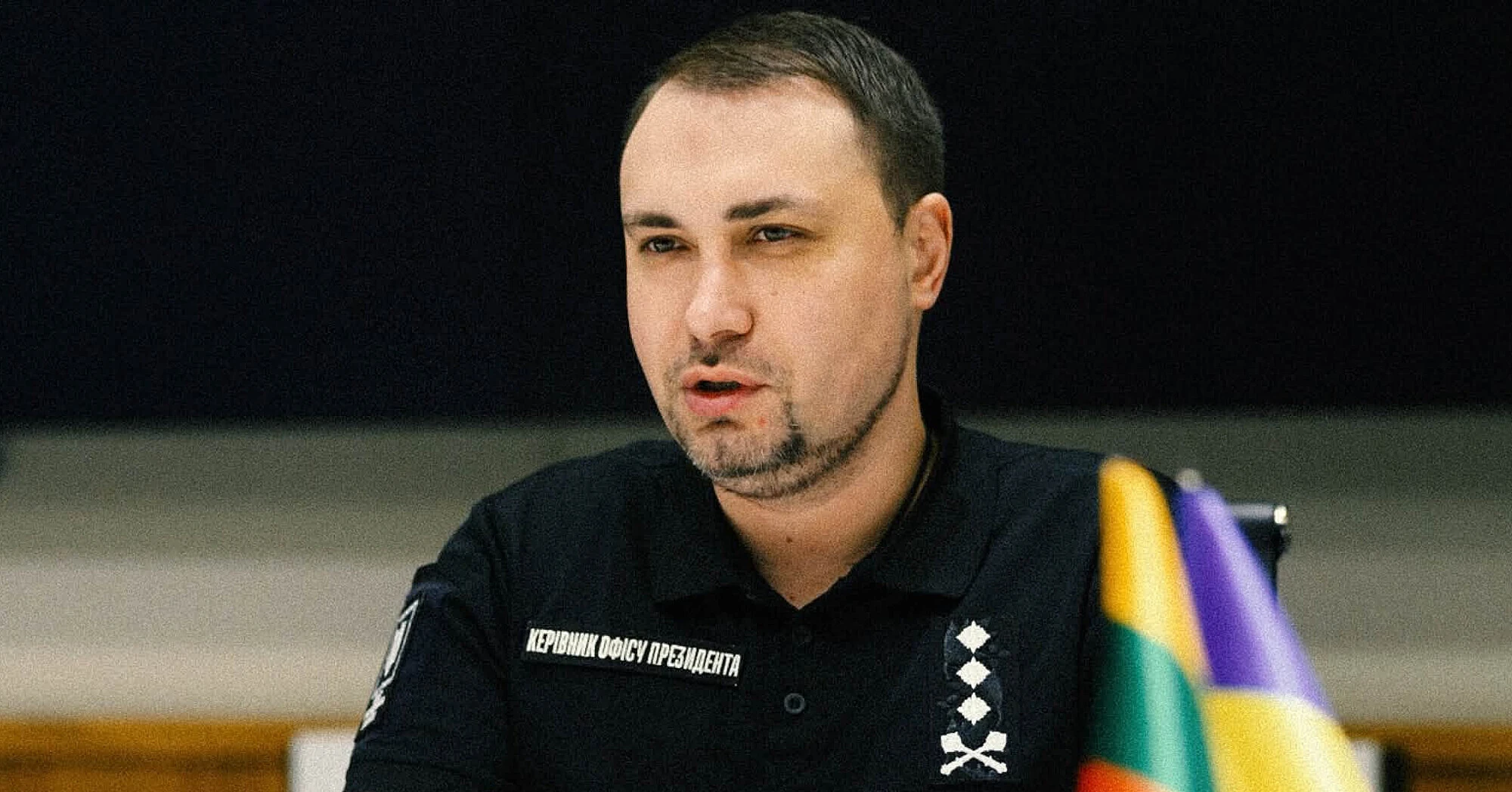
Head of the Office of the President of Ukraine Kyrylo Budanov will lead the Ukrainian delegation at a new round of trilateral talks with the United States and Russia. The meeting is scheduled for November 10–11 in Abu Dhabi (United Arab Emirates). The main topics will be ending the war, security guarantees, de-escalation, and humanitarian issues.
Budanov announced this on November 6 in an interview with the American television channel CBS News.
According to the head of the Office of the President, the Ukrainian side does not expect a significant breakthrough from the upcoming meeting. At the same time, he considers the very fact that Ukrainian and Russian representatives have agreed to resume direct negotiations after a prolonged pause to be a positive signal.
Budanov emphasized that the upcoming round will not be the final stage of the peace process. The parties intend to discuss the conditions under which further progress toward ending the war is possible.
“These negotiations are not the last. Everything we will talk about is moving closer to readiness to end the ongoing war. What will we achieve? I will refrain from answering,” — Budanov said.
In his assessment, the military experience of the negotiating teams' participants could be useful in discussing technical aspects of a possible ceasefire.
Who will represent Ukraine, the USA and Russia
The talks will be held with Washington's mediation. The meeting on November 10–11 was previously announced by US President's Special Representative Steve Witkoff.
According to Axios, the American delegation will be led by Witkoff and Jared Kushner, who are directly involved in preparing proposals to end the Russo-Ukrainian war.
The Russian negotiating group, according to a statement by Kremlin spokesman Dmitry Peskov, will be headed by Vladimir Putin's aide Vladimir Medinsky. The delegation is also expected to include representatives of several government agencies, including the Russian Foreign Ministry.
The final personal composition of the Russian delegation has not yet been announced. The full list of participants of the Ukrainian negotiating group has also not been made public.
The meeting in Abu Dhabi will be the first in-person round of trilateral talks since February 2026. Previous negotiations involving representatives of Ukraine, the US, and Russia took place in Geneva on February 17–18 but did not lead to an agreement to end the war.
Main issues of the upcoming talks
The American side has identified four main areas of discussion: post-war security guarantees, measures to reduce the intensity of hostilities, humanitarian initiatives, and further steps toward a peaceful settlement.
President of Ukraine Volodymyr Zelenskyy earlier named several specific priorities of Kyiv for the talks in Abu Dhabi.
The first concerns energy security. Ukraine intends to seek an end to Russian strikes on energy facilities and other critical infrastructure. This issue is especially urgent amid ongoing attacks on the power grid and power supply disruptions.
The second area relates to the safety of navigation in the Black Sea. Kyiv proposes discussing the restoration of unimpeded operation of maritime transportation routes, including those necessary for the export of Ukrainian agricultural products.
The third priority is humanitarian issues. Ukraine hopes to achieve more frequent exchanges of prisoners of war and the return of detained citizens. Zelenskyy has previously called “all for all” a desirable exchange formula, but has also allowed for a phased expansion of existing mechanisms.
The fourth area will be preparation for a possible meeting at the level of the leaders of Ukraine, the USA, and Russia. Kyiv insists that reaching sustainable agreements is impossible without the participation of European partners.
Advisor to the Office of the President Serhiy Leshchenko also stated on November 6 that the Ukrainian side is considering the possibility of a cessation of hostilities along the current front line without recognizing Russia's territorial claims. Among the proposed options are separate agreements to stop strikes on energy infrastructure and ensure security in the Black Sea.
US and Europe preparing proposals on security guarantees
Preparation for the talks was accompanied by separate consultations between Washington, Kyiv, and European partners.
On November 4, Zelenskyy held a one-and-a-half-hour phone conversation with Steve Witkoff and Jared Kushner. As reported by the Office of the President, the parties discussed preparation for the trilateral format, security guarantees, and further coordination of diplomatic efforts.
In parallel, consultations took place in Brussels involving representatives of Ukraine, the USA, the European Union, the United Kingdom, France, Germany, and NATO. International financial institutions and business representatives were also involved.
The focus was on future security guarantees for Ukraine, post-war reconstruction, and economic mechanisms to support the country.
On November 5, Zelenskyy discussed preparations for the meeting in Abu Dhabi with President of the European Council António Costa. The Ukrainian side continues to insist on the participation of European states in discussions of issues directly affecting the security of the continent.
At the same time, the Russian side advocates maintaining the trilateral format at this stage of the talks. Peskov said that representatives of European countries will not directly participate in the upcoming meeting.
As reported by Financial Times on November 6, European capitals are concerned about the possibility of discussing a new European security system between Washington and Moscow without the full participation of European states.
In particular, European representatives oppose agreements that could limit the autonomy of states in choosing alliances or weaken NATO's role.
Zelenskyy sends proposals to US ahead of meeting
On November 6, the President of Ukraine held separate consultations with the leaders of Northern European and Baltic countries on the upcoming round of talks.
As reported by the presidential press service, Ukraine has already sent the American side proposals regarding possible practical outcomes of the meeting in Abu Dhabi.
Zelenskyy noted that in recent days several preparatory meetings were held with representatives of NATO, European states, and the American administration. The negotiating teams continue to maintain constant contact.
However, the specific contents of the documents sent to Washington are not being publicly disclosed.
The consultation participants also confirmed the need to discuss European security issues with the direct participation of European states.
What differences remain between Ukraine and Russia
Despite the resumption of diplomatic contacts, key contradictions between Kyiv and Moscow remain.
One of the main obstacles remains the territorial issue. Russia continues to demand the transfer of territories in the Donbas that the Russian army has failed to occupy. Ukraine rejects the possibility of legally recognizing Russian sovereignty over the seized territories.
Serious differences also concern the sequencing of possible agreements. The Ukrainian side insists on credible security guarantees that should prevent a resumption of Russian aggression after the cessation of hostilities.
According to Financial Times, participants in informal diplomatic consultations doubt that the November round will quickly result in a ceasefire agreement. Among the reasons cited are the lack of convergence on territorial issues and the ongoing Russian strikes on Ukrainian infrastructure.
Thus, the meeting on November 10–11 should primarily show whether the parties are ready to move from general proposals to discussing specific mechanisms for ending hostilities and ensuring security.
At the time of composing this report, no official statements about a preliminary ceasefire agreement or a joint draft peace agreement had been received.
