
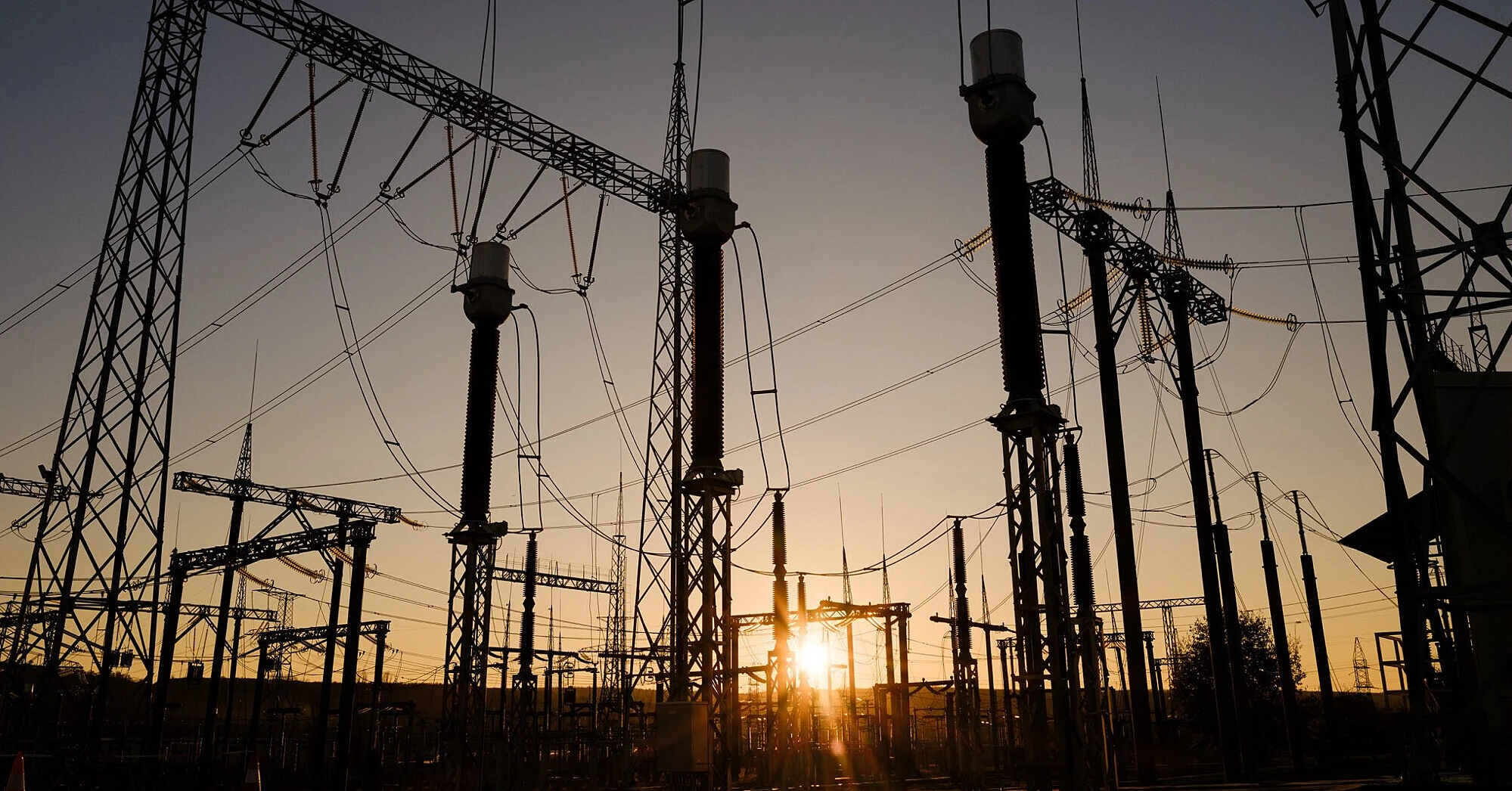
Moldova no longer purchases Russian natural gas and plans to build two more power transmission lines to Romania. This was stated by the country's president Maia Sandu after the launch of the Vulcănești - Chișinău high-voltage line, which created an additional route for electricity supply from the European market bypassing Transnistria.
The corresponding statement was published by Sandu on November 8 on social network X.
"Today we launched the Vulcănești - Chișinău power transmission line, connecting Moldova with Romania and the European energy system. For decades Moscow used energy for our blackmail. No more: Moldova does not purchase Russian gas, and two more power transmission lines to Romania are on the way", - wrote the president.
The new 400 kV line was officially put into operation on November 8 with the participation of Maia Sandu and European Commissioner for Enlargement Marta Kos. Its length is about 158 km, and the project also included the modernization of substations in Vulcănești and Chișinău.
The power line allows transmitting electricity imported through the existing connection with Romania without using the Cuciurgan power plant in Transnistria, not controlled by Chișinău. Previously, dependence on this infrastructure created risks for electricity supply to the central part of Moldova.
According to the Moldovan authorities, the capacity of the new line is up to 630 MVA. This allows transmitting volumes of electricity comparable to more than half of the country's needs during peak load hours. At the same time, actual supply volumes will depend on electricity availability and the operating mode of the power system.
The total cost of the project is about 61 million euros, of which approximately 27 million euros is directly for the construction of the line. Funding was provided by the World Bank Group. Construction was completed back in November 2025, after which equipment testing and preparation of substations for operation continued.
According to Radio Moldova, the next projects will be the high-voltage connections Bălți - Suceava and Strășeni - Gutinaș.
The cost of the Bălți - Suceava project is estimated at about 77 million euros. It is financed with the participation of the European Union, the European Bank for Reconstruction and Development, and the European Investment Bank. In June 2026, the Moldovan operator Moldelectrica signed a contract for the design and construction of its section of the line. The start of construction works on both banks of the Prut is expected in 2027.
The second line, Strășeni - Gutinaș, is planned to be implemented with US financial support of 130 million dollars. It will connect the Moldovan substation Strășeni with the Romanian substation Gutinaș. On November 5, the Parliament of Moldova recognized the construction of the line and the modernization of the substation as a project of national importance. Completion of the works is scheduled for 2032.
At the launch ceremony of the Vulcănești - Chișinău line, Sandu emphasized that energy independence means the ability to independently choose suppliers without external political pressure. She reminded that in the past Moscow had threatened Moldova with cutting off gas and electricity supplies.
European Commissioner Marta Kos called the commissioning of the new infrastructure an important step towards overcoming energy dependence on Russia. At the same time, she acknowledged that high energy prices remain a serious financial burden for Moldovan households.
The new power grids are expected to expand Moldova's opportunities for purchasing electricity on the markets of Romania and the EU and to reduce the risks of supply disruptions. However, the launch of additional lines itself does not guarantee lower tariffs for consumers.
Based on materials: Maia Sandu (X), Radio Moldova, Ministry of Energy of Moldova.
