
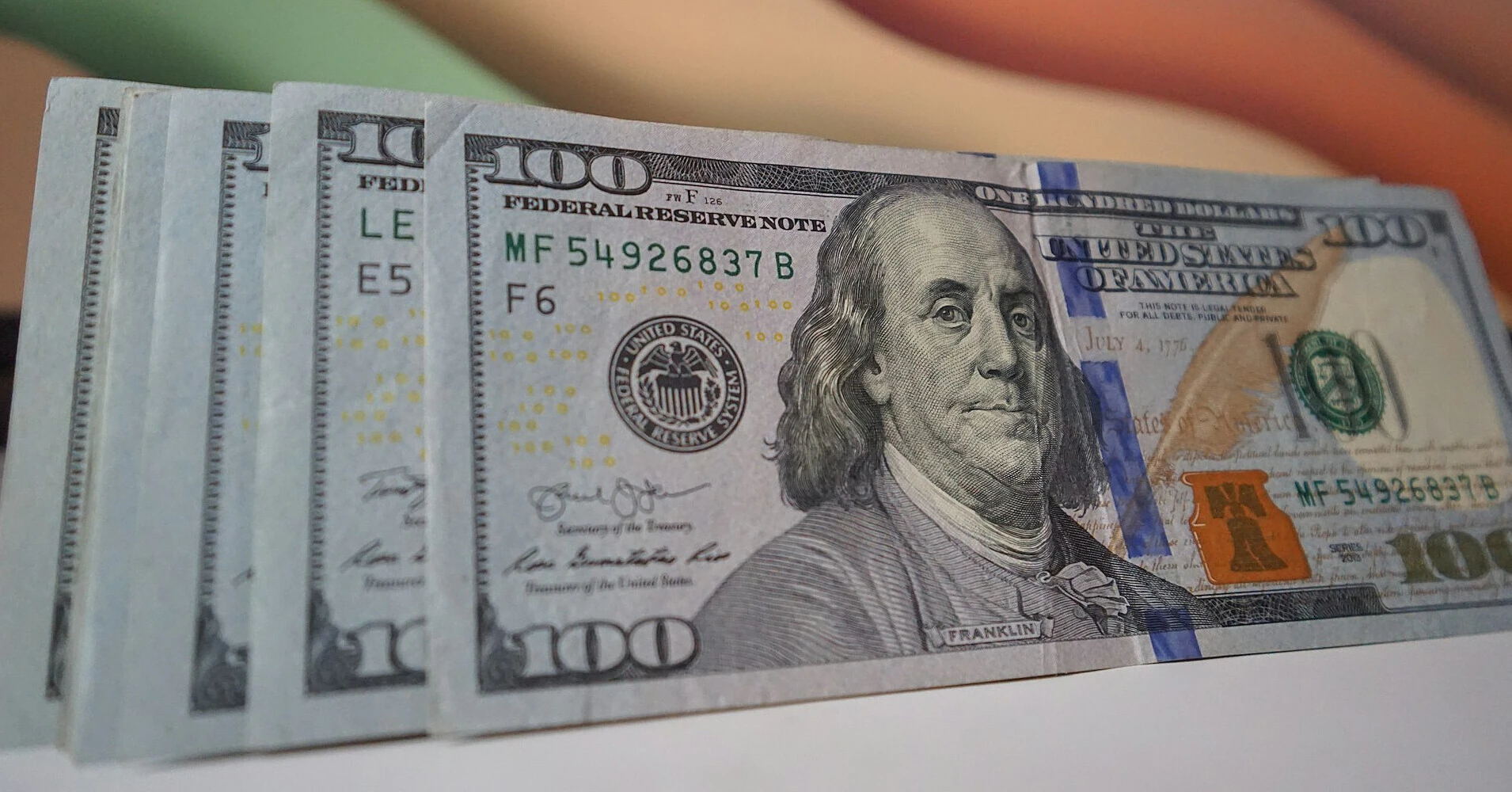
Following the rise in quotes on the interbank foreign exchange market, prices for selling cash dollars have started to rise again. If last Friday afternoon, capital wholesale exchange offices were selling cash "American" at 46.10 UAH, and this morning – at 46.20 UAH, then by the time of writing this article, the selling rate of the "white" dollar [2001-2006 series – Ed.] jumped to 46.35 UAH.
In a confidential conversation, a representative of one of the largest financial companies told the "Kurs Ukrainy" portal that the National Bank began calling the management of large currency exchange networks demanding "not to set the dollar selling rate above 46.20". In such a simple way, the NBU decided to fight the shortage of currency in banks.
Prices also went up in regional centers. Today, in the first half of the day, wholesalers were selling the dollar at the following prices: Chernihiv – 46.15 UAH, Lutsk and Ivano-Frankivsk – 46.25 UAH, Odesa – 46.28 UAH, Dnipro – 46.30 UAH, Khmelnytskyi – 46.35 UAH, Poltava – 46.40 UAH.
At the same time, commercial banks are changing rates in different directions. As of 12:00 on Monday, the cheapest dollar at 45.80 UAH is declared by Ukreximbank, OTP Bank, Ukrgasbank, and the Kyiv branch of Sky Bank. The most expensive dollar – at 46.15 UAH – is sold by Radabank. As we can see, bank retail rates are lower than those of Kyiv wholesalers. It is not surprising that buying dollars in banks is becoming problematic.
As for the euro, the minimum selling rate at the moment is at Ukrgasbank and Tascombank. Both banks are ready to sell euros at 51.20 UAH. The maximum selling rate for cash euros – 52.00 UAH – is at Trust Capital Bank. Today, the euro is rising on FOREX, so by evening its price tags in Ukraine may rise by another 10-15 kopecks.
According to analysts of the "Kurs Ukrainy" portal, the National Bank is trying to bring the cash and non-cash dollar rates as close as possible, and this can only be done by trying to lower the rate on the cash market. Or it will have to let the interbank rate go, which is fraught with another round of hryvnia devaluation.
