
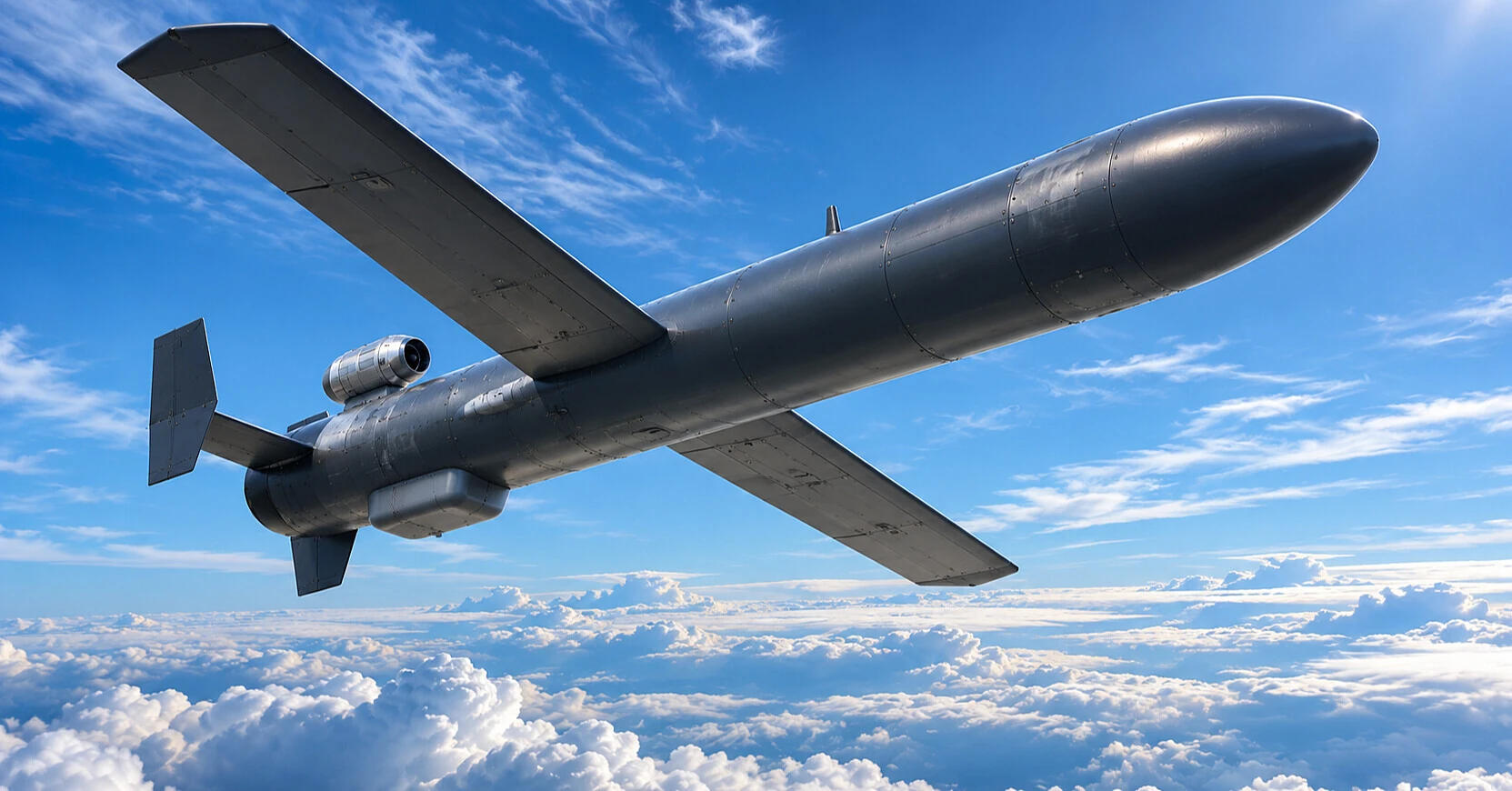
The Main Intelligence Directorate of the Ministry of Defense of Ukraine has examined a new modification of the Russian strike drone "Geran-5 K5-K" and found 93 electronic components of foreign manufacture. Most of the identified parts come from American manufacturers, although Russia continues to try to hide the markings on some microcircuits.
This was reported by the Main Intelligence Directorate of the Ministry of Defense of Ukraine on November 9, publishing the results of the study on the War&Sanctions portal.
Ukrainian specialists received an almost undamaged sample of "Geran-5 K5-K" that landed on the territory of Ukraine for study. This allowed them to examine the design of the device, its electronic equipment and clarify its technical characteristics.
Of the 93 detected electronic components, 52 belong to manufacturers from the USA. Another 10 components each come from companies in China and Switzerland.
Among the identified electronics are products of American companies Texas Instruments, ON Semiconductor and other manufacturers, as well as Swiss STMicroelectronics and Japanese companies.
According to the GUR, Russian manufacturers are trying to hide the markings on some parts. In particular, such attempts have been recorded on Texas Instruments digital signal processors and Murata inertial modules.
Intelligence believes that hiding markings indicates difficulties in supplying the Russian military-industrial complex with electronics under sanctions. According to the GUR's assessment, international restrictions increase the cost and delivery time of components, and increase the risk of supply disruptions.
At the same time, the detection of products of foreign manufacturers in Russian weapons does not in itself prove that these companies directly supplied components to Russia or violated sanctions. The GUR did not disclose specific channels for getting parts into the studied sample.
Besides foreign electronics, intelligence confirmed improved speed characteristics of the new modification of "Geran-5". According to the GUR's assessment, its cruising speed exceeds 450 km/h, and during certain maneuvers the maximum speed can reach 1000 km/h.
The flight altitude increased from 5 to 6 km compared to the previous version. The range remained at about 1000 km, and the weight of the warhead is 90 kg.
The new modification has also become more compact. Its length was reduced from 6.5 to 4 meters, and its wingspan from 3.2 to 3 meters. In terms of aerodynamic characteristics and capabilities, the GUR classifies the K5-K as a small-sized cruise missile.
The studied sample had a thermobaric warhead TBBCh-90. A turbojet engine TRD-200 was used as the power plant, which, according to intelligence, is assembled in Russian Alabuga from Chinese components.
Specialists paid special attention to the navigation system. In "Geran-5 K5-K" they found the optoelectronic correlation system "Susanin", an analogue of which was previously found in Russian drones "Geran-4".
This system compares the image of the terrain obtained by the camera with the reference data loaded into the memory of the on-board computer. This principle allows controlling whether the actual route matches the planned one.
In the studied apparatus, image processing was provided by the Chinese microcomputer Coke Pi - an analogue of Raspberry Pi. Intelligence also discovered a dual-band camera and other electronic units that are used in modern versions of Russian jet drones.
On the War&Sanctions portal, the GUR published an interactive three-dimensional model of "Geran-5 K5-K", the characteristics of the apparatus and a list of identified components with an indication of their manufacturers and countries of origin.
As "Kyiv Ukraine" reported earlier, the use of the "Geran-5 K5-K" modification by Russia became known back in October. Then radio technology specialist Serhiy Beskrestnov reported about the new optical navigation system and improved flight characteristics of the device.
The current study by the GUR made it possible to establish the specific composition of electronic equipment, clarify technical characteristics and determine the origin of dozens of components.
Intelligence emphasizes that the obtained data can be used to strengthen sanctions control and limit the access of the Russian military-industrial complex to critically important technologies.
Based on materials: Main Intelligence Directorate of the Ministry of Defense of Ukraine, War&Sanctions
