
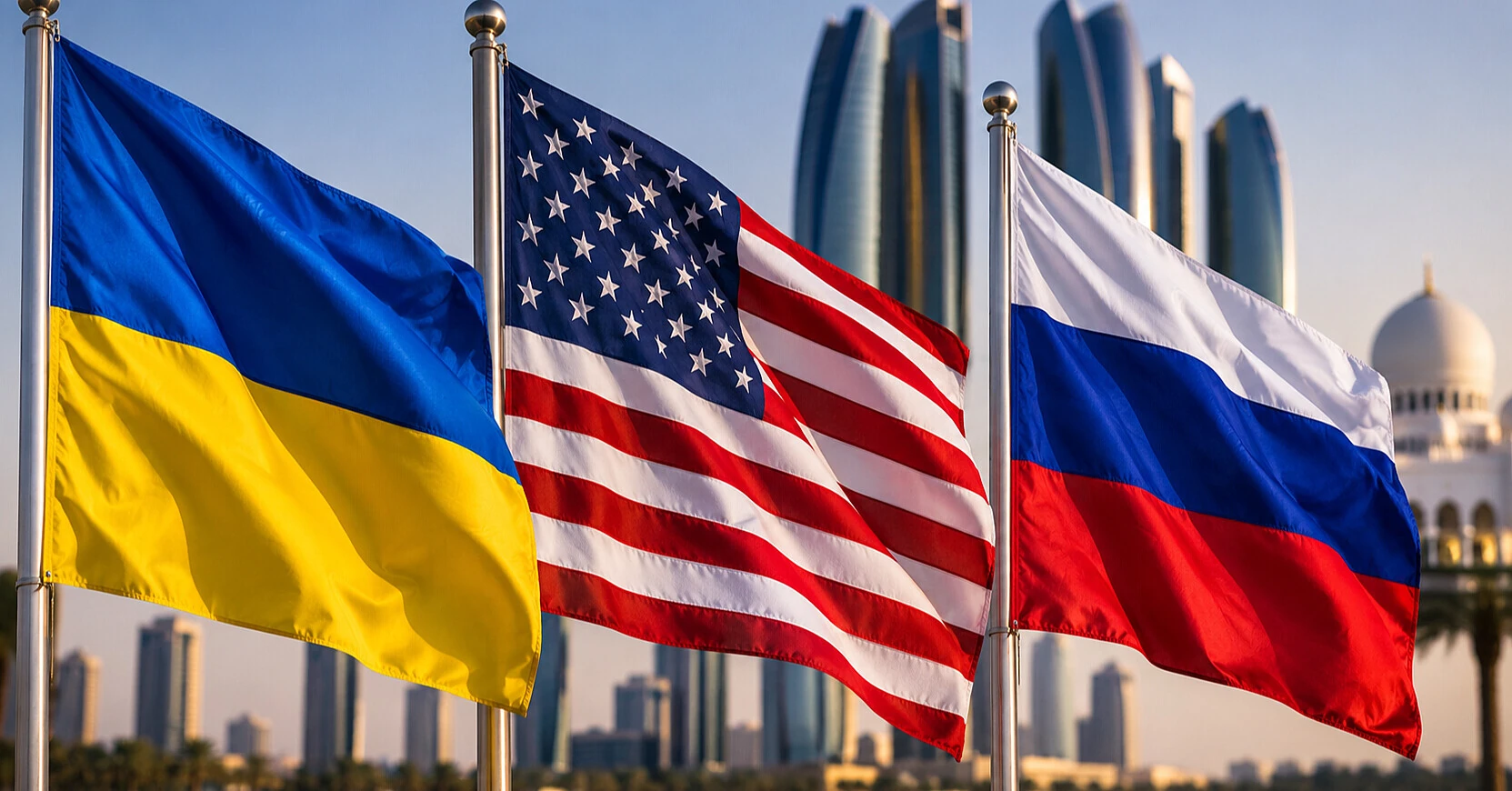
Ahead of the resumption of peace talks in Abu Dhabi, officials from the administration of U.S. President Donald Trump stated that Ukraine and Russia had shown some flexibility on the issue of the future of the occupied territories. According to Washington's assessment, the parties are demonstrating a willingness to discuss possible compromises during closed contacts, although their public positions remain unchanged.
This was reported by the BBC, citing American officials. Similar assessments by U.S. representatives are cited by Reuters and Axios.
The main dispute remains the territorial issue, particularly control over the Donetsk region. Moscow demands the withdrawal of Ukrainian troops from territories that Russia failed to occupy. Kyiv rejects the transfer of these areas to Russian control and insists on security guarantees.
According to a U.S. official, during the private discussions both sides showed some willingness to seek a compromise. However, he did not specify any concrete proposals or agreed concessions.
At the same time, as Reuters reports, a senior Ukrainian official denied that Kyiv was prepared to make territorial concessions. According to him, such issues can only be discussed at the level of heads of state and with adequate security guarantees for Ukraine.
Washington also believes that the resolution of territorial disputes will directly depend on agreements concerning the post-war security architecture. Among the possible options under consideration are American guarantees for Ukraine based on a principle similar to Article 5 of the North Atlantic Treaty, which provides for collective defense of allies.
According to Axios, the talks are planned to be conducted along two tracks. The political group will focus on territorial disputes, while the military group will focus on mechanisms for monitoring a potential ceasefire and future security agreements.
A new round of trilateral talks between Ukraine, the U.S., and Russia is scheduled for November 10-11 in Abu Dhabi. These will be the first talks in this format since the February meeting in Geneva, which ended without significant results.
The American delegation will be represented by Steve Witkoff and Jared Kushner. The Ukrainian delegation includes Rustem Umerov, Kyrylo Budanov, and Davyd Arakhamia. The Russian delegation will be headed by Russian presidential aide Vladimir Medinsky.
Separately, U.S. representatives plan consultations with Great Britain, Germany, France, Italy, the EU, and NATO. Washington seeks to involve European states in discussing the future security architecture, but Moscow opposes their direct participation in the trilateral negotiating format.
Despite cautious optimism on the American side, the negotiators do not predict a swift breakthrough. In particular, Davyd Arakhamia, in a comment to Deutsche Welle, noted that after a long pause he does not expect immediate agreements. He considers the very resumption of direct trilateral dialogue a positive outcome.
