
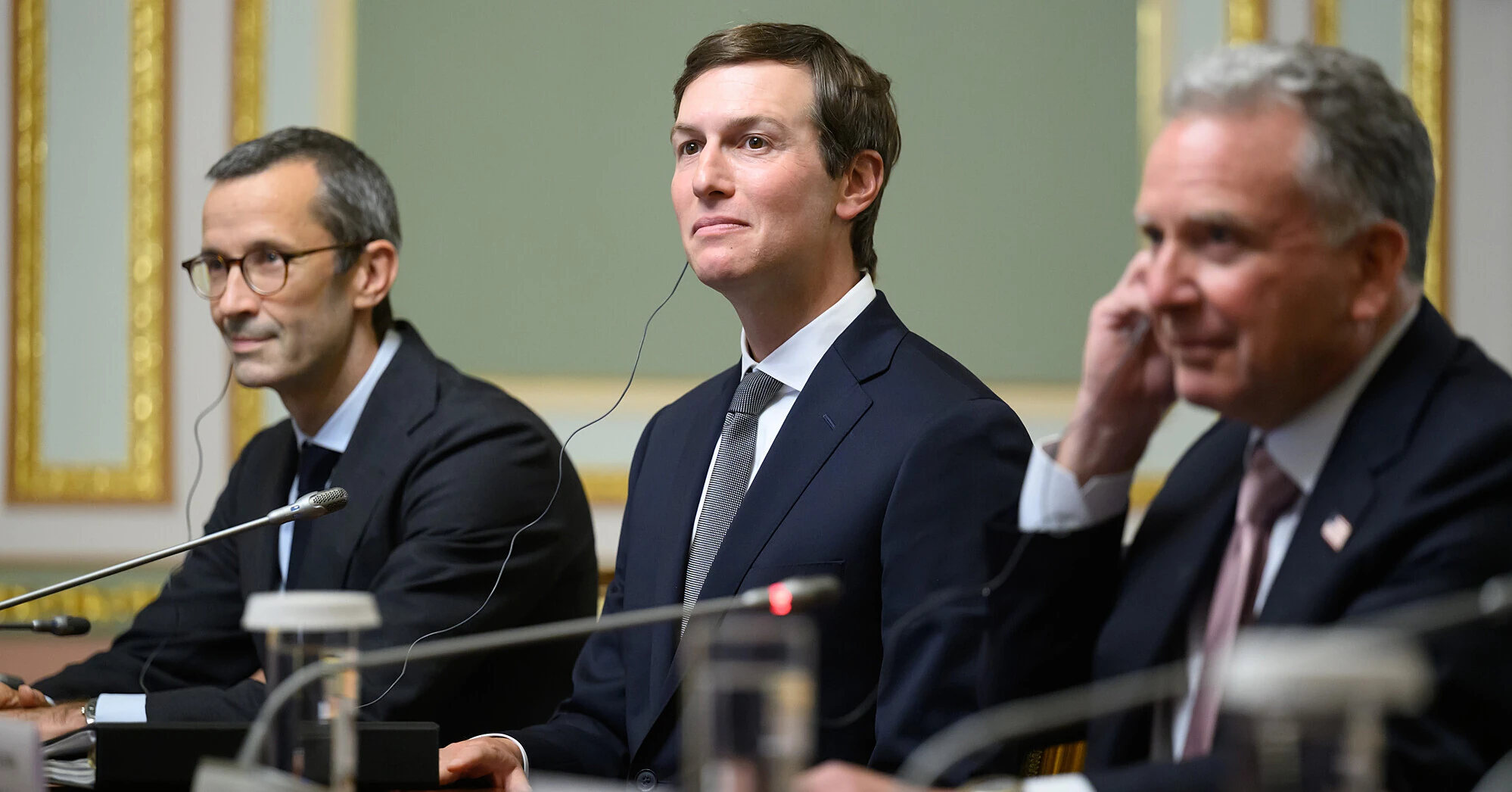
Special Representative of the US President Jared Kushner said that after negotiations with Vladimir Putin, the American side considers the Russian leader ready to end the war against Ukraine under certain conditions. According to Kushner, Washington's recent contacts with Kyiv and Moscow also made it possible to reduce differences between the parties.
Kushner said this on November 10 during the opening of trilateral negotiations between Ukraine, the United States and Russia in Abu Dhabi. A video of his speech was published by APT channel.
Kushner said that European partners regularly ask American mediators whether Russia and its president are really ready for a peaceful settlement.
"From what Steven and I heard from him, we can say with great confidence that we believe this - under the appropriate conditions", Kushner said, referring to the negotiations with Putin that he conducted together with Stephen Witkoff.
At the same time, the American representative did not specify what conditions could make a peace agreement acceptable to the Russian president.
According to Kushner, the Russian side, for its part, asks American mediators a similar question - whether Ukraine and European states are really ready for peace.
Kushner did not say that he himself doubts the readiness of Kyiv or European partners for a peaceful settlement. He only relayed the questions that, according to him, Moscow raises.
Kushner also said that over the past two months, American representatives have maintained almost daily contact with the Ukrainian and Russian sides.
According to him, during this time, substantive discussions were held with President of Ukraine Volodymyr Zelenskyy and Putin, which helped to better identify key contradictions.
"We really identified and narrowed the differences on the issues that we need to resolve. And I think we have good ideas on how to overcome them", the US representative said.
He expressed hope that the negotiations on November 10-11 will allow the parties to have a frank dialogue and achieve further progress.
Kushner also said that before the start of the trilateral meeting, American representatives held consultations with the Ukrainian delegation and European partners.
According to him, a significant part of the proposals that the US plans to discuss with Ukraine and Russia was prepared jointly with European allies over the past two months.
One of the key goals of the negotiations, Washington believes, is not only ending the war, but also creating a new system of security relations between Ukraine, Russia and Europe.
Kushner explained that the American side proposes to take into account the experience of previous international agreements, identify the reasons for their ineffectiveness and develop mechanisms that will help avoid new conflicts.
"We take what worked, try to identify what did not work, and hope to create a new system that will ensure peace for decades, if not centuries", he said.
According to Kushner, US President Donald Trump remains committed to ending the war and has instructed his representatives to intensify diplomatic efforts due to the significant human losses and humanitarian consequences of the hostilities.
At the same time, Kushner's statements reflect the assessment of American negotiators. They do not mean that Russia has already agreed to a ceasefire or that Ukraine and the Russian Federation have reached agreements on the conditions for ending the war.
We remind you that on November 10, trilateral negotiations between Ukraine, the United States and Russia began in Abu Dhabi. This is the first meeting in this format after a break that has lasted since February.
According to Radio Svoboda, during the first round, the main attention was paid to security guarantees for Ukraine and Europe, as well as Russia's demands regarding its own security. The Ukrainian side insists that the war must first be stopped, and then proceed to the formation of a new architecture of European security.
No specific agreements following the first round of negotiations have been reported yet.
Sources: APT - Jared Kushner's speech, Radio Svoboda
