
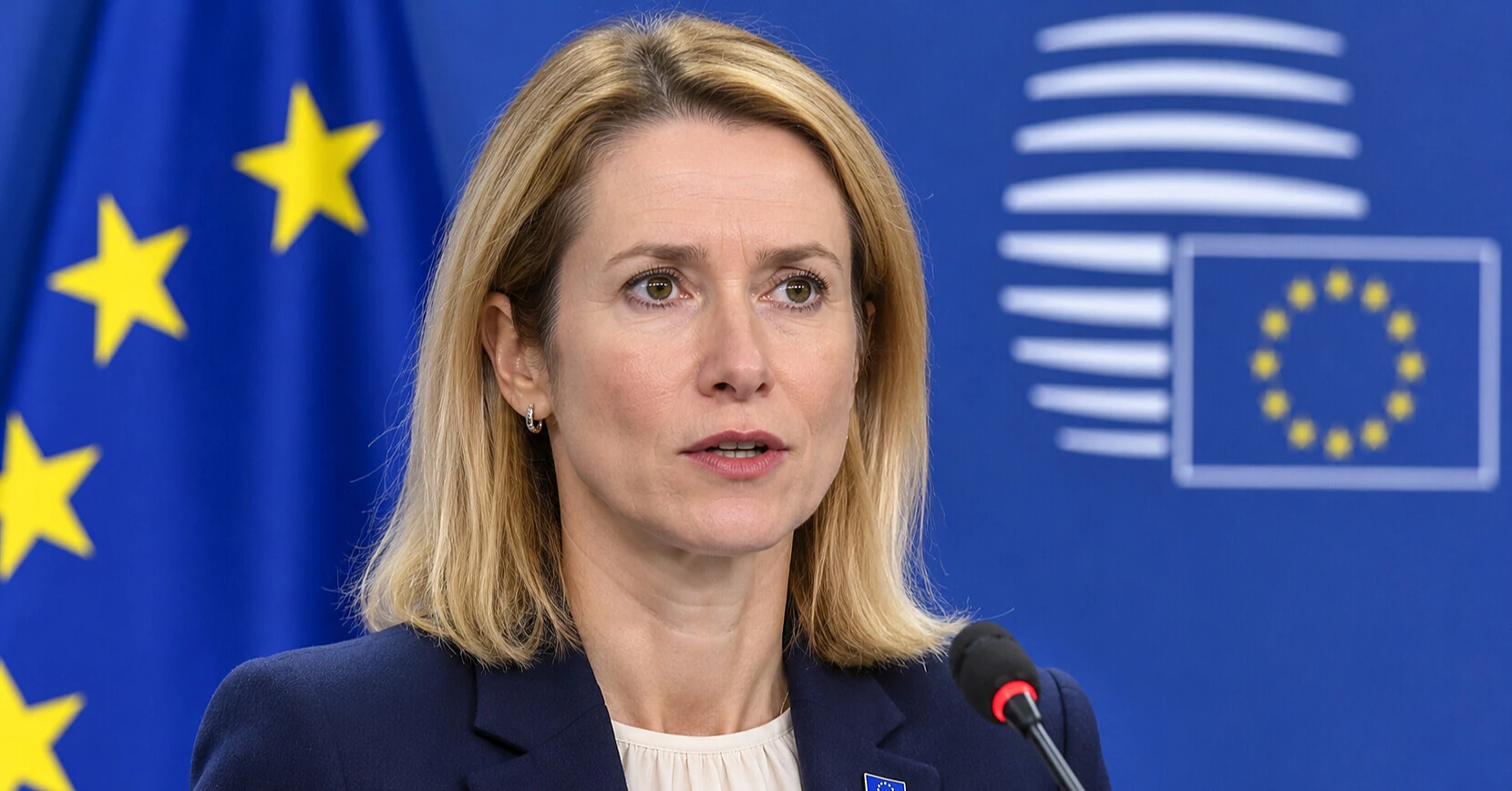
Head of European diplomacy Kaja Kallas urged international partners not to give in to Russia's claims about allegedly existing threats to its security when discussing the conditions for ending the war against Ukraine. She emphasized that the sovereignty of states, territorial integrity, and the right to independently choose military-political alliances cannot become the subject of negotiating concessions.
Kallas wrote about this on social network X on November 10 after a meeting with Ukrainian Foreign Minister Andrii Sybiha on the sidelines of the G7 foreign ministers' meeting in Paris.
According to the EU's top diplomat, the coming weeks are of particular importance for Ukraine in connection with the resumption of negotiations with Russia with the mediation of the United States.
Kallas assured that regardless of the further development of the diplomatic process, the European Union will continue to support Ukraine. She also stressed that the existing sanctions against Moscow will remain in place and will be strengthened.
"We must not give in to Russian narratives about their alleged security concerns. NATO is a defensive alliance and has never threatened Russia. Respect for sovereignty, territorial integrity, and the right to freely choose alliances are fundamental principles, not bargaining chips," — said Kallas.
Thus, the head of European diplomacy spoke out against using Russian demands for security guarantees as a basis for limiting the sovereign rights of Ukraine and other European states.
The statement came amid trilateral talks between Ukraine, the United States, and Russia in Abu Dhabi, which began on November 10. One of the central topics of the meeting was future security guarantees and possible conditions for ending the war.
According to sources of Ukrainska Pravda, during the first round of negotiations, the parties discussed security guarantees not only for Ukraine, but also for Russia. However, the content of possible agreements was not officially disclosed.
Earlier, Moscow stated that the future system of guarantees should take into account Russian security interests. Kremlin representatives insisted on the mutual nature of such obligations.
European officials, in turn, emphasize that any decisions regarding the security architecture of the continent should be made with the direct participation of European states.
Ahead of the talks, Kallas also said that she does not yet see convincing signs of Moscow's readiness for a good-faith settlement of the war. She recalled that Russia has previously assumed international obligations regarding European security, but has violated them.
Following the first day of meetings in Abu Dhabi, Ukrainian President Volodymyr Zelenskyy called the negotiations constructive and substantive. However, the parties did not announce reaching an agreement on a ceasefire or future security guarantees.
Continuation of the trilateral negotiations is scheduled for November 11.
Based on materials from: Kaja Kallas (X), European Pravda, Reuters.
