
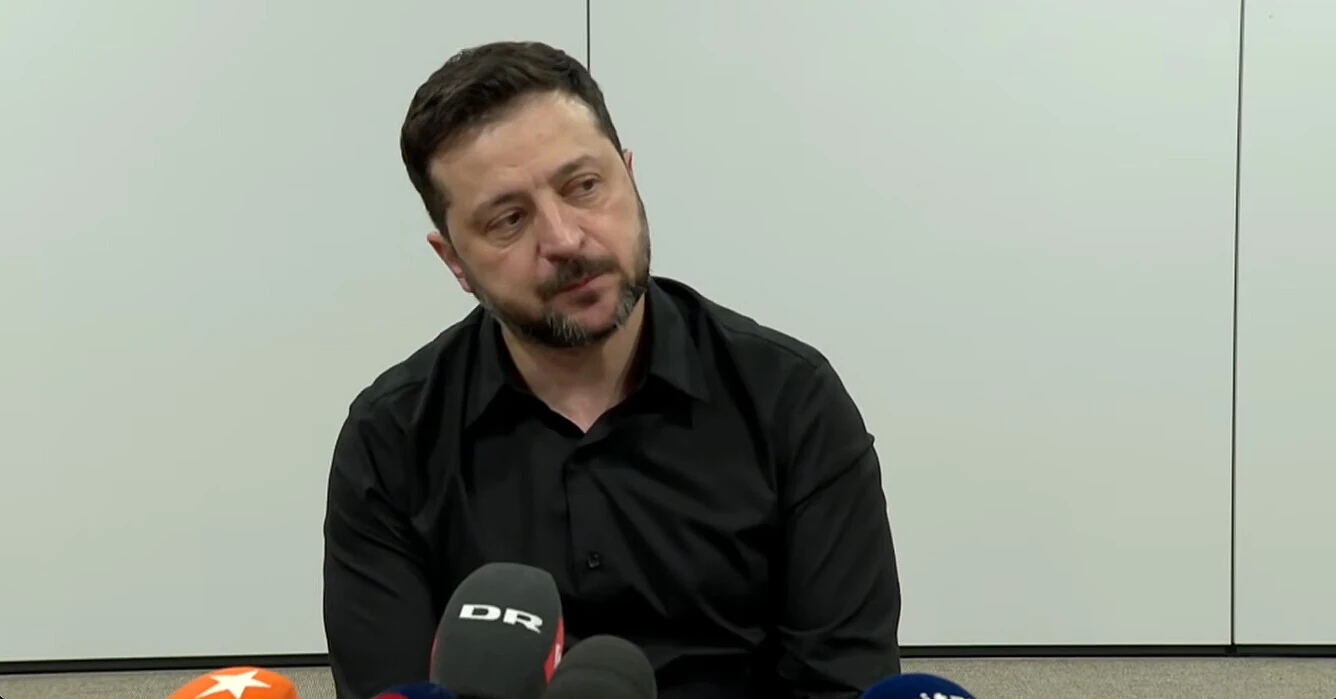
President of Ukraine Volodymyr Zelensky said that the trilateral talks between Ukraine, the United States and Russia in Abu Dhabi focused primarily on humanitarian issues, including the possibility of a large-scale prisoner of war exchange. The parties also discussed security guarantees and possible steps to reduce the intensity of hostilities.
The head of state said this on November 10 after receiving a report from the Ukrainian negotiating delegation. Details of the meeting were also reported by Associated Press.
According to Zelensky, the negotiating day began with consultations between Ukrainian representatives and the US delegation and European partners. After that, a trilateral meeting was held with the participation of Russian representatives.
The president described the consultations as constructive and quite substantive, emphasizing that the Ukrainian side is interested in achieving concrete results.
One of the central topics was the release of Ukrainian prisoners of war and civilians held by Russia. In addition, the parties touched upon the return of Ukrainian children.
According to Associated Press, a senior Ukrainian official who wished to remain anonymous confirmed the discussion of a large-scale prisoner exchange. He added that details are expected to be agreed upon over the coming days.
Earlier Radio Svoboda, citing a source close to the Ukrainian negotiating group, reported that an agreement had been reached to conduct a major exchange in the near future.
However, the officially agreed lists, the number of participants in the exchange and the date of its implementation have not yet been announced. Representatives of other parties to the talks also have not confirmed the final parameters of the agreement.
The second important area of the talks was security guarantees for Ukraine after a possible end to the war. Zelensky stressed the need to create mechanisms that can prevent new Russian aggression.
According to the president, the participants discussed not only the content of future guarantees, but also the conditions for their long-term effectiveness.
Ukraine insists that future guarantees must be backed by real security instruments, not limited to political statements.
Possible de-escalation measures were also discussed separately. Kyiv has previously proposed considering a halt to strikes on energy infrastructure and agreements on security in the Black Sea.
At the same time, there were no official reports on the agreement of an energy truce or a general ceasefire following the first day of the meeting.
The talks in Abu Dhabi lasted about four hours. The meeting became the first direct trilateral consultation of this level among Ukraine, the USA and Russia since February 2026.
The Ukrainian delegation was led by the head of the Foreign Intelligence Service, Rustem Umerov. It also included the head of the Presidential Office, Kyrylo Budanov.
The American side was represented by US presidential special envoy Steve Witkoff and Jared Kushner. The Russian delegation was headed by Russian presidential aide Vladimir Medinsky.
Before the trilateral talks began, representatives of Ukraine and the United States held a separate coordination meeting with the participation of Great Britain, France, Germany, Italy, NATO and the European Commission.
US Secretary of State Marco Rubio positively assessed the first day of consultations, calling it productive. At the same time, he warned that one should not expect the negotiation process to be completed within the next day.
The main disagreements between Kyiv and Moscow regarding territories, cessation of hostilities and future security guarantees remain.
Russia continues to demand territorial concessions and restrictions on the Ukrainian army. Ukraine rejects such conditions and insists on the need for reliable international security guarantees.
After receiving the report, Zelensky set tasks for the Ukrainian negotiating team for the next round of meetings. The continuation of trilateral consultations is scheduled for November 11.
Thus, the most concrete potential result of the first day of talks remains a large prisoner of war exchange. However, its final terms still need to be agreed upon, and the parties have not announced political agreements on ending the war.
Based on materials from: Volodymyr Zelensky, Associated Press, Radio Svoboda, Ukrinform.
