
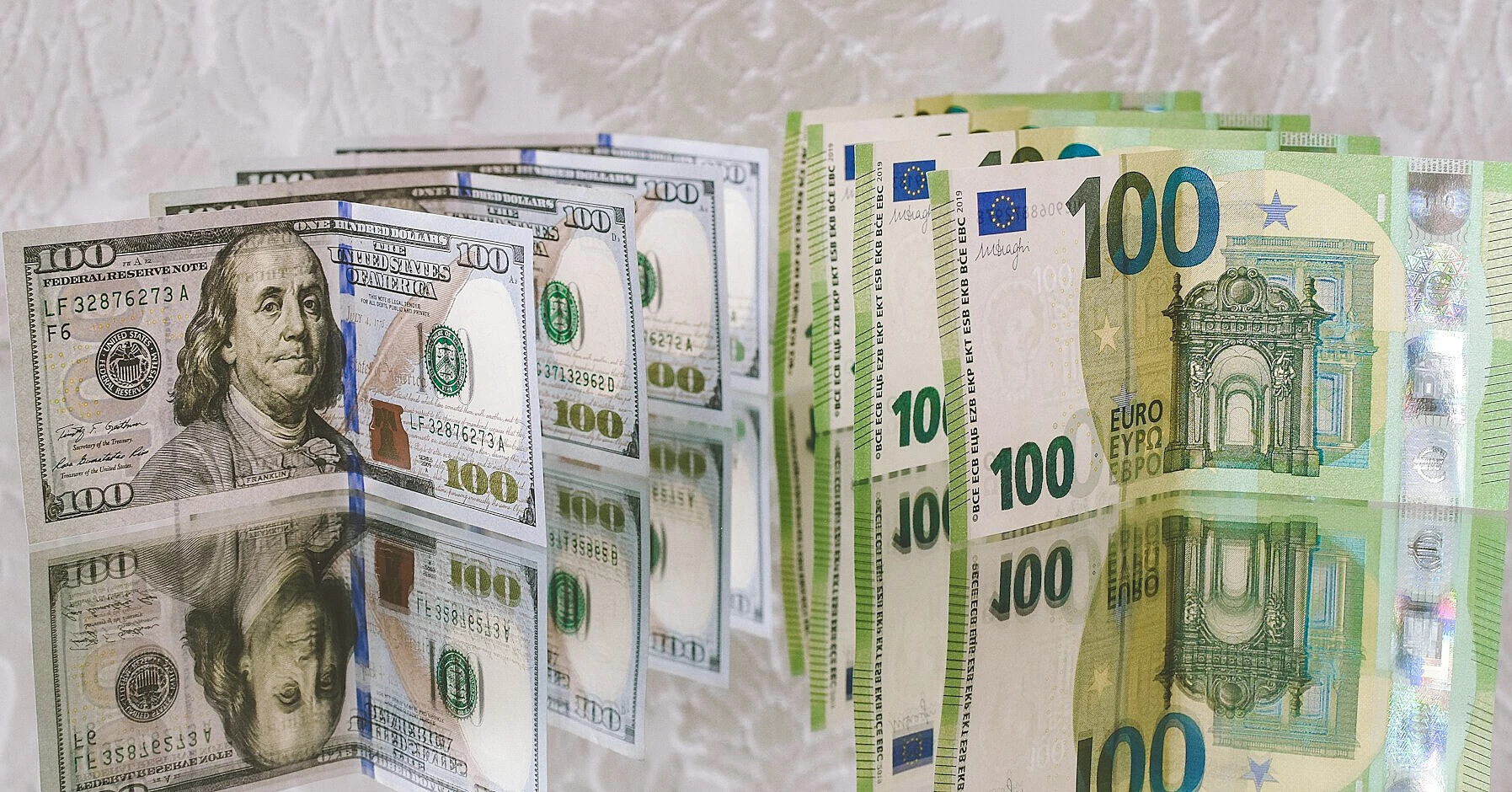
Ukrainians continue to look for ways to protect their savings from inflation and the possible weakening of the hryvnia. One of the most popular questions right now is which currency is more profitable to buy: the US dollar or the euro? In early November 2026, this question became especially relevant: the American currency approached the psychological mark of 46 UAH, while the European currency settled above 51 UAH.
At the same time, the choice between the dollar and the euro is not as obvious as it might seem. The dollar exchange rate in Ukraine depends primarily on the policy of the National Bank, the state of the balance of payments, international financial assistance, and demand for currency within the country. The euro, on the other hand, is additionally influenced by the international FOREX market, where the EUR/USD ratio can significantly change the value of the European currency against the hryvnia.
Let's figure out what is happening on Ukraine's currency market, how much the dollar and euro cost now, which currency has better growth prospects, and what is more profitable for Ukrainians to invest in — dollars or euros.
What is happening with the dollar and euro in Ukraine
As of November 11, 2026, the Ukrainian currency market is under pressure from increased demand for foreign currency. In late October – early November, an acceleration of the hryvnia's devaluation was observed, and the cash dollar in some exchange offices rose above 46 UAH.
The National Bank continues to adhere to a managed exchange rate flexibility regime. This means that the hryvnia is not tied to a rigid fixed value, but the NBU actively intervenes through currency interventions, smoothing excessive fluctuations.
Official NBU exchange rates as of November 11, 2026:
| Currency | NBU rate | Change per day |
| US Dollar | 45.5013 UAH | +8.90 kopecks |
| Euro | 51.0795 UAH | +26.43 kopecks |
Thus, the euro now costs more than the dollar not only in absolute terms, but also shows a more noticeable daily increase. However, this does not mean that the European currency will necessarily be more profitable to buy.
On the cash market, average quotes look as follows:
| Currency | Buying | Selling |
| Dollar | 46.05 UAH | 46.25 UAH |
| Euro | 51.50 UAH | 51.85 UAH |
In Ukrainian banks, the average selling price is about 46.04 UAH per dollar and 51.69 UAH per euro. Specific offers from banks and exchange offices may differ.
Why the dollar is rising in price and what to expect from the American currency
There are several reasons for the current weakening of the hryvnia:
1) high demand for currency from importers. Ukrainian enterprises have to purchase fuel, energy equipment, components, raw materials, and other goods abroad. Russian strikes on infrastructure additionally increase the need for imported supplies;
2) reduction of export opportunities. Problems with logistics, infrastructure damage, and restrictions on production activity prevent Ukrainian exporters from receiving and selling foreign currency earnings in the same volumes;
3) budget expenditures. Significant payments from the state budget increase the volume of hryvnia liquidity. Part of this money subsequently enters the currency market through demand from the population and businesses;
4) international financial assistance. The regular receipt of funds from foreign partners allows the NBU to maintain foreign exchange reserves and satisfy demand for foreign currency.
According to preliminary NBU data, Ukraine's international reserves increased by 4.2% at the end of October, to $49.1 billion. This is a serious resource for maintaining the stability of the hryvnia.
Dollar exchange rate forecast
According to financial analyst Andriy Shevchyshyn, during the week of November 9–14, the dollar exchange rate on the interbank market may be in the range of 45.15–45.65 UAH, and on the cash market — 45.70–46.30 UAH.
Banking expert Taras Lesovyi also estimated the possible dollar exchange rate range for November 9–15 within 45.0–45.7 UAH, noting the likelihood of gradual stabilization after the currency rush in early month.
This means that experts do not expect an immediate collapse of the hryvnia. However, the preconditions for further gradual appreciation of the dollar remain.
In the medium term, military actions, volumes of international aid, foreign trade deficit, and the NBU's ability to continue currency interventions will remain the main risk factors.
Euro: why the European currency may grow faster than the dollar
The situation with the euro is somewhat more complicated. Its value in Ukraine is determined by two main factors:
- The dollar-to-hryvnia exchange rate.
- The euro-dollar ratio on the international FOREX market (EUR/USD).
It is the second factor that distinguishes the European currency from the American one.
For example, if the dollar against the hryvnia barely changes, but the euro strengthens against the dollar on the international market, Ukrainians will still see an increase in the euro exchange rate.
In early November, the international EUR/USD pair is under pressure from the American currency. Strong US inflation data for October and hawkish statements from Fed representatives strengthened expectations of a rise in American interest rates. This became a negative factor for the euro.
On November 11, the EUR/USD pair was approximately around 1.1160. The strengthening of the dollar may limit further growth of the European currency even amid the hryvnia's weakening.
At the same time, the euro has its own supporting factors:
- Possibility of further monetary policy tightening by the ECB.
- Prospects for the European economy's recovery.
- Changes in demand for euros from international investors.
- Possible weakening of the US dollar if the Fed's policy changes.
- Improvement in economic indicators of the largest eurozone countries.
Thus, the euro exchange rate forecast in Ukraine depends not only on the situation inside the country, but also on how the EUR/USD ratio will change.
Euro exchange rate forecast
In the short term, the European currency may remain in the range of 50–52 UAH. This is exactly the range for November 9–15 named by banking expert Taras Lesovyi.
A more significant increase is possible if the hryvnia continues to weaken simultaneously with the strengthening of the euro against the dollar on FOREX.
But there is also an opposite scenario: if the American economy continues to show resilience and the Fed maintains a tight stance, the euro may grow slower than the dollar against the hryvnia.
Therefore, one should not rely solely on the higher value of the euro as a sign of its investment attractiveness.
What is more profitable to buy: dollars or euros?
To answer this question, it is necessary to consider not only the projected exchange rate but also the purpose of buying currency.
| Criterion | US Dollar | Euro |
| Current value | Around 46 UAH | Around 52 UAH |
| Main influence factor | NBU policy and the state of the US economy | EUR/USD rate and NBU policy |
| International role | Main reserve currency | One of the main world reserve currencies |
| Short-term risks | Inflation and Fed decisions | Weakness of the eurozone economy and EUR/USD fluctuations |
| Main advantage | High liquidity and prevalence | Convenient for spending in Europe |
| Main risk | Possible strengthening of the hryvnia | Possible decline in EUR/USD |
When is it more profitable to buy dollars?
The dollar suits those who:
- want to create a currency safety cushion;
- plan to keep savings for several years;
- consider currency as protection against hryvnia devaluation;
- are going to make purchases outside Ukraine in dollars;
- want to have the most liquid foreign currency.
When is it better to buy euros?
The euro may be preferable if:
- trips to European Union countries are planned;
- expenses for education or living in Europe are ahead;
- there are incomes or financial obligations in euros;
- an investor expects the European currency to strengthen against the dollar;
- it is necessary to diversify currency savings.
Should you buy dollars and euros now or wait?
One of the most common mistakes of private investors is attempting to guess the minimum exchange rate of a currency. For example, a person expects the dollar to fall from 46 to 45 UAH, postpones the purchase, but in the end faces a further rise in quotes.
Under current conditions, a strategy of gradually building up currency savings looks more reasonable. Instead of buying the entire necessary amount at once, one can divide the purchase into several parts and acquire currency with certain time intervals. This will reduce the risk of buying the whole amount at a local peak.
In addition, one should take into account the difference between buying and selling rates. For example, if an exchange office sells a dollar for 46.25 UAH and buys for 46.05 UAH, the difference is 20 kopecks. For the euro, with quotes of 51.85 and 51.50 UAH, the spread is already 35 kopecks. Therefore, for short-term investments, exchange costs can eat up part of the potential profit.
Also, do not forget about the alternative to cash currency — hryvnia deposits and domestic government bonds (OVHZ). With sufficiently high yields, hryvnia instruments may prove more profitable than simply holding dollars or euros if the hryvnia's devaluation is moderate.
Dollar or euro in 2026–2027: final forecast
In the coming months, both foreign currencies retain growth potential against the hryvnia. The reasons for this are high import demand, budget needs, military risks, and the dependence of the Ukrainian economy on external financing. However, the pace of appreciation of the dollar and euro may differ significantly.
For the American currency, the key factor will be the NBU's policy and Ukraine's ability to receive international financial assistance. If the regulator continues to actively conduct interventions and external financing remains regular, sharp exchange rate jumps can be avoided.
For the euro, an additional factor will be the situation on FOREX. If the dollar continues to strengthen due to the Fed's tight policy, the European currency may lag behind it in dynamics. If the ECB turns out to be more hawkish and the American economy begins to slow down, the euro will get additional chances for growth.
