
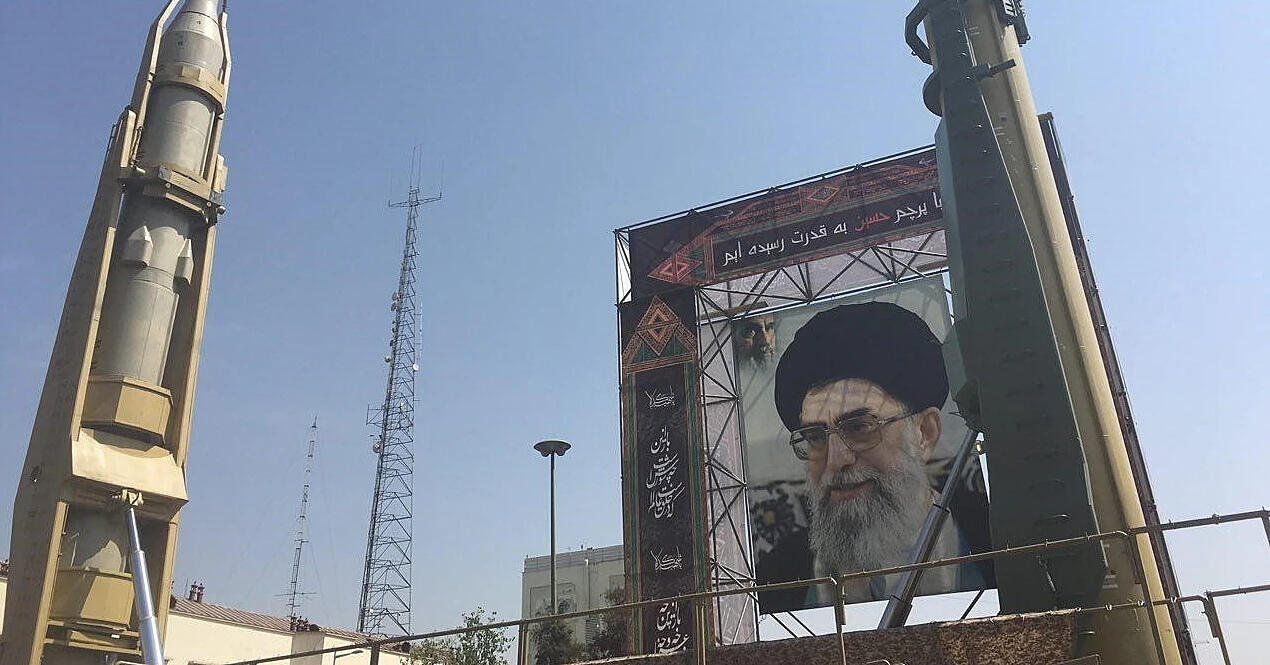
Iran has retained the ability to produce about 50 ballistic missiles per month despite months of US and Israeli strikes on the country's military infrastructure. This is about half of Tehran's pre-war production capacity, allowing it to replenish its arsenal even after massive losses.
This was reported on November 10 by Bloomberg, citing a Western military intelligence assessment.
According to a Western official familiar with the intelligence reports, Iran likely retains at least 1,700 ballistic missiles. Production of new munitions continues, although at roughly half the rate seen before the war began on February 28.
This assessment indicates that Tehran's missile capability remains significant, despite Washington's claims of seriously weakening Iran's military industry.
US Defense Secretary Pete Hegseth stated on November 10 that American operations have inflicted massive losses on Iran. In particular, he said that over 80% of the country's nuclear industrial base has been destroyed. However, this figure does not directly relate to ballistic missile production facilities.
The exact size of Iran's arsenals remains unknown. Former CIA analyst Jim Lamson, who now works at King's College London, suggests that Iran may also store thousands of Shahed-type attack drones.
According to him, available stockpiles of components allow Tehran to continue missile assembly even after damage to production infrastructure. The expert also emphasizes significant uncertainty in assessments, as neither pre-war stocks nor the quantity of weapons manufactured since the start of hostilities are precisely known.
Against this backdrop, the Islamic Revolutionary Guard Corps released a video showing what the Iranian side claims to be a new underground missile complex. There is no independent confirmation of the facility's characteristics.
According to Bloomberg Economics, Iran has used more than 4,900 Shahed-type attack drones and at least 2,200 ballistic missiles since the start of the war.
This puts significant strain on the air defense systems of the US and its allies. The agency estimates that at least 1,000 Patriot PAC-3 interceptor missiles were expended to counter Iranian attacks. Each costs about $4 million, while Bloomberg estimates annual production at roughly 650 units.
The high rate of interceptor use also matters for Ukraine, which needs additional Patriot missiles to defend against Russian strikes. However, the agency does not provide direct data on any reduction in supplies to Ukraine specifically due to Middle East expenditures.
Based on materials from: Bloomberg
