
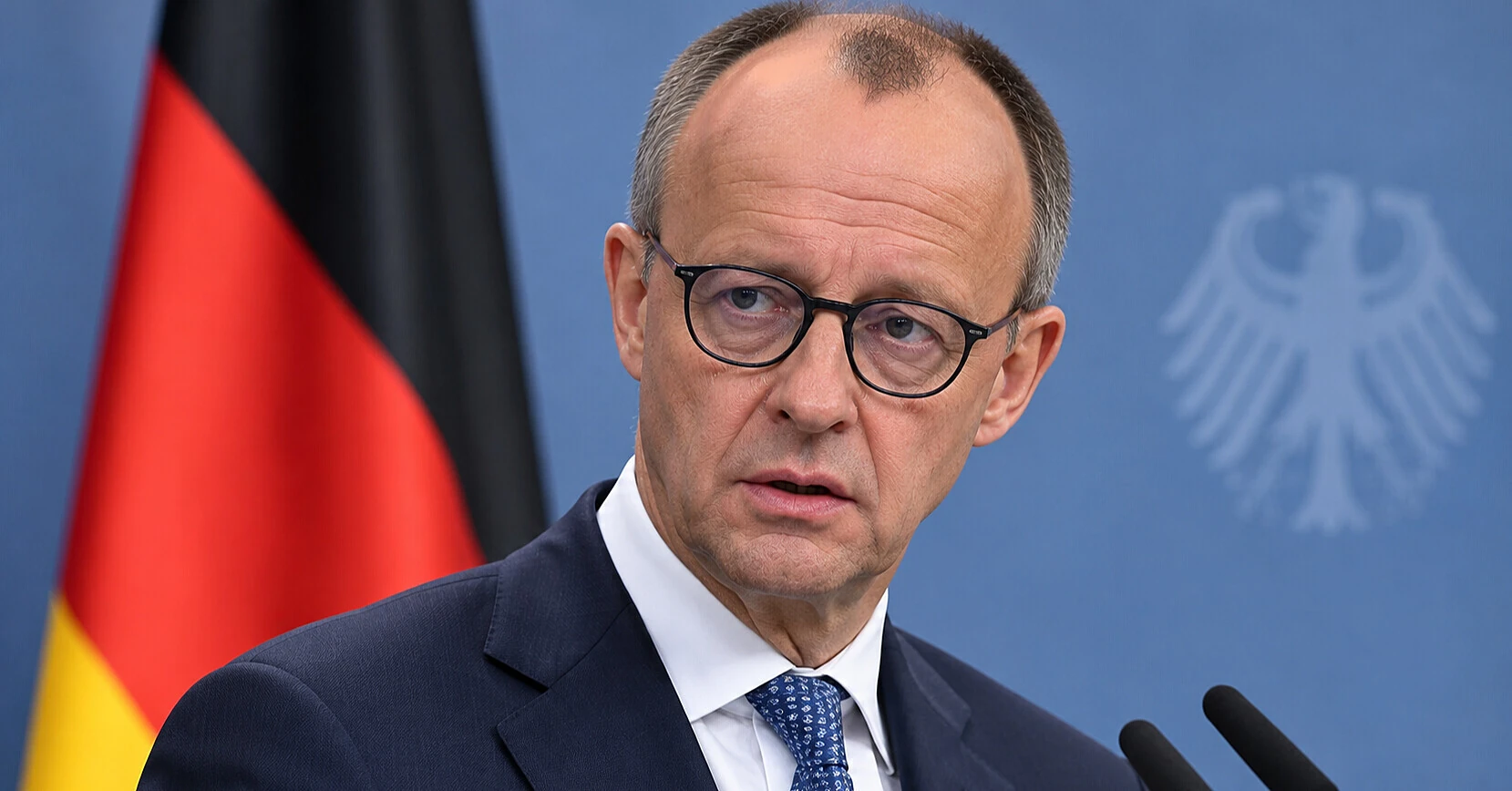
The German government allows the possibility of direct talks between Chancellor Friedrich Merz and Vladimir Putin after consultations on settling the war in Ukraine held in Abu Dhabi. Berlin believes that agreeing on common principles for the further negotiation process could create a basis for such contact.
This was reported on November 11 by the German newspaper Die Zeit. The corresponding position was voiced by a federal government spokesperson at a press conference in Berlin.
Answering a question about the chancellor's readiness to hold a conversation with the Russian president, the government spokesperson said that after the talks in the United Arab Emirates, grounds had emerged for further diplomatic contacts.
"Now in Abu Dhabi mutual understanding has been reached on the main directions. Now these agreements are being brought to the attention of the Russian president. And on this basis negotiations may follow," — said the German government spokesperson.
At the same time, Berlin clarified that this concerns principles agreed between representatives of Ukraine, the United States and European states, not agreements directly with Russia. These are precisely the points that should serve as the basis for subsequent consultations with Moscow.
No final decision on holding a meeting or phone call between Merz and Putin has yet been made. Specific timing of a possible contact has also not been announced.
Earlier, on November 9, deputy federal government spokesperson Steffen Mayer stated that the chancellor is in principle open to direct dialogue with the Russian leadership, but such a conversation must have a clear goal and real prospects for achieving results.
"We have always said that in principle we are ready for this, but the conversation must make sense. A conversation for the sake of conversation makes no sense," — Mayer emphasized.
According to him, appropriate conditions, a specific agenda and the readiness of the Russian side to seriously discuss a fair and sustainable end to the war in Ukraine are necessary for negotiations to take place.
The government spokesperson also noted that Berlin does not intend to participate in formal negotiations that cannot lead to a practical result.
Merz himself earlier did not rule out the possibility of a personal conversation with Putin during the G20 summit scheduled for December in the United States. The chancellor said that the German leader would at some point have to negotiate with the Russian president, but such a meeting would require thorough preparation.
The new signal from Berlin came after the completion of two days of talks between Ukraine, Russia and the United States in Abu Dhabi on November 10–11. The meeting became the first direct contact between Ukrainian and Russian delegations in several months, with American mediation.
Germany was represented at the consultations by Chancellor's foreign and security policy advisor Günter Sautter. Representatives of European states participated in separate consultations with the Ukrainian and American sides, but were not admitted to direct negotiations with the Russian delegation.
Berlin, together with Paris and London, insists on more active European involvement in discussing the future peace settlement and security guarantees for Ukraine.
Following the meeting in Abu Dhabi, Ukraine and Russia reached a preliminary agreement on a large-scale exchange of prisoners of war. At the same time, significant disagreements on territorial issues, cessation of hostilities and future security guarantees remain.
Germany has previously emphasized that it is first necessary to achieve an end to the war in Ukraine, and only then discuss broader issues of European security. This approach is coordinated with American and European partners.
Thus, Berlin views the possibility of contact between Merz and Putin as a potential next diplomatic step, not as a meeting already agreed upon. Whether it takes place will depend on the further negotiation process and Moscow's readiness to discuss concrete terms of a peace settlement.
Based on materials from: Die Zeit, Federal Government of Germany, Tagesschau.
