
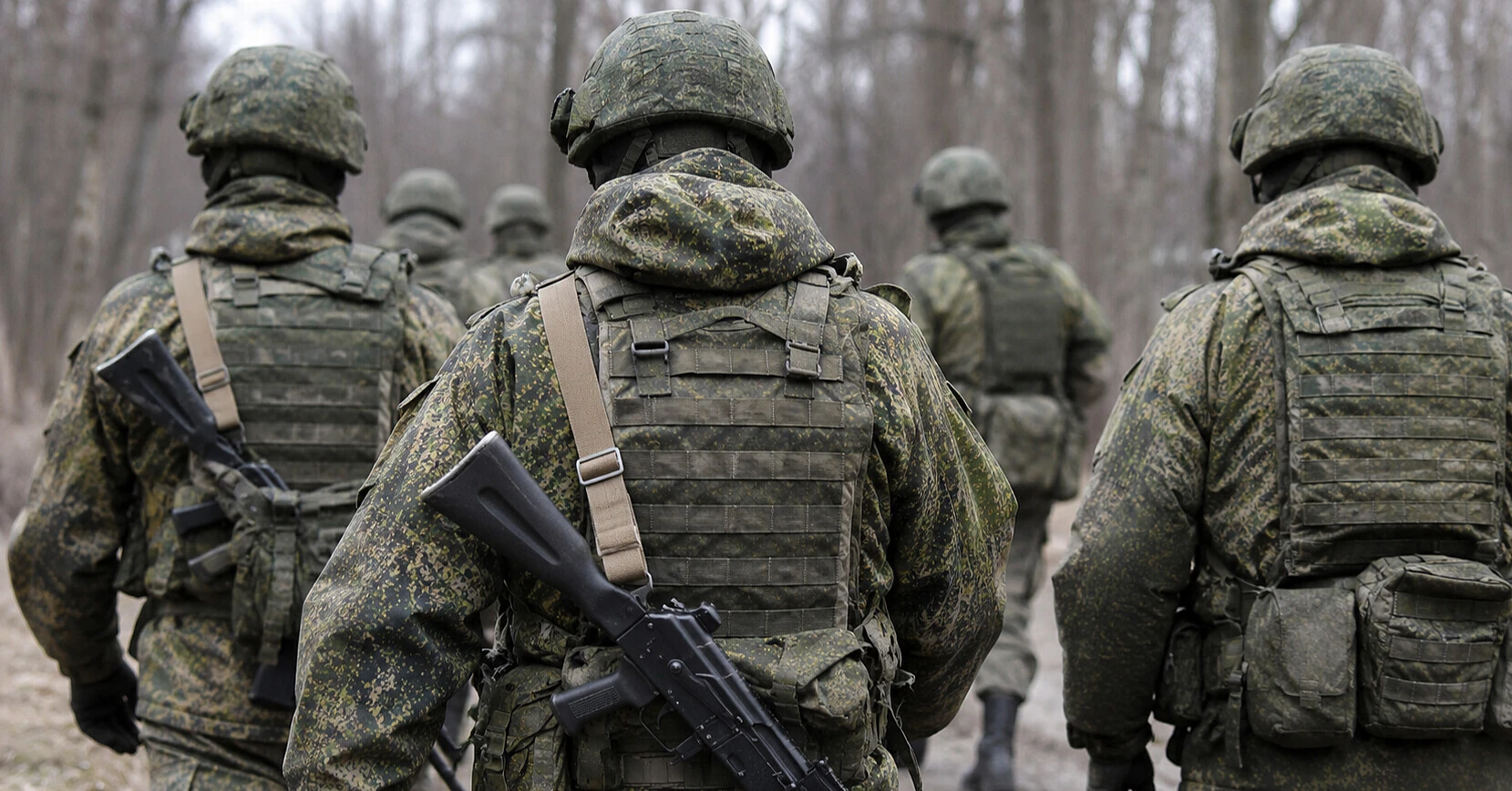
Russian authorities have registered the deaths of more than 11,000 foreigners who participated in the war against Ukraine on the side of the Russian Federation. The dead included natives of almost 100 countries, including states of the former USSR, Asia and Africa.
This was reported on November 11 by Bloomberg, citing confidential data from the Russian state statistical agency Rosstat.
Journalists studied a database containing more than 11 million death certificates. The documents indicate citizenship, place of birth, place of residence and circumstances of death.
The information was obtained by the Belarusian opposition group “Cyberpartisans” and the Ukrainian hacker group Silent Crow. The materials were subsequently passed on to Bloomberg and several other news outlets.
According to the obtained data, from February 24, 2022 until the end of August 2026, Russia registered 11,335 deaths of foreigners directly related to the war against Ukraine.
Researchers included in this category people who were born outside Russia or had foreign citizenship. At the same time, some of the dead already had Russian passports.
The connection of deaths with the war was established through special codes and wording in documents, including mentions of military operations, shelling and drones.
According to Bloomberg, the number of dead foreigners increased almost simultaneously with the overall losses of the Russian army. If in 2022 about 630 such deaths were registered, then in 2025 their number exceeded 5,500. Thus, the figure increased more than eightfold.
The largest group of dead consists of natives of former Soviet republics. A particularly significant number of cases is associated with Kazakhstan and the states of Central Asia.
About 3,700 of the dead had Ukrainian citizenship or were born in Ukraine after the restoration of its independence in 1991. According to preserved address data, most of them lived in the occupied territories of eastern and southern Ukraine.
After the start of the full-scale invasion, Russian authorities carried out forced mobilization of residents of the occupied Ukrainian territories. This practice also affected migrants from Central Asia who had obtained Russian citizenship.
At the same time, more than 6,000 people from the studied category had Russian citizenship at the time of death, although they were born outside the Russian Federation. Therefore, the obtained figures should not be considered solely losses of foreign mercenaries.
The study also showed that Russia gradually expanded the geography of recruitment.
In 2023–2024, the number of dead natives of Nepal increased noticeably among the casualties. In 2024–2025, the number of deaths of citizens of Sri Lanka and China grew, and from the end of 2025 — natives of Colombia, Kenya and Nigeria.
Separately, journalists identified about 340 dead natives of African countries. Most of these deaths occurred from 2025 onwards. Among the most represented states are Egypt, Cameroon, Nigeria, Kenya and Ghana.
In some cases, foreigners were lured with promises of high-paying work, Russian citizenship or cash payments. The authorities of several countries, including Kenya, Ghana, Kazakhstan and Kyrgyzstan, have previously expressed concern about such recruitment methods.
Russian authorities deny accusations of using deception in recruiting foreign nationals for military service.
According to Dmytro Usov, secretary of the Coordination Headquarters for the Treatment of Prisoners of War, by October 2026 Russia had recruited about 46,000 foreigners. Ukrainian military captured representatives of 59 countries.
At the same time, another estimate by Ukrainian intelligence suggests that the number of foreign fighters attracted by the Russian army is about 28,000 people.
The published database lacks information on the deaths of North Korean servicemen, despite the participation of DPRK units in combat operations on the side of Russia. Bloomberg suggests that Russian authorities may not have issued death certificates for these military personnel, as they operated as part of foreign units.
Journalists warn that the actual number of dead may be significantly higher. The data are especially incomplete for 2026, since registration of a serviceman’s death sometimes takes months or even years. In addition, some of the dead remain unidentified or are listed as missing in action.
Earlier, Bloomberg, based on the same database, reported about 400,000 registered deaths associated with Russia's war against Ukraine. This information covers the period until the end of August 2026 and does not reflect subsequent losses.
Rosstat acknowledged that in late October and early November its information systems were subjected to targeted cyberattacks. However, the agency stated that it found no evidence of a leak of confidential information.
The Russian statistical agency did not respond to Bloomberg's request regarding the content of the obtained documents. It is impossible to independently verify each entry in the database.
