
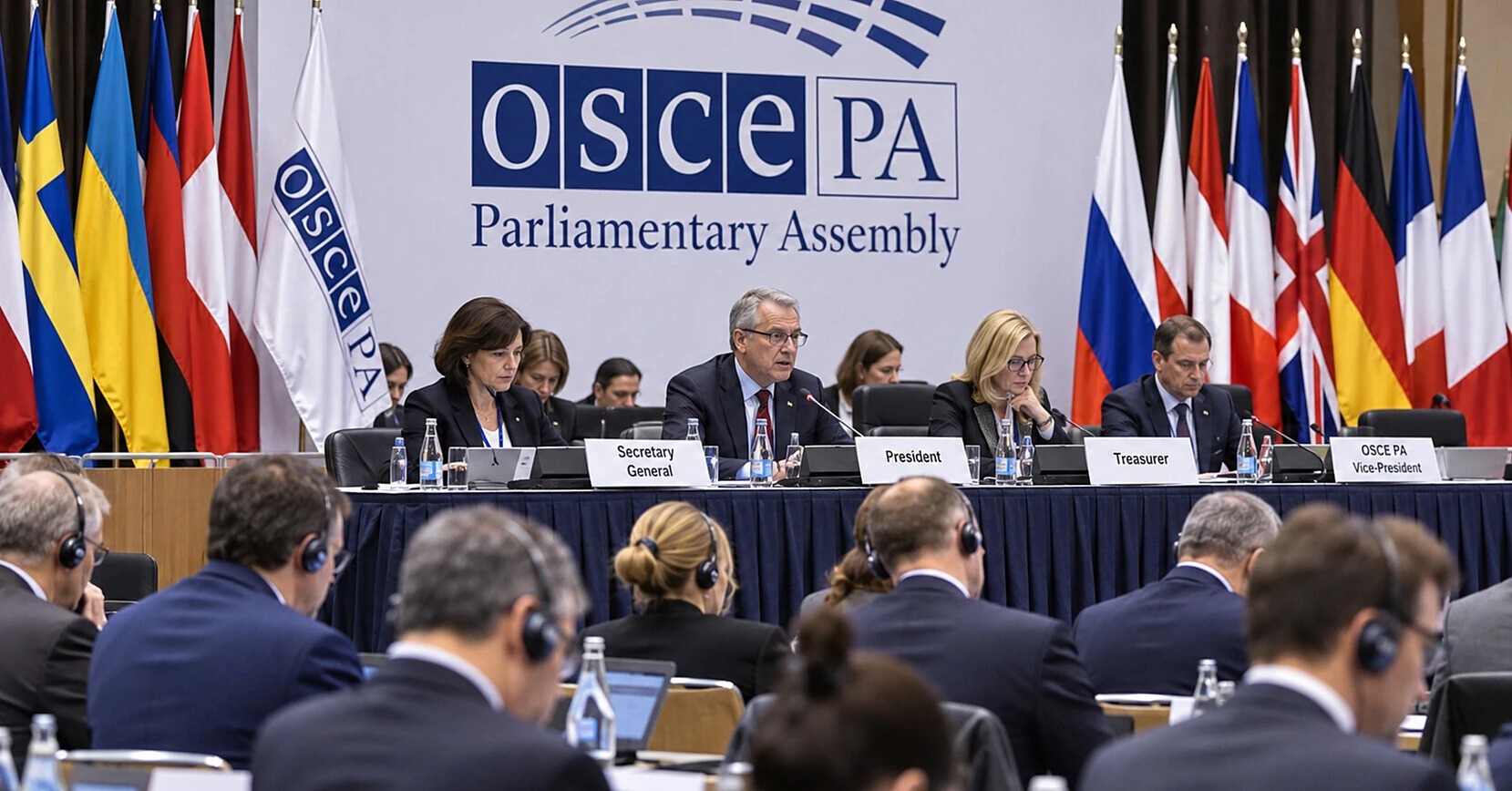
The OSCE Parliamentary Assembly has expressed serious concern over reports of the possible transfer of Vadym Golda, a staff member of the Special Monitoring Mission, from the temporarily occupied territory of Donetsk Oblast to Russia. According to available information, he may have been moved to a correctional treatment facility in Tambov Oblast.
This was reported on November 11 by the press service of the OSCE Parliamentary Assembly.
A joint statement was issued by OSCE Parliamentary Assembly President Mykyta Poturaiev and Special Rapporteur on the release of detained OSCE staff members Boris Dittrich.
OSCE representatives stressed that reports of Golda's possible transfer are of particular concern in light of similar actions by Russia regarding two other mission staff members, Dmytro Shabanov and Maksym Petrov.
Both were transferred in 2025 from occupied Ukrainian territories to correctional facilities on the territory of the Russian Federation.
The OSCE stated that it still does not have reliable and independently verified information about the conditions of detention and the state of health of all three detained staff members.
According to the human rights organization Ukrainian Legal Advisory Group, Vadym Golda's family received information about his possible transfer to Correctional Treatment Facility No. 7 of the Federal Penitentiary Service of Russia in Tambov Oblast.
The man last contacted his relatives on October 15, 2026. Earlier he reported the possible transfer of prisoners from the occupied territory of Donetsk Oblast and assumed that he might be moved on October 19.
According to human rights activists, the facility where Golda was allegedly taken is intended for the detention and outpatient treatment of prisoners with active tuberculosis, as well as alcohol and drug addiction.
However, the reasons for the possible placement of the OSCE staff member in such a facility remain unknown. His relatives claim that the man had no tuberculosis or such addictions before.
Human rights activists emphasize that the mere fact of Golda's possible presence in a specialized medical facility does not allow conclusions about his diagnosis. There is no independent confirmation of the detainee's health condition.
The OSCE Parliamentary Assembly reminded that the forced transfer of protected civilians from occupied territory to Russia should be assessed in light of Articles 49 and 76 of the Fourth Geneva Convention.
These provisions prohibit the deportation of protected persons from occupied territories and stipulate that accused or convicted residents of such territories must be detained within the occupied territory.
OSCE representatives demanded that the Russian authorities immediately provide reliable information on the exact whereabouts of Vadym Golda, Dmytro Shabanov and Maksym Petrov, their state of health and conditions of detention.
In addition, the organization insists on ensuring proper medical care, safety and constant contact with relatives for the detainees.
A separate demand concerns granting unimpeded access to the prisoners for representatives of the International Committee of the Red Cross and the OSCE.
The statement also calls on the OSCE Chairmanship, participating States and parliamentarians to intensify diplomatic efforts for the release of all three Ukrainians.
The Parliamentary Assembly recalled that as early as July 8, 2026, in The Hague Declaration, they demanded their immediate release without any preconditions.
The situation was earlier commented on by Ukrainian Foreign Minister Andrii Sybiha. On November 9, he said that the Ukrainian side had learned of Golda's possible transfer to Tambov Oblast.
According to the minister, if this information is confirmed, Golda would become the third OSCE monitoring mission staff member illegally transferred by Russia from occupied Ukrainian territory.
Sybiha stressed that such actions could qualify as war crimes. Ukraine intends to raise the issue of the release of the detained staff members at a meeting of the OSCE Permanent Council.
Vadym Golda, Dmytro Shabanov and Maksym Petrov have been in Russian custody since April 2022. All three were staff members of the OSCE Special Monitoring Mission to Ukraine and performed official duties in Donetsk and Luhansk oblasts.
In September 2022, Russian-controlled judicial bodies sentenced Shabanov and Petrov to 13 years in prison. In July 2024, Golda was sentenced to 14 years in prison on charges of espionage.
The OSCE does not recognize the legality of these court decisions and consistently demands the release of its staff members.
The organization emphasizes that the persecution of international observers poses a threat not only to specific individuals, but also to the very possibility of conducting international monitoring missions in the future.
As of November 11, the Russian side has not provided the OSCE with independently verifiable information about the whereabouts and state of health of all three detainees.
Based on materials from: OSCE Parliamentary Assembly, Ukrainian Legal Advisory Group, OSCE.
