
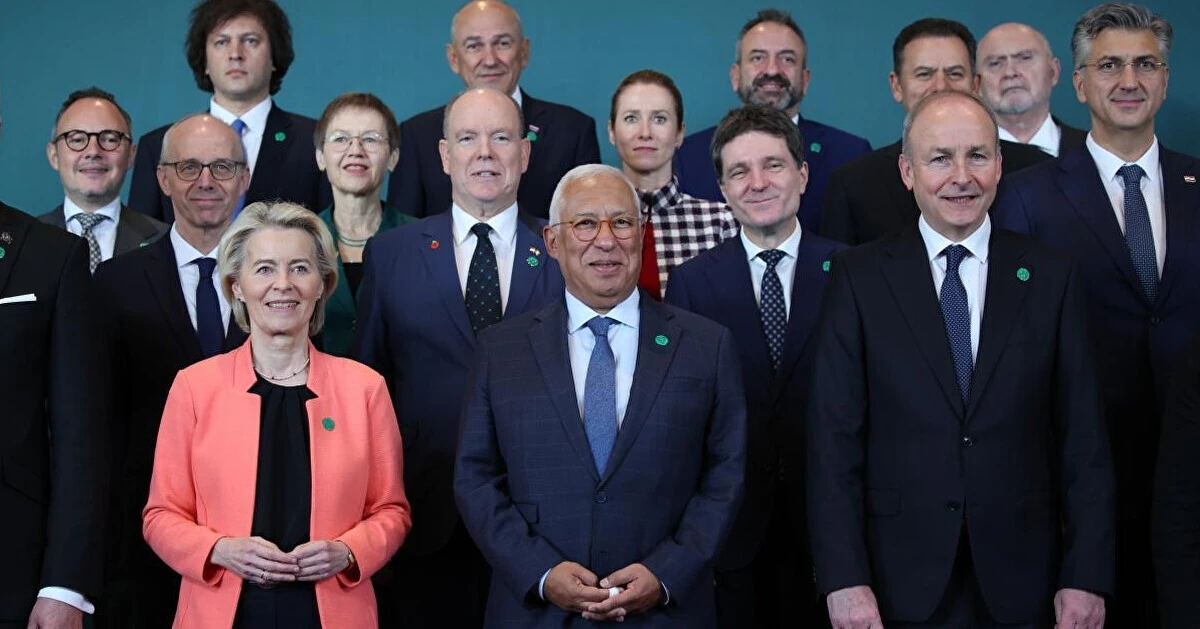
France and Germany are not ready to transfer to the leadership of the European Union the exclusive right to represent Europe at peace negotiations on Ukraine. Despite agreements on involving Europeans in the negotiation process, disagreements have emerged among EU countries over who exactly should negotiate with Russia.
Politico reported this on 13 November, citing European diplomats and officials ahead of the informal EU summit in Dublin.
According to the publication, at least three groups with different views on future representation have formed in the EU. Currently, the President of the European Council, Antonio Costa, is gaining the most support, but France and Germany seek to maintain their own participation in the negotiations.
Costa's candidacy was supported by the Prime Ministers of Estonia and Luxembourg, Kristen Michal and Luc Frieden, as well as the Polish side. Italian Prime Minister Giorgia Meloni, who proposed discussing this issue at the summit, also stated that she would not object to such an appointment.
Supporters of Costa argue that his position provides the necessary mandate to represent all EU states, and his previous experience as Prime Minister of Portugal makes him an acceptable candidate for various European capitals.
Instead, German Chancellor Friedrich Merz spoke in favor of maintaining the current consultation format, which includes Germany, the United Kingdom, France, Italy and Poland.
"We are also working on this task together with five representatives - Germany, the United Kingdom, France, Italy and Poland. I see no problem in maintaining this format," Merz said on 12 November.
France, according to Politico's interlocutors, is also not interested in Brussels obtaining a monopoly right to represent Europe. Paris seeks to preserve its own diplomatic influence, particularly given its status as a permanent member of the UN Security Council and a nuclear power.
Another possible EU representative is the head of European diplomacy, Kaja Kallas. However, her candidacy is controversial. Some diplomats believe that her tough stance on Moscow could complicate negotiations with the Kremlin. Others are convinced that such a stance is an advantage and Europe should not coordinate its candidate with Russia.
Estonian Prime Minister Michal proposed considering Kallas as a possible second EU representative alongside Costa.
European leaders are unlikely to officially appoint a negotiator at the 13 November meeting. According to a senior EU official, the discussions may end only with reaching a common understanding of the future representation format.
Earlier, President of Ukraine Volodymyr Zelensky and US representatives Steven Witkoff and Jared Kushner reported on agreements regarding Europe's participation in the next round of negotiations. According to Kushner, Vladimir Putin expressed readiness to try an expanded format.
At the same time, European governments are sceptical about the possibility of a quick breakthrough in negotiations. As Politico reports, after consultations in Abu Dhabi, EU representatives briefed European ambassadors on their results. One diplomat noted that Russian demands remain as maximalist as in previous years.
