
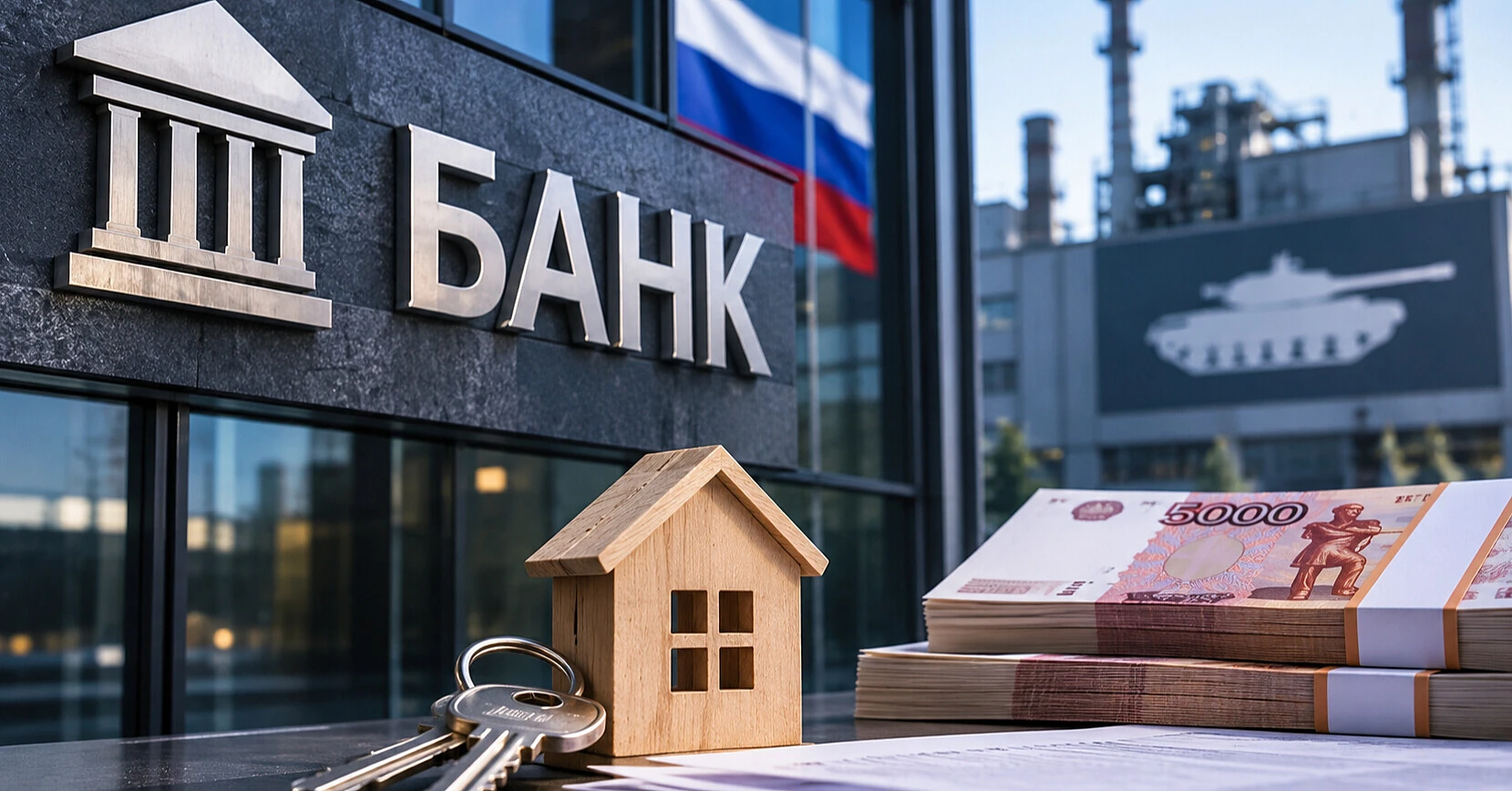
The Main Intelligence Directorate of the Ministry of Defense of Ukraine on November 16 published data on 11 Russian banks operating in the temporarily occupied territories, serving the military-industrial complex of the Russian Federation and participating in schemes to circumvent international sanctions.
The information was published in the "War Finances" section of the War&Sanctions portal, which the GUR develops jointly with the Office of the President of Ukraine and the National Bank.
According to intelligence, Russia uses the banking system in the occupied territories for their forced integration into its own financial space. In particular, through banking institutions, the occupation authorities implement preferential mortgage lending programs, which also contribute to the spread of Russian citizenship and illegal trafficking of real estate of Ukrainians.
One of such banks is "RostFinance", which has deployed a network of branches in Donetsk, Luhansk, Mariupol, Berdyansk, Alchevsk, and Makiivka. The institution serves occupation administrations and enterprises cooperating with Russia.
As established by the GUR, "RostFinance" participates in the Russian state program "New Territories", under which mortgage loans at 2% per annum and loans secured by real estate at rates from 21% are offered in the occupied lands.
Ukrainian intelligence emphasizes that such financial mechanisms are used for forced introduction of the ruble, stimulating the acquisition of Russian passports and legalizing the illegal expropriation of property of Ukrainian citizens.
The updated list also includes "Genbank", which after the occupation of Crimea in 2014 became one of the main financial institutions of the occupation administration of the peninsula. According to the GUR, the bank expanded its activities to other occupied territories, opening units in Donetsk, Luhansk, and Makiivka.
Another institution is the "Black Sea Bank for Development and Reconstruction". According to intelligence, it uses assets and property of the Ukrainian bank illegally expropriated after the occupation of Crimea. At the same time, 98.15% of its shares are under the control of the occupation administration of the peninsula.
A separate part of the published materials concerns schemes to circumvent international financial restrictions and support the Russian military-industrial complex.
In particular, the GUR reports that "Moscow Credit Bank" uses alternative payment systems for international settlements and participates in financial operations related to the import of military and dual-use goods. Among the described mechanisms are transfers through the Chinese payment infrastructure and conversion of funds into cryptocurrency assets.
Intelligence also points to the activities of "Sovcombank", which, according to its data, participates in alternative international settlements and serves Russian enterprises related to the execution of defense orders. Among them are manufacturers of military equipment and suppliers of components for the defense industry.
The list includes other financial institutions that lend to Russian defense enterprises, provide state contracts, or help to conduct payments bypassing international restrictions.
After the update, the "War Finances" database contains information about 40 banks, financial institutions, and payment systems. Some of the published organizations are already under sanctions of Ukraine and international partners. The new update of the portal in itself does not mean the introduction of additional sanctions.
The GUR calls on international partners to strengthen control over cross-border payments, synchronize sanctions against the Russian financial sector, and more thoroughly check the connections of clients of foreign banks with enterprises of the Russian military-industrial complex and structures of the occupation authorities.
The "War Finances" section started working in September 2026. Its goal is to systematize information about the financial infrastructure that helps Russia maintain military production, conduct international settlements, and ensure the operation of occupation administrations.
Based on materials: GUR MOU, War&Sanctions
