
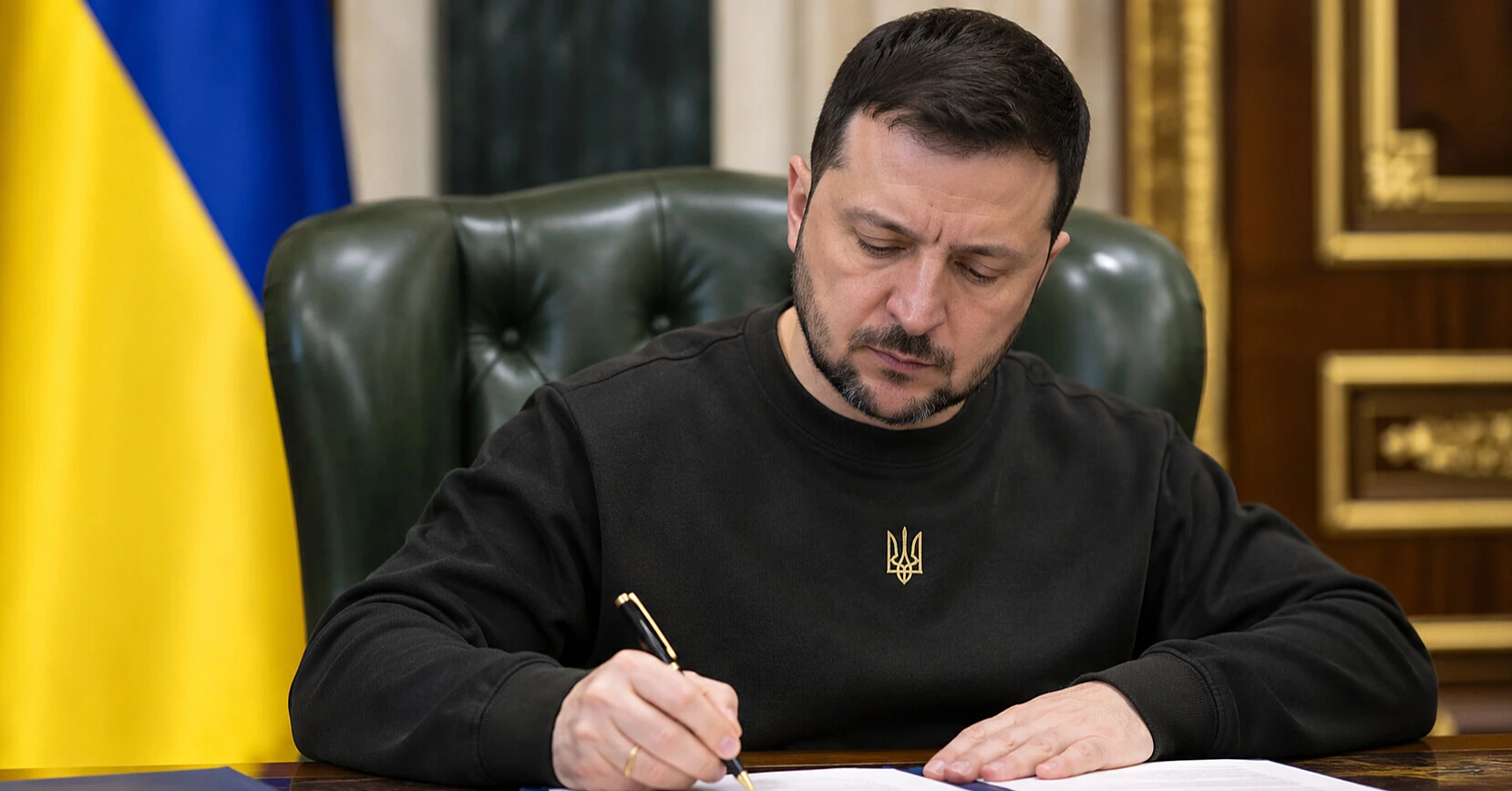
President of Ukraine Volodymyr Zelensky on November 16 signed two decrees introducing new sanctions against Russia. The restrictions affected seven maritime vessels that transport weapons and military equipment for the Russian army, as well as six Russian officials involved in the forced passportization of Ukrainians in the temporarily occupied territories.
This was reported by the Office of the President of Ukraine.
The first sanctions package targets seven vessels under the Russian flag. According to Ukrainian authorities, they are regularly used to transport large shipments of weapons, ammunition, military and other equipment intended for Russian troops.
Most of these vessels belong to Russian companies "M Leasing" and "MG-Flot", which are already under sanctions by Ukraine and a number of Western states.
Five of the seven vessels have previously come under US sanctions. Two of them are also subject to restrictions by the European Union, the United Kingdom, Canada, Switzerland and Japan.
Advisor – Commissioner of the President of Ukraine for Sanctions Policy Vladyslav Vlasiuk explained that the new restrictions should hinder the access of these vessels to foreign ports and the receipt of necessary services.
According to him, the next step could be the introduction of personal sanctions against the captains of vessels involved in transportation for the Russian army.
The second sanctions package concerns six Russian officials who contribute to the establishment of occupation control over Ukrainian territories.
It refers to representatives of Russian state structures involved in the implementation of the policy of forced passportization of residents of the occupied parts of Donetsk, Luhansk, Zaporizhzhia and Kherson regions, as well as Crimea and Sevastopol.
Among the persons included in the sanctions list are Deputy Head of the Federal Bailiff Service of Russia Valentina Kazakova and Head of the Main Directorate of the Ministry of Internal Affairs of the Russian Federation for Krasnodar Krai Oleg Agarkov.
Kazakova is already under US sanctions, and Agarkov – under restrictions by Canada.
The Office of the President emphasized that forced passportization is used by Russian authorities to control the population of the occupied territories.
In particular, obtaining Russian citizenship becomes a condition for access to medical care, pension payments, employment and education. Moreover, having a Russian passport allows occupation authorities to register residents for military service.
Ukrainian authorities also report threats of seizure of children used to coerce citizens into obtaining Russian documents.
Sanctions decisions were enacted by Decree No. 1118/2026 and Decree No. 1119/2026.
Ukraine intends to pass information about the new restrictions to international partners for their coordination and possible expansion to other jurisdictions.
