

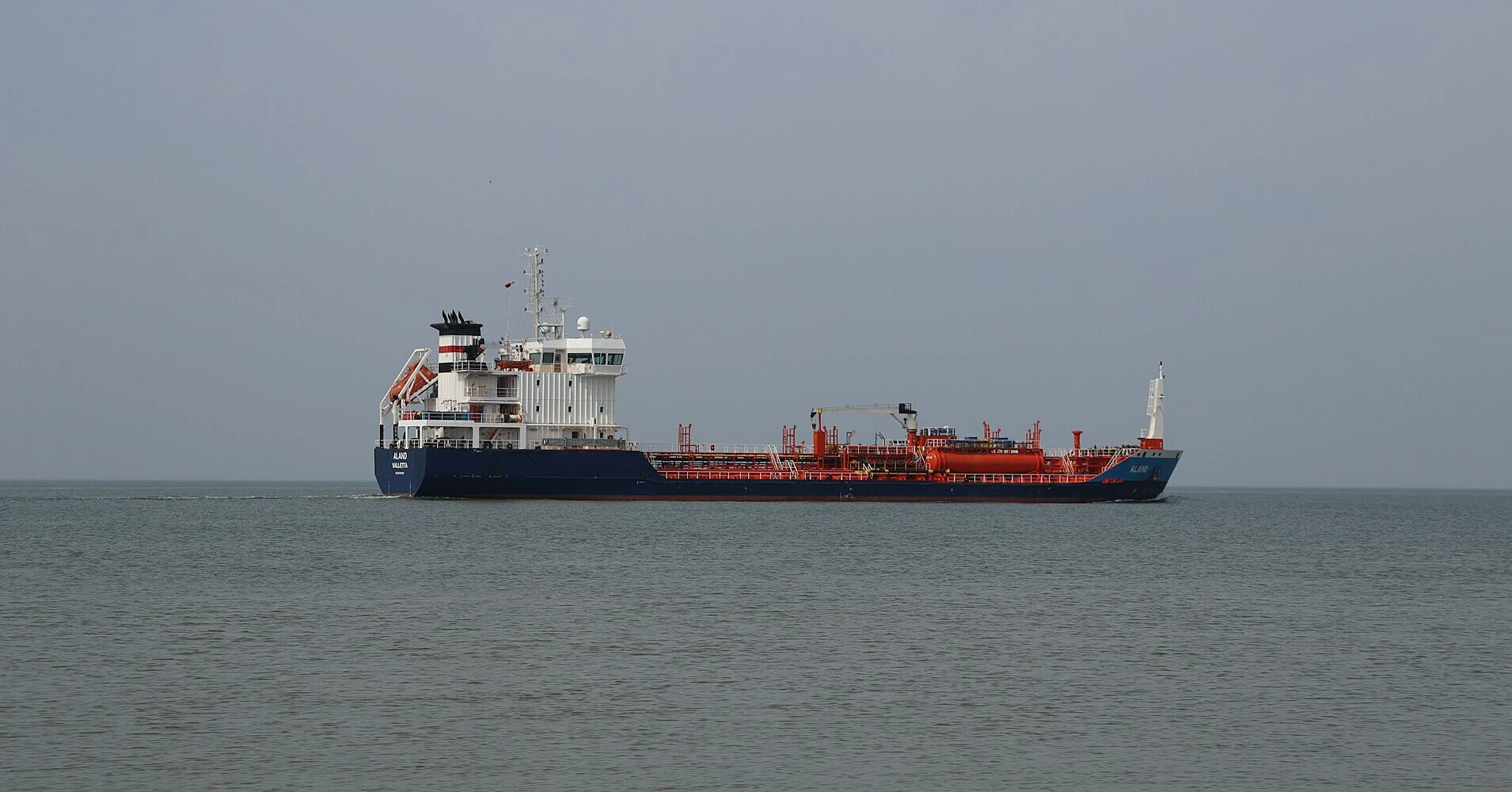
Russia, against the backdrop of fuel shortages, is actively purchasing petroleum products abroad, using maritime routes and tankers, some of which are under international sanctions. From July 18 to October 22, 2026, around 989 thousand tons of fuel and high-octane additives were delivered to Russian ports.
The Main Intelligence Directorate of the Ministry of Defense of Ukraine reported this on November 17, publishing the results of a study of maritime deliveries of petroleum products to Russia.
According to GUR, during this period Russia received 39 shipments of fuel on 30 tankers. The largest share of imports was gasoline - 724.2 thousand tons, or 73.2% of the total volume. Diesel fuel accounted for 128.1 thousand tons (13%), Jet A-1 aviation fuel - 106.7 thousand tons (10.8%), and high-octane additives - 30 thousand tons (3%).
The main receiving points were ports in northwestern Russia. Vitino and Murmansk accounted for 42.3% of supplies, while 32.8% went to the Baltic ports of Vysotsk and St. Petersburg. The Far Eastern ports of Vladivostok and Nakhodka received 24% of imported petroleum products.
Vitino and Vysotsk proved especially important for gasoline supply. Through these two ports passed 15 shipments of fuel totaling 573 thousand tons - about 58% of all maritime imports during the studied period.
Of the 30 tankers involved in transportation, 13 are under sanctions from the European Union, the United Kingdom, the United States, or other partner states. Two more vessels - HANNA and CAPIBARA - are only on Ukrainian sanctions lists. The remaining 15 tankers, according to intelligence, are not under sanctions.
GUR separately focused on transshipment of petroleum products between vessels at open sea. At least 216 thousand tons of fuel, or 22% of the total volume, were delivered to Russia in this way. Operations were carried out, in particular, near the Egyptian ports of Damietta and Port Said, as well as near the Spanish port of Ceuta.
By tanker loading locations, the largest volumes came from Egypt - 364.7 thousand tons, Morocco - 219.1 thousand tons, South Korea - 191.1 thousand tons, and Turkey - 104.5 thousand tons. At the same time, intelligence emphasizes that the country of loading is not necessarily the country of origin of the fuel, as some ports are used for transshipment of cargo.
The origin could be reliably established for approximately 264 thousand tons of imported products. In particular, 189 thousand tons of gasoline came from the Indian refinery Nayara Energy, 49.13% of whose shares are controlled by the sanctioned Russian company "Rosneft". Another 58.5 thousand tons of aviation fuel was shipped by the Egyptian Midor plant on behalf of the state corporation EGPC.
GUR links the growing need of Russia for foreign fuel with damage to its refining capacity as a result of Ukrainian long-range strikes. The agency also notes that transshipment between tankers, disabling automatic identification systems, and changing declared routes are used to bypass sanctions restrictions.
Sources: GUR MOU