

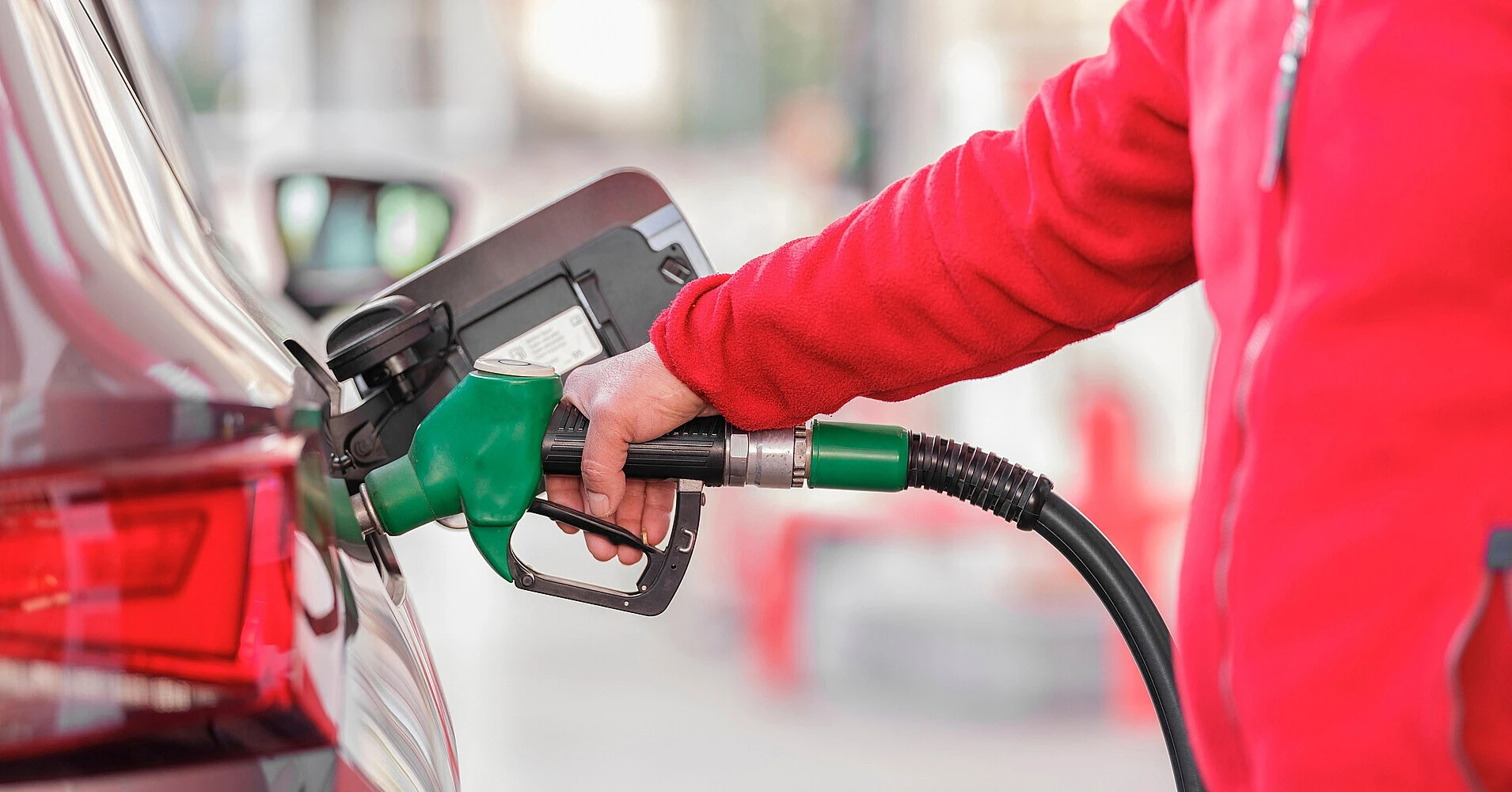
During a check of diesel fuel dispensing accuracy at Ukrainian gas stations, experts found underfilling of more than 0.5% at eight out of 17 checked networks. The largest deviation was 2% of the paid volume. With current high diesel prices, such a difference could lead to noticeable additional costs for drivers.
This is evidenced by the results of a study by the Institute of Consumer Expertise, published on November 17.
Experts checked the accuracy of diesel dispensing at networks of various price segments, including OKKO, WOG, UKRNAFTA, KLO, SOCAR, AMIC, BRSM-Nafta and a number of regional operators.
The largest underfilling based on the results of control measurements was recorded at OVIS - 2%. At the price of 106 UAH/L cited in the study, this means additional costs for the buyer of about two hryvnias from each actually received liter.
At BRSM-Nafta, the deviation was 1.75%, at VST (Odesa) - 1.65%. According to the researchers' calculations, taking into account underfilling, the actual cost of a liter of diesel in these networks increased respectively to approximately 104.70 and 105.61 UAH.
The group with underfilling of more than 0.5% also included Dneprnafta and MARKET - 0.95% each, Diesel-Discount - 0.85%, MANGO - 0.75%, and MARSHALL - 0.70%.
However, in four of the checked networks, experts recorded slight overfilling of fuel. The largest positive deviation was found at KLO - 0.20%. At OKKO it was 0.15%, at UKRNAFTA - 0.10%, and at WOG - 0.05%.
Another five networks showed results within the 0.5% threshold accepted for the study. At 24/7, AMIC, and Autotrans, no deviations were recorded. At SOCAR and BVS (Poltava), the underfilling was 0.10%.
To understand possible losses, experts gave an example: if when filling 50 liters, the underfilling consistently amounts to 2%, the driver will receive about one liter less of diesel. In the case of filling 500 liters, the difference at the same deviation would reach 10 liters.
The cause of inaccurate fuel dispensing may be improper calibration of fuel dispensers or technical interference in their operation. However, the fact of deviation during a control measurement alone does not prove intentional actions by the station employees or management.
According to the Institute, fuel market operators also report a shortage of specialists in repair and adjustment of refueling equipment.
The study results have limitations, though. The open publication does not provide the addresses of the checked gas stations, the dates of measurements, or the number of repeated tests. Therefore, the obtained indicators characterize specific control measurements, not the operation of all stations of the respective networks.
The study is also not an official inspection by a government supervisory body. To establish the causes of deviations and possible violations, a separate technical and metrological inspection of equipment is required.