

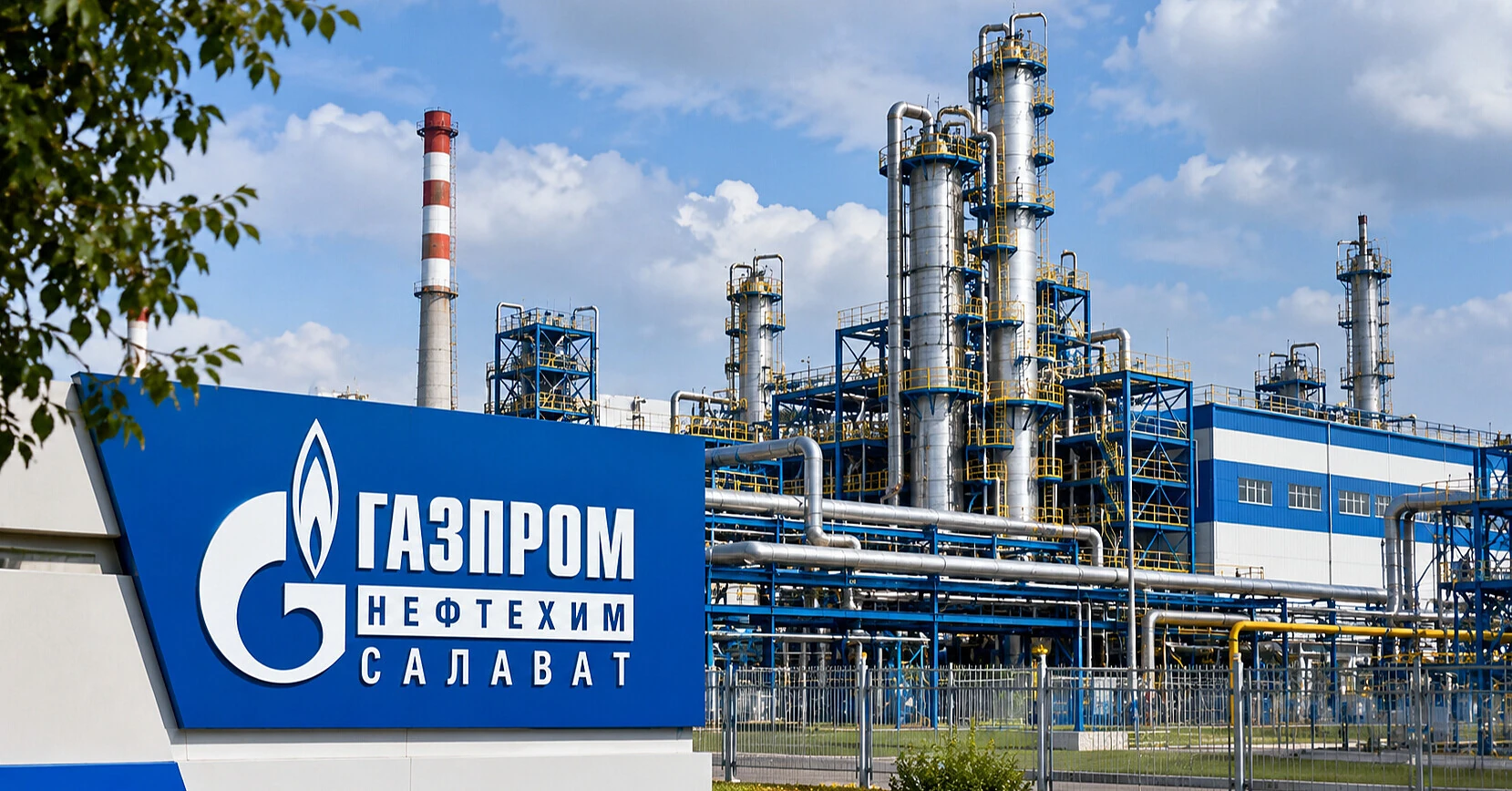
The Special Operations Forces of the Armed Forces of Ukraine have officially confirmed the destruction of one of Russia's largest petrochemical complexes — Gazprom Neftekhim Salavat in Bashkortostan. The strike was carried out on the night of November 17 by Ukrainian long-range drones.
This was reported by the press service of the Special Operations Forces of the Armed Forces of Ukraine.
According to the military, the operation was carried out by Deep Strike units of the SSO. Ukrainian drones traveled about 1,500 kilometers and hit the industrial complex in the city of Salavat.
The General Staff of the Armed Forces of Ukraine also confirmed the destruction of the enterprise. According to the Ukrainian command, explosions and a fire occurred at the plant after the hits.
As early as the morning of November 17, local residents reported explosions and a large fire in the industrial zone of Salavat. The independent publication Astra analyzed photographs from eyewitnesses and determined that the fire sources were located on the territory of the petrochemical complex.
Russian authorities confirmed a massive drone attack on industrial zones of Ufa and Salavat. However, the Bashkortostan State Committee for Emergency Situations claimed that Russian air defense shot down more than 50 drones, enterprises continue to operate normally, and there is no critical damage.
Gazprom Neftekhim Salavat is among Russia's largest oil refining and petrochemical enterprises. According to the SSO, the complex is capable of processing about 6 million tons of oil and 4 million tons of gas condensate per year.
The enterprise produces more than 150 types of products, including motor gasoline, diesel fuel, fuel oil, road bitumen, sulfur, ammonia, urea, styrene, and polyethylene.
Part of the output is used to support Russia's military industry and army. The Ukrainian command emphasizes that strikes on such facilities are aimed at reducing Russia's military-economic potential.
The complex is owned by a structure of Russia's Gazprom and unites oil refining, gas chemical, and other production facilities.
A day before the attack, on November 16, the European Union added Gazprom Neftekhim Salavat to its sanctions list. The restrictions are related to the role of Russia's oil industry in financing the country's state budget.
This is not the first attack on the enterprise. In October 2026, the complex was already hit by drones, after which a fire was also reported at the industrial site.
The exact extent of damage after the November 17 attack and the possible impact on production capacity are not yet determined. There is no confirmed information about the shutdown of the enterprise.
Based on materials from: Special Operations Forces of the Armed Forces of Ukraine, General Staff of the Armed Forces of Ukraine, Astra.