

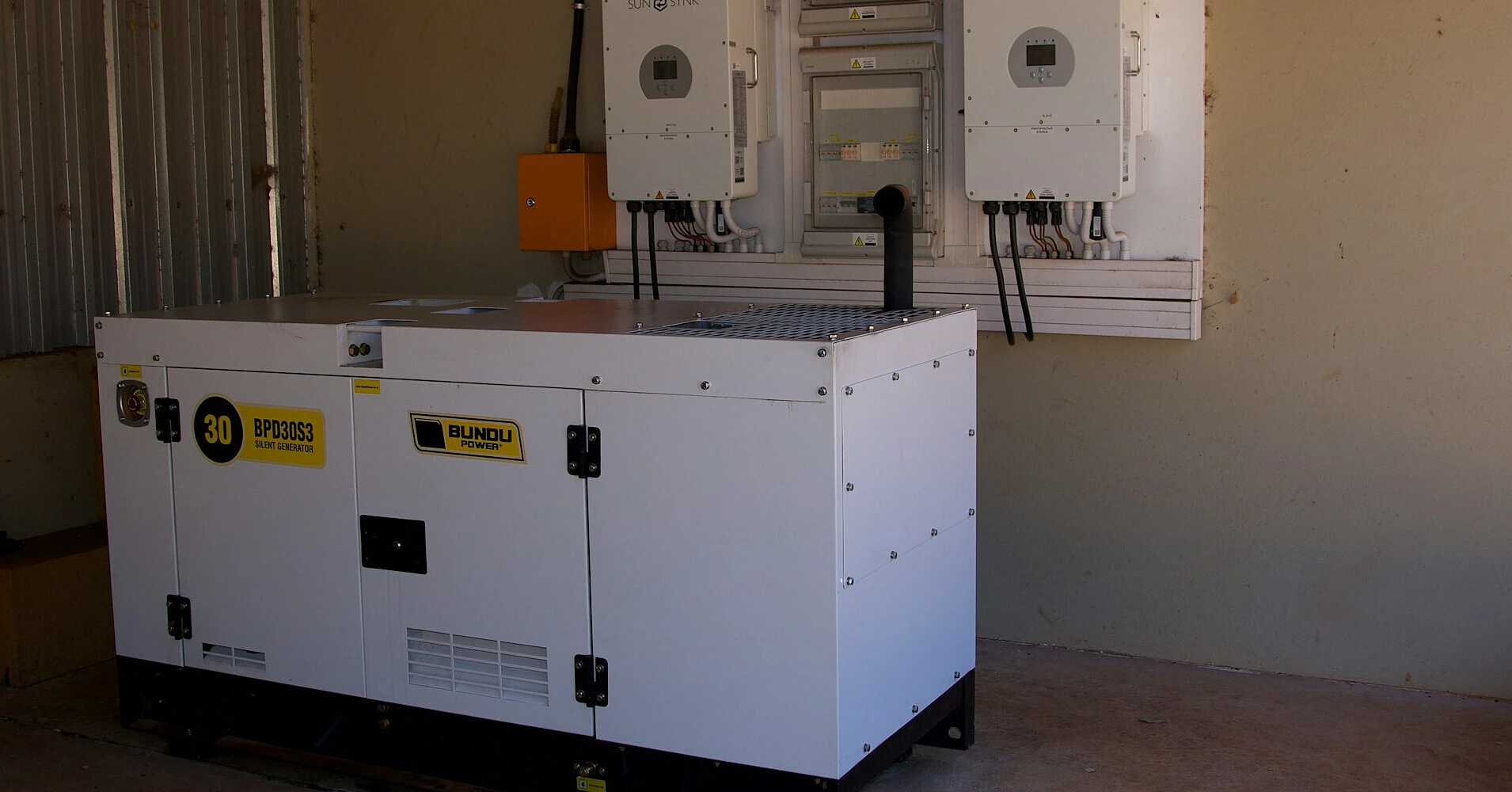
Ukraine has introduced new rules for using backup generators for temporary power supply to consumers during large-scale and prolonged blackouts. Such installations will be able to feed electricity into local grids under a simplified procedure, without obtaining the standard connection service.
The National Commission for State Regulation of Energy and Public Utilities (NERC) announced this on November 18. The regulator approved the procedure for commercial metering of electricity fed by backup generators into the grids of distribution system operators. Relevant amendments were made to Resolution No. 555 of May 31, 2022.
Under the new rules, connection and disconnection of generators will be carried out in agreement with and under the supervision of the distribution system operator (DSO). The DSO will determine technically feasible connection points. Compliance with electrical safety requirements remains mandatory.
Separately, the accounting of generated electricity is regulated. Distribution system operators must ensure the formation and transmission of data on the volumes of electricity fed into the grid, record the actual period of generator operation, and final meter readings after its use ends. The created metering points can be reused for other backup installations.
Generator owners or users can also sell the generated electricity and receive payment for it. However, to do so, they must become a participant in the electricity market and fulfill contractual requirements stipulated by law.
In particular, a market participant must sign an imbalance settlement agreement with the transmission system operator and independently bear financial responsibility for imbalances or transfer it to another responsible party through joining a balancing group. Therefore, simplified generator connection does not automatically mean automatic right to sell electricity without preparing the required documents.
NERC explained that the new mechanism will allow communities to attract additional backup power sources, including generators from the State Emergency Service, to maintain power supply during accidents and prolonged outages. The decision was made amid damage to energy infrastructure and the need to provide consumers with alternative electricity sources.
Based on materials from: NERC