

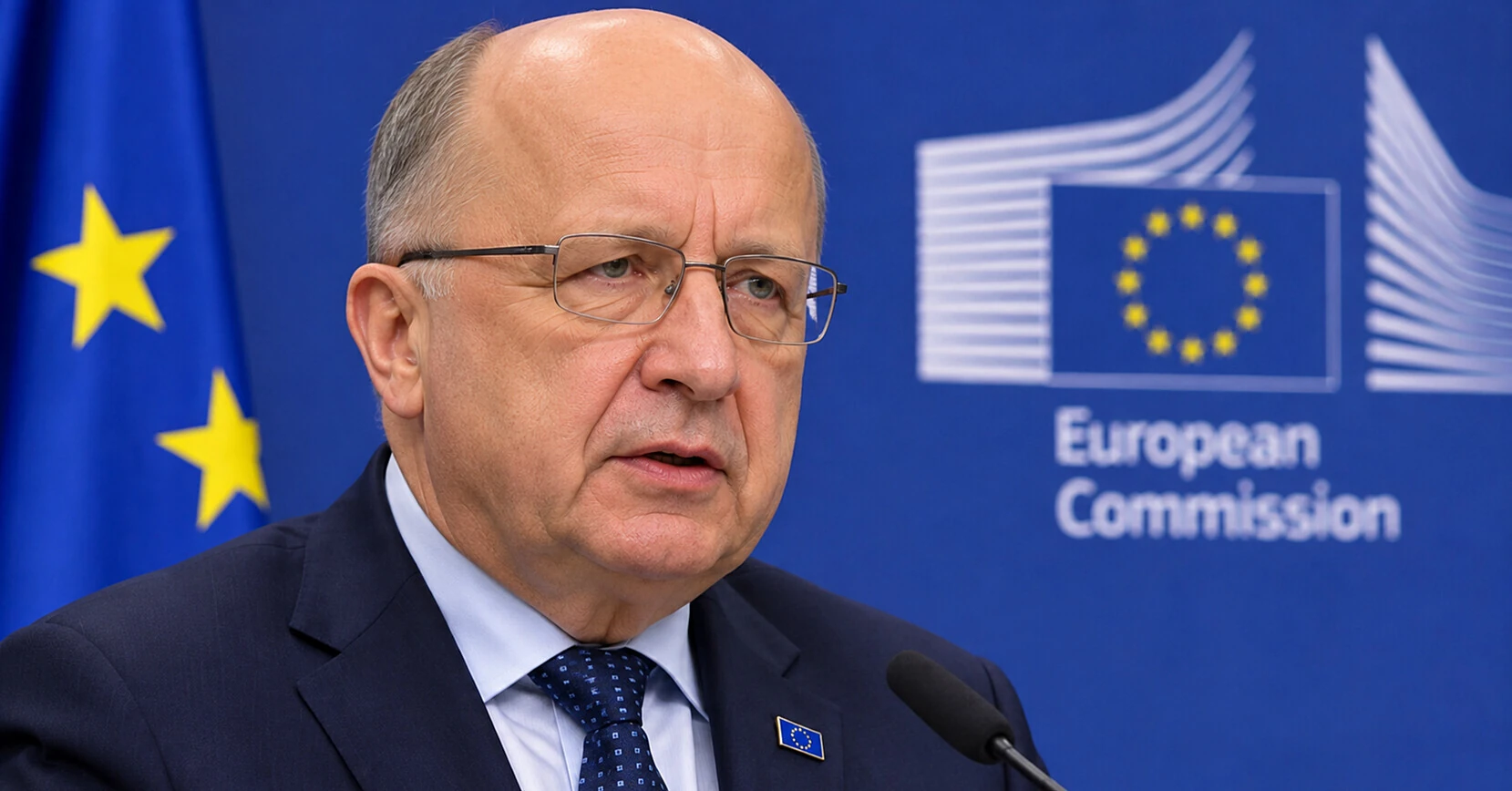
The European Commission intends to convince European Union member states to transfer interceptor missiles for Patriot air defense systems to Ukraine from their own stockpiles. In return, European countries could receive new missiles that Kyiv has already ordered from manufacturers but is only expecting in 2028–2029.
European Commissioner for Defense and Space Andrius Kubilius said this on November 18 while speaking to journalists in Brussels, reports Rapporteur.
According to Kubilius, the shortage of missiles for intercepting ballistic targets remains one of the most serious problems of Ukrainian air defense. Russia is increasing production of ballistic missiles, while the capabilities of Western manufacturers do not yet allow fully meeting Ukraine's needs.
The European Commissioner estimated that in 2026 Russia could use about 2,000 ballistic missiles against Ukraine. For comparison, in 2025 this figure, according to his estimate, was approximately 1,000 missiles. At the same time, American industry produces about 700 interceptor missiles annually.
To reduce the gap between Ukraine's needs and production capabilities, Brussels proposes using existing European arsenals.
"Our task now is to approach member states and try to convince them" to agree to such an exchange, Kubilius said.
The proposed mechanism provides that European countries transfer part of their Patriot missiles to Ukraine now, and subsequently receive new interceptors from batches already ordered by Kyiv. Thus, allies will not have to irreversibly reduce their own stockpiles, and Ukraine can obtain the necessary weapons without waiting for the fulfillment of long-term contracts.
This primarily concerns PAC-2 and PAC-3 missiles, which are used in Patriot systems. Ukraine has already signed contracts for the supply of such interceptors, but some orders are scheduled for completion only in 2028–2029.
On the eve, November 17, President Volodymyr Zelenskyy proposed a similar scheme to participants of the Ukraine Defense Contact Group meeting in the Ramstein format. He called on partners to transfer Patriot and IRIS-T missiles from existing arsenals in exchange for new munitions, the production of which Ukraine has already ordered.
Zelenskyy emphasized that this is not a gratuitous transfer of weapons, but an exchange. According to him, allies will be able to get newer missiles to replenish their own stocks, and Ukrainian air defense will receive necessary protective means right now.
At the same time, the European Commission expects to increase European missile production. To this end, Brussels plans to use new financial instruments, including the additional loan to Ukraine of 45 billion euros proposed on November 18. Of this amount, 25 billion euros are expected to be allocated for defense needs.
Additional opportunities could be provided by a future defense-industrial pact between the EU and Ukraine, as well as about 21 billion euros of unused credit resources under the SAFE program. These instruments are seen as a way to expand arms production in Europe and reduce dependence on American supplies.
In addition, Germany plans to establish licensed production of PAC-2 missiles. The European Commission is also working with Ukraine and EU states on projects for their own missile defense systems.
No decision has yet been made on transferring missiles from European countries' national stockpiles. Kubilius spoke of his intention to convince governments to agree to the exchange, but he did not name specific states, possible volumes of supplies, or timelines for transferring interceptors.