

Germany is seeking to secure long-term financing for Ukraine before the French presidential elections in spring 2027. In Berlin, there are fears that a possible rise to power of Marine Le Pen, who promises to end financial support for Kyiv, could complicate the adoption of new European assistance programs.
Politico and The Wall Street Journal reported this on November 18. European leaders are striving to accelerate negotiations on financing Ukraine and the next seven-year EU budget.
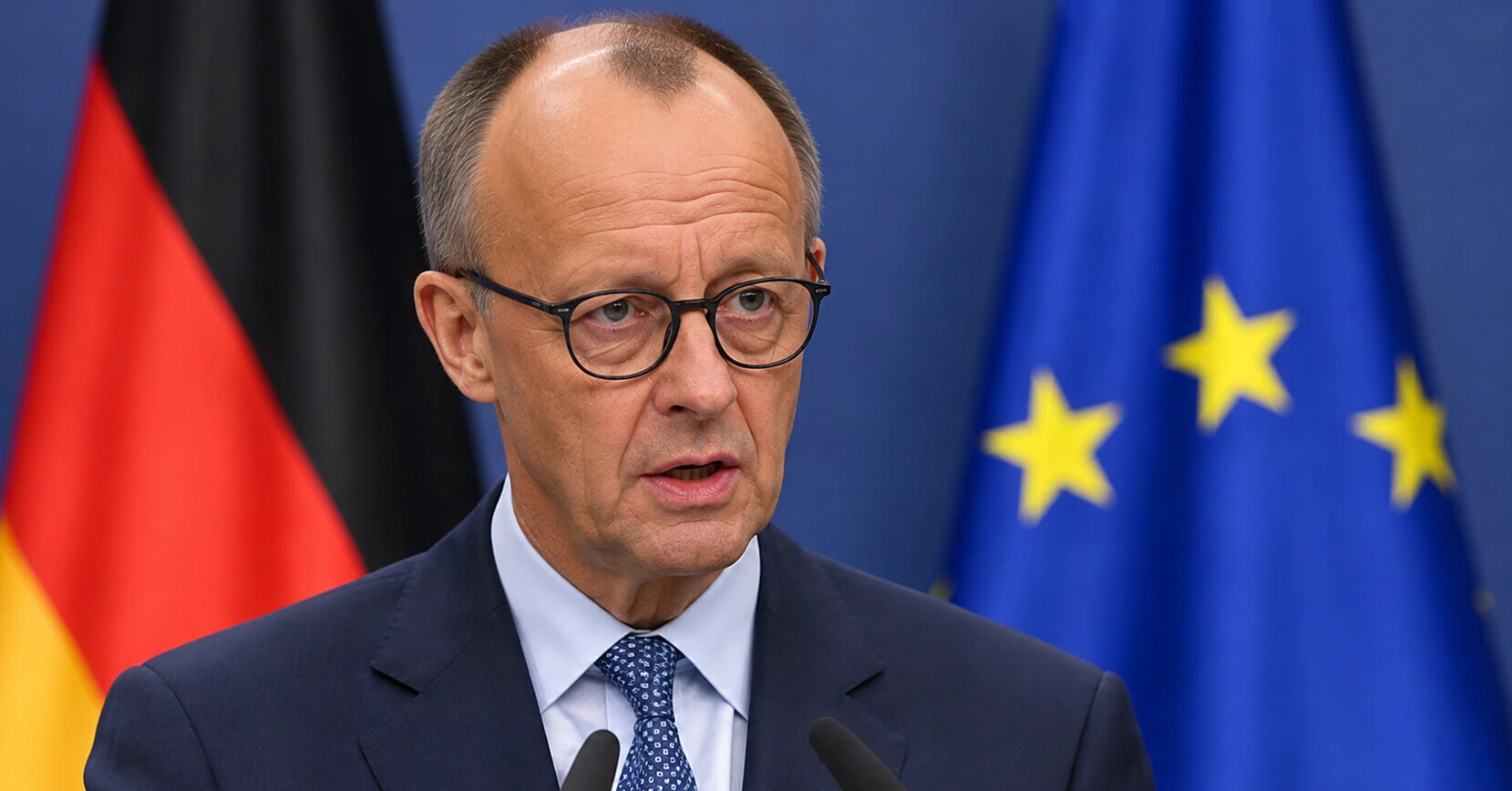
German Chancellor Friedrich Merz advocates that all 27 EU states commit to further support for Kyiv. Berlin also proposes changing the decision-making mechanism for financing Ukraine, switching from the unanimity principle to qualified majority voting. This would reduce the dependence of new assistance programs on the positions of individual governments.
As early as November 6, Merz sent a letter to European Council President António Costa, linking agreement on the EU budget for 2028–2034 to the willingness of all states to participate in financing Ukraine. The chancellor warned that Germany might not support the new budget if individual countries continue to refuse financial obligations.
An additional factor is the upcoming presidential elections in France, the first round of which will take place in April 2027. Marine Le Pen, leader of the National Rally party, has stated that if elected, she will stop providing new financial aid to Ukraine, including France's participation in future European lending programs.
However, after a meeting with Ukrainian Ambassador Vadym Omelchenko on November 16, Le Pen clarified that she intends to fulfill already assumed commitments of Paris. In particular, she does not plan to revise the previously agreed EU loan of 90 billion euros. Nevertheless, France under her leadership will not take on new financial obligations. Le Pen explains this position by the state of public finances.
France is the second largest net contributor to the EU budget. According to Le Monde, Paris accounts for about 18% of European financial commitments under Ukraine support programs. Therefore, a possible refusal by France to participate in new financing mechanisms would have significantly more serious consequences than a similar position of smaller EU states.
Against this backdrop, European leaders want to finalize the next long-term budget by the end of 2026. Its total volume could reach 2 trillion euros, and the period of validity will cover 2028–2034. The initial proposals of the European Commission also provide for the possibility of allocating up to 100 billion euros to Ukraine within the future budget cycle.
At the same time, Brussels is trying to cover Kyiv's financial needs for 2027. According to European Commission estimates, Ukraine will need an additional about 70 billion euros. Of this amount, 45 billion euros is proposed to be raised through a new EU loan mechanism presented on November 18.
However, there is no agreement yet. Hungary, Slovakia, the Czech Republic, and Bulgaria have opposed additional financial obligations. Germany insists on an even distribution of expenditure, while some governments consider this approach unacceptable.
According to The Wall Street Journal, the European Union expects to agree on key financial decisions before the end of the year. French President Emmanuel Macron previously called mid-January 2027 the deadline for reaching an agreement on financing Ukraine.
The main difficulty is that approval of the long-term EU budget requires unanimity. If an agreement is not reached before the change of political leadership in France, the new government could use its veto power. In that case, the EU might have to temporarily extend current budget parameters instead of transitioning to a new seven-year program.
The changes proposed by Germany remain the subject of negotiations. There is no final decision on switching to qualified majority voting on Ukrainian aid issues, nor is there an approved agreement on financing Kyiv after 2027.