

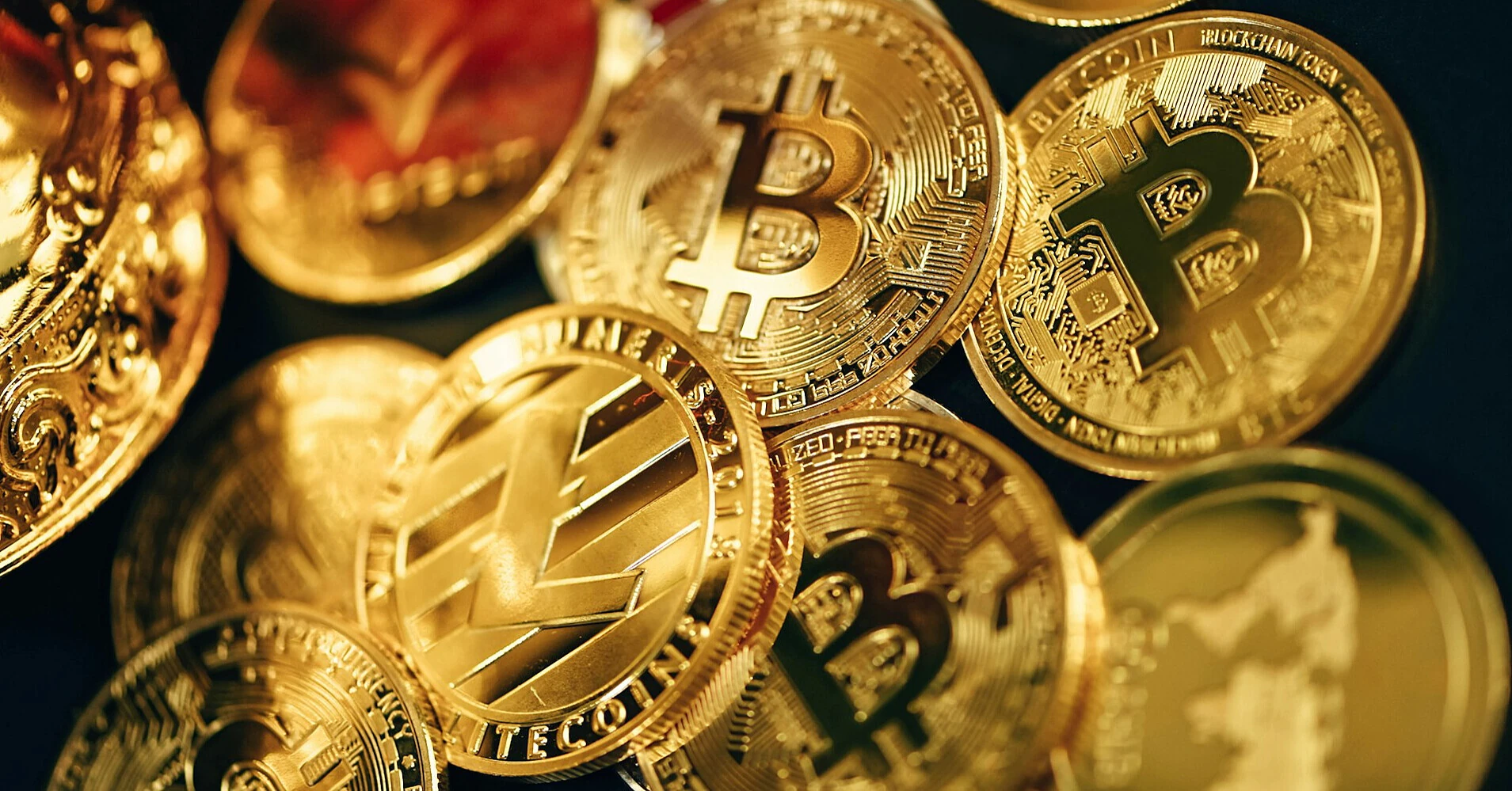
The cryptocurrency market remains extremely volatile. After another wave of decline, investors are trying to determine which digital assets are able to recover positions and which risk continuing to fall. The situation is not uniform: even against the background of general deterioration in sentiment, certain altcoins show noticeable growth.
For investors it is especially important now to distinguish between short-term speculative movements and the fundamental prospects of projects. A coin that has risen 30–50% in a few days is far from always a good purchase. Sometimes such a jump is just a temporary reaction to news or the result of low liquidity.
General situation on the cryptocurrency market
The situation looks quite alarming. As of the morning of November 19:
- Bitcoin (BTC) is trading around $62,400–62,500, losing about 15% over the week.
- Ether (ETH) is around $1,750–1,760, also losing more than 15% in seven days.
- The total capitalization of the crypto market is about $2.1–2.2 trillion.
- The Fear and Greed Index has dropped to about 10–11 points out of 100. This corresponds to extreme fear.
Why are cryptocurrencies getting cheaper?
I would single out four main factors:
- US Federal Reserve policy. FOMC minutes reinforced concerns about a rate hike in December. High rates make risky assets less attractive.
- US inflation. Higher-than-expected inflation figures are forcing investors to revise forecasts regarding monetary policy.
- Problems in the technology sector. Negative sentiment around large technology companies, including Nvidia, is putting pressure on risky assets.
- Liquidations and security concerns. Mass closure of margin positions and recent hacks of cryptocurrency platforms increase investor distrust.
Thus, the current decline cannot be explained solely by problems in the cryptocurrency industry. It is taking place against the background of a general deterioration in investors' attitude to risk.
Five cryptocurrencies that rose the most over the week
Despite the general market decline, some coins are showing impressive dynamics. According to CoinGecko monitoring, among the 250 largest cryptocurrencies by capitalization, the growth leaders over seven days are as follows:
| Cryptocurrency | 7-day change |
| Akedo (AKE) | +319.06% |
| Pieverse (PIEVERSE) | +112.55% |
| Pearl (PEARL) | +53.86% |
| Sentient (SENT) | +33.51% |
| Rain (RAIN) | +23.13% |
What should you know about these coins?
- AKE (Akedo) is the absolute growth leader. A gain of more than 300% in a week looks impressive, but after such a jump the risk of a correction is especially high.
- PIEVERSE (Pieverse) is another prominent representative of the growing segment. However, rapid growth does not guarantee its continuation.
- PEARL (Pearl) is showing strong dynamics and attracting the attention of speculative investors.
- SENT (Sentient) is a project related to artificial intelligence and blockchain technologies.
- RAIN (Rain) is also among the most successful assets of the week.
I would not recommend buying these five coins solely because they have already risen a lot. You should be especially cautious about AKE and PIEVERSE. Buying after a triple-digit increase may mean entering practically at a local maximum.
Five cryptocurrencies that fell the most
Here the situation looks much worse. Some projects have lost a quarter or more of their value in just a week.
| Cryptocurrency | 7-day change |
| Bitway (BTW) | −51.46% |
| Gate (GT) | −27.45% |
| Maple Finance (SYRUP) | −27.23% |
| Pump.fun (PUMP) | −25.30% |
| Filecoin (FIL) | −24.28% |
The most alarming situation is with Bitway: a loss of more than half of its value in a week indicates extremely high volatility.
Separately, pay attention to:
- Gate (GT) — the token of the cryptocurrency exchange Gate. Its decline requires an assessment of not only the general state of the market, but also the prospects of the exchange ecosystem itself.
- Maple Finance (SYRUP) — a decentralized lending project. Here it is important to monitor the state of the loan portfolio and demand for DeFi products.
- Pump.fun (PUMP) — the token of the memecoin launch platform. Its prospects largely depend on the activity of the speculative segment.
- Filecoin (FIL) — a project of decentralized data storage. Despite the sharp decline, it cannot automatically be equated with speculative memecoins.
Important: a price fall by itself does not prove that the project has lost its prospects. But if the decline is accompanied by deterioration in fundamental indicators, that is already a serious reason to reconsider investments.
Which cryptocurrencies are worth buying now?
In my view, in the current situation it is better to give preference to projects with large capitalization, high liquidity and a clear economic model.
I would single out three main candidates.
1. Bitcoin (BTC). Priority No. 1
The main candidate for long-term accumulation. Bitcoin remains the most liquid crypto asset and has the most developed institutional investment infrastructure.
Tactic: buy in parts, without investing the whole sum at once.
2. Ethereum (ETH) Priority No. 2 Despite the sharp decline, Ethereum remains the key infrastructure for DeFi, smart contracts and asset tokenization.
Tactic: gradual purchase over a horizon of several months.
3. Solana (SOL) Increased risk Solana is interesting due to its developed ecosystem of applications, DeFi and payment solutions. But in periods of market decline it can fall faster than Bitcoin.
Tactic: a small share of the portfolio, purchases after market stabilization.
You can also monitor BNB and XRP. However, I would not rush to increase the share of altcoins yet.
How to allocate investments?
If we consider a hypothetical portfolio for an investor with moderately high risk tolerance, I would suggest the following structure:
Bitcoin 50% Ethereum 25% Solana 10% Stablecoins (USDT/USDC) 15%
This is an illustrative model, not personal investment advice. Stablecoins also carry issuer and storage risks.
Having free funds will allow you to take advantage of a further market decline if it occurs.
Which cryptocurrencies should you get rid of?
I would divide assets into two categories.
First — highly speculative coins. If you have BTW, PUMP and other tokens in your portfolio whose price depends mainly on short-term trader interest, you should seriously reconsider their share.
Bitway is especially concerning: a loss of more than 50% in a week is a reason to check liquidity, project news, tokenomics and the reasons for such a sharp decline.
Second — projects whose fundamental indicators are deteriorating. Here you need to assess the real income of the protocol, number of users, developer activity, token unlockings and product competitiveness.
I would not advise automatically selling FIL, SYRUP or GT just because of a weekly decline. These projects have real areas of activity, so the decision should depend on fundamental analysis.
And most importantly: you should not sell a quality asset solely because of panic, but averaging a losing position without reconsidering the investment idea is dangerous.
What to expect from the crypto market in the coming weeks?
In my view, the next few weeks may be difficult.
There are three scenarios:
| Scenario | What could happen |
| Negative | The Fed continues its tight policy, BTC tests new lows, altcoins fall harder |
| Neutral | BTC stabilizes, the market moves sideways |
| Positive | Inflation fears ease, demand for risky assets returns, BTC and ETH begin to recover |
Special attention should be paid to the Fed's December meeting, US inflation statistics, the liquidity situation on crypto exchanges and the dynamics of Bitcoin ETFs.
Bottom line: buy or sell?
My main conclusion: now is not the best time for aggressive purchases of altcoins, but quite a suitable moment to build long-term positions in the most stable cryptocurrencies — provided you are ready for further declines.
I would follow the following strategy:
- BTC and ETH are the main candidates for gradual accumulation.
- SOL is an interesting but riskier asset.
- AKE, PIEVERSE and PEARL — do not chase growth that has already happened.
- BTW and PUMP — reconsider risks and the advisability of holding.
- USDT and USDC — keep part of the capital in reserve.
And finally. The extreme fear index sometimes becomes a harbinger of good opportunities for long-term investors. But it does not show whether the market has reached the bottom. Therefore, it is wiser now to buy in small portions and keep a reserve in case of a new decline.
My additional advice: I would take a closer look at Ethereum. Against the background of its decline of more than 15% for the week, the ratio of potential return to risk is gradually becoming more interesting. But for a purchase I would wait for at least the first signs of BTC stabilization.