

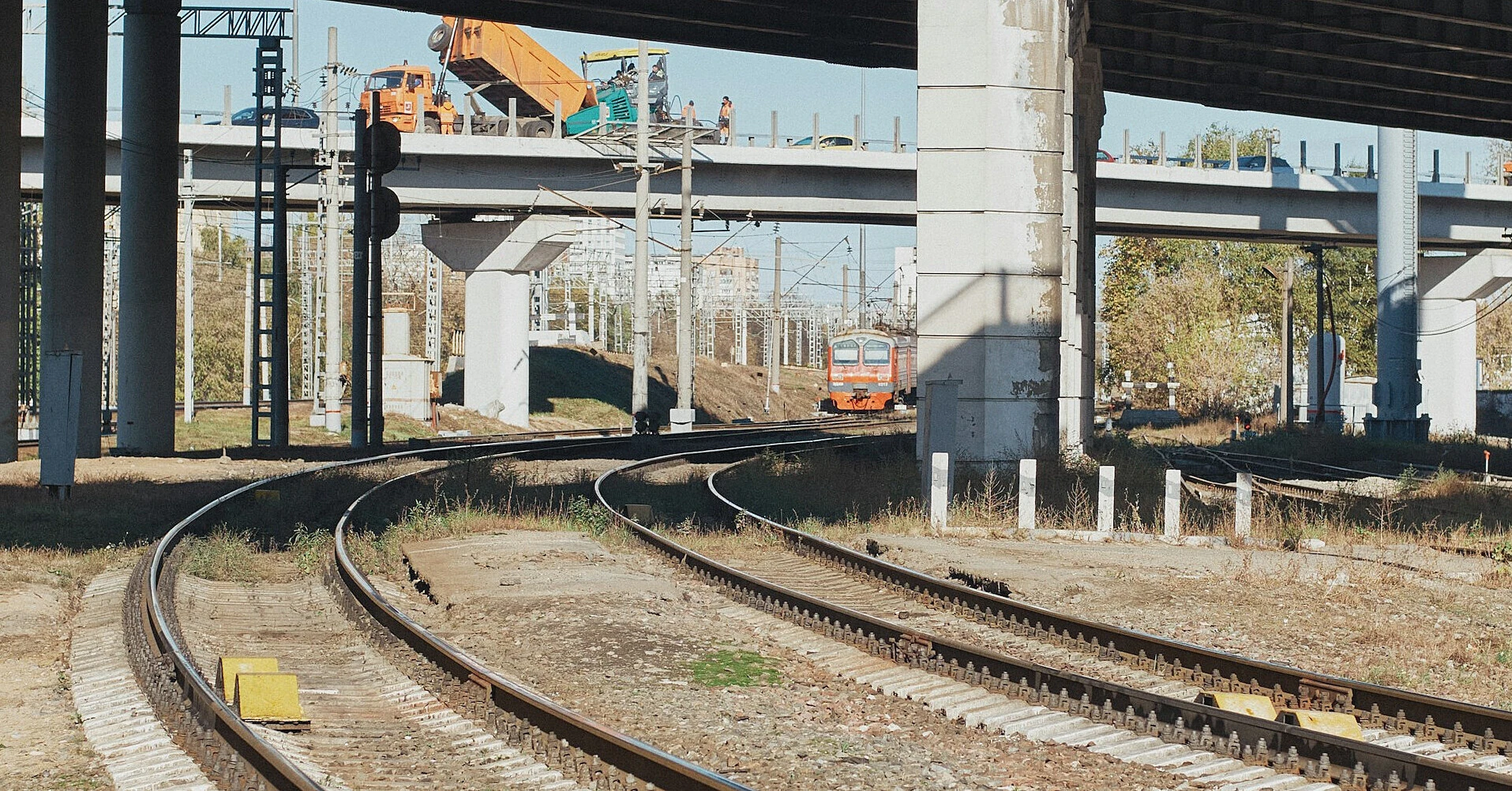
In Russia, problems are accumulating with the implementation of large state construction projects. Since the beginning of the full-scale invasion of Ukraine, the completion dates of almost 300 federal facilities with a total cost of 9.5 trillion rubles have been repeatedly postponed. Hundreds more planned construction projects have not yet started.
Such conclusions were reached by the publication The Moscow Times, which on November 19 published the results of an analysis of federal capital construction registries and state programs of the Russian Federation.
According to journalists' calculations, delays affected 294 projects on which work had already begun. Another 382 facilities with a total cost of at least 1 trillion rubles remain at the planning stage. Thus, the total cost of construction projects with postponed deadlines or uncertain prospects exceeds 10.5 trillion rubles. This refers to the estimated cost of the projects, not to already spent or lost budget funds.
The greatest number of delays was recorded in transport infrastructure. The implementation timeline of 128 facilities worth over 3.4 trillion rubles was postponed. Among them are highways, railway lines, and urban transport.
Problems also affected strategic industrial projects. In particular, the construction schedule of the gas processing complex in Ust-Luga, worth about 3.5 trillion rubles, was repeatedly changed. The launch of the Northern Latitudinal Railway, a large railway line for transporting goods from the northern regions of the Russian Federation, was postponed until 2031.
The slowdown in state construction applies not only to industry and transport. According to the investigation, the completion dates of 43 hospitals and medical centers with a total cost of 438.5 billion rubles were also postponed. Among the problematic facilities are oncology dispensaries and children's hospitals.
One of the main reasons for the delays is lack of funding. This is confirmed by a change in the Russian government's approach to capital investments. In June 2026, the Ministry of Construction of the Russian Federation recommended that federal agencies prioritize funding for already started facilities, allowing the postponement of new projects to later dates.
Such decisions are made against the backdrop of a growing federal budget deficit. According to the Russian Ministry of Finance, from January to October 2026, expenditures exceeded revenues by 5.23 trillion rubles, or 2.3% of GDP. Compared to the same period last year, budget expenditures increased by 13.4%, while oil and gas revenues decreased.
However, not all projects with postponed deadlines are officially frozen or cancelled. Some construction continues, although their completion has been delayed for several years. According to calculations by The Moscow Times, of the 1238 federal facilities analyzed, 402 have already been commissioned, and another 160 are being implemented according to schedule.
Economists surveyed by the publication have different assessments of the scale of the problem. Some compare the accumulation of long-term construction projects to the late Soviet period, while others consider the postponement of some projects to be a legitimate budget adjustment. However, the analysis shows that the Russian authorities are increasingly finding it difficult to simultaneously finance new infrastructure facilities and complete those already started.