

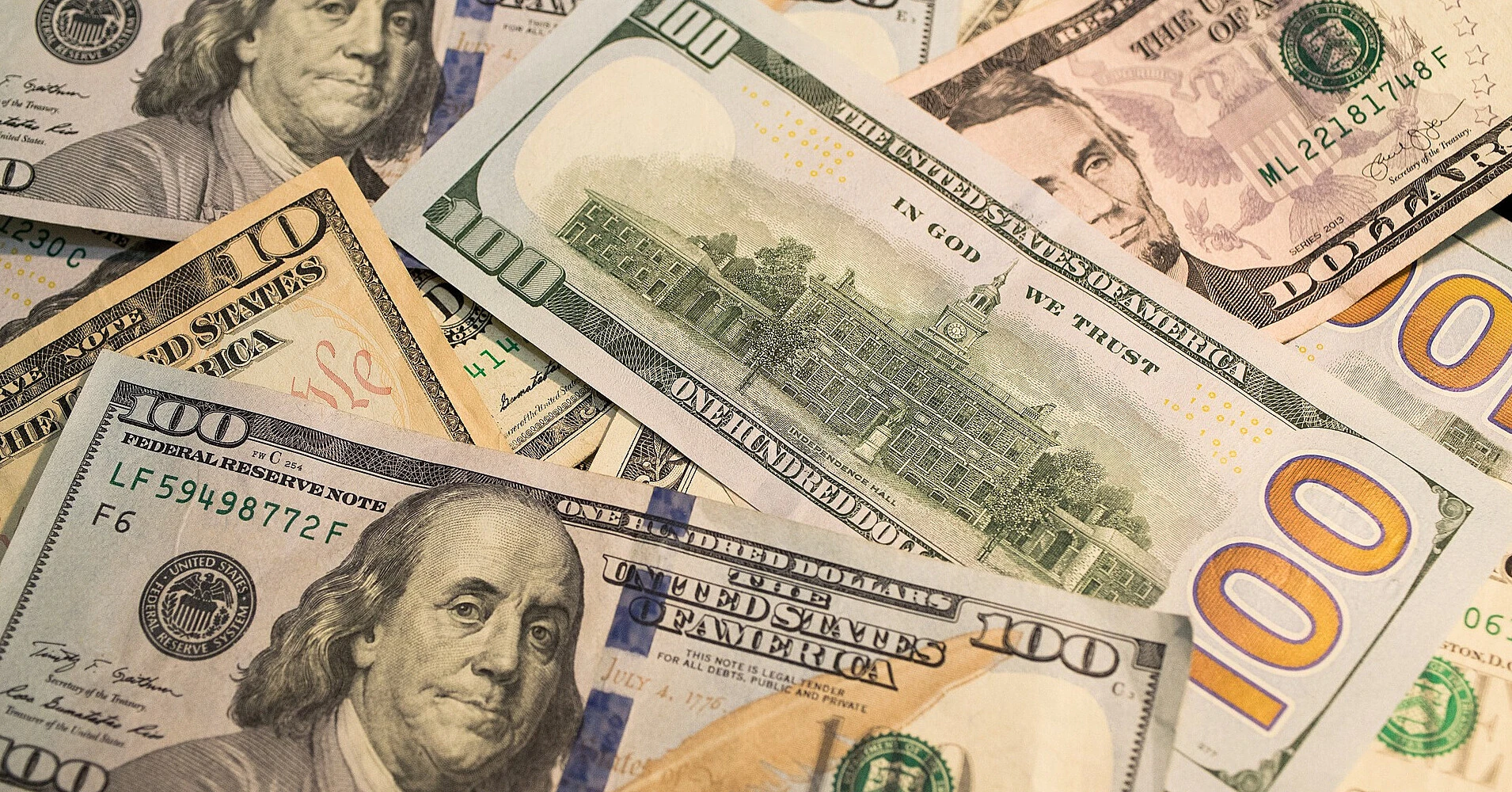
The cash dollar is rapidly becoming cheaper following the non-cash one. At the same time, its supply is growing, while demand leaves much to be desired.
If on Wednesday evening, November 18, in Kyiv it was possible to purchase large batches of "white" dollars (i.e., dollars of the 2001-2006 series) at 45.60 UAH, then by Thursday evening, November 19, the price tag was lowered to 45.30-45.33 UAH. That is, over the course of a day, the dollar in the capital became cheaper by 27-30 kopecks at once.
The dollar is not lagging behind in regional centers either. Thus, by Thursday evening, the dollar in Lviv and Odesa was sold at 45.40 UAH, in Dnipro – at 45.45 UAH, and in Kharkiv – at 45.49 UAH. How much did the dollar become cheaper? In Dnipro – by 15 kopecks, in Lviv – by 20, in Kharkiv – by 26 kopecks, and in Odesa – by as much as 32 kopecks at once. That is, the pace of decline remains quite high (at the level of the previous day).
Ukrainian banks are also reacting to what is happening, and they have also begun to confidently lower selling price tags. By Thursday evening, the cheapest dollar was sold at 45.39 UAH in Tascombank. The most expensive dollar, meanwhile – at 45.90 UAH – was sold in BTA Bank. The minimum price tag decreased by 11 kopecks, the maximum – by 15 kopecks.
As for euro prices in Ukraine, they continued to decline today, even despite the growth on the international currency market FOREX, where the euro is trying to correct after seven days of continuous decline. By this evening, the minimum euro selling price started from 49.95 UAH in the Kyiv branch of Sky Bank, and the most expensive euro – at 50.80 UAH – was sold by Trust Capital Bank. The minimum price tag became lower by 20 kopecks, the maximum – by 40 kopecks.
The gap between the non-cash and cash dollar rates decreased from 54 to 43 kopecks. As we can see, the cash and non-cash dollar rates are still converging, and this process has accelerated.