

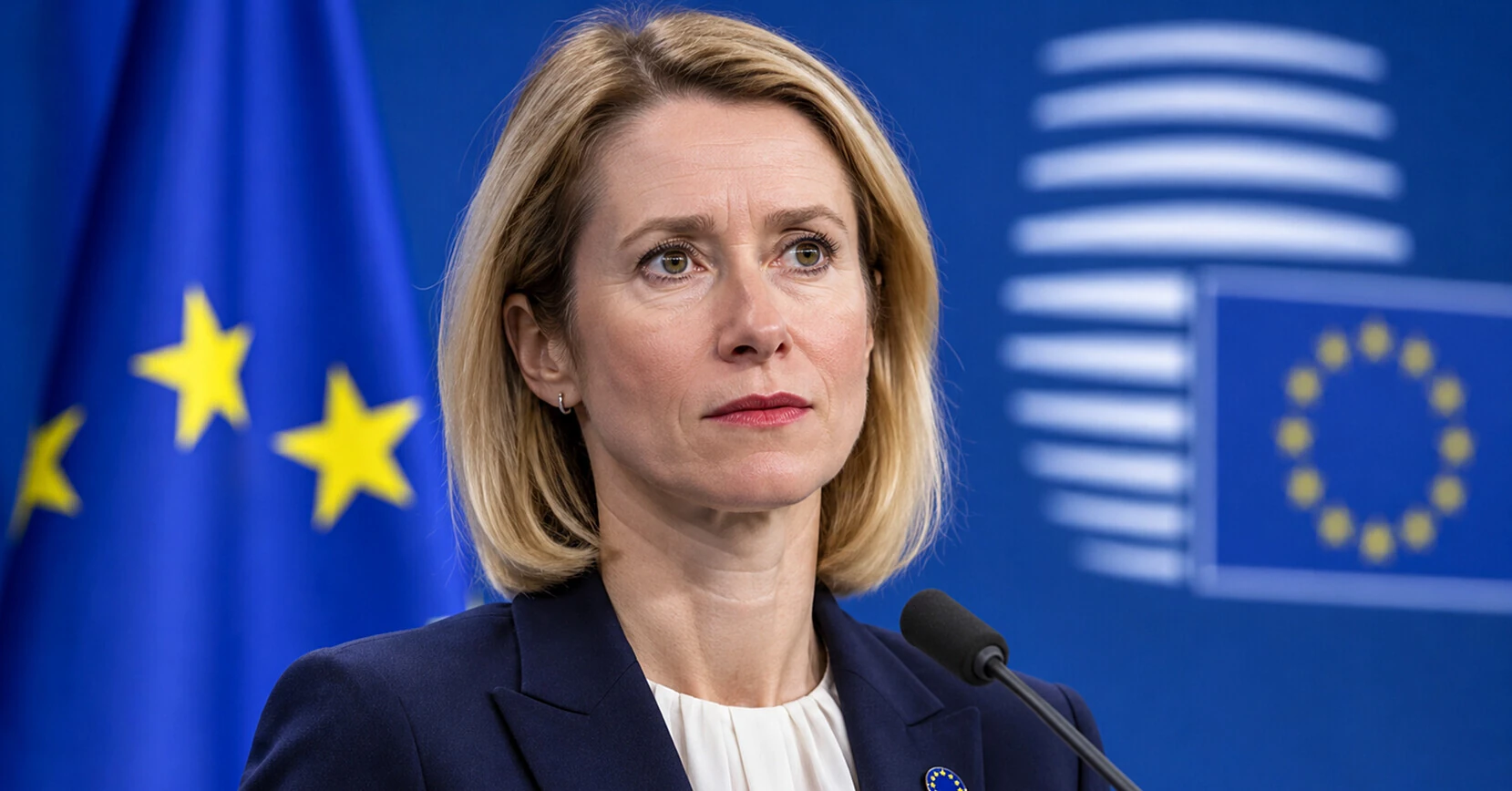
The European Union will summon Russia's representative to the EU after the Russian attack on Kyiv on November 19, which damaged buildings of several foreign diplomatic missions. Brussels also intends to strengthen support for Ukraine and pressure on Moscow.
This was stated by the head of European diplomacy, Kaja Kallas.
Kallas noted that the Russian strikes on the Ukrainian capital occurred during Vladimir Putin's stay in China's Shenzhen, where he participated in talks with US President Donald Trump and Chinese President Xi Jinping.
"While Putin walked the red carpet in Shenzhen, Russian strikes hit Kyiv and damaged several European and non-European embassies," — stated the EU High Representative.
Kallas emphasized that diplomatic premises are protected under international law, which Russia, according to her, systematically violates.
"Diplomatic premises are protected under international law. Russia's disregard for this law is demonstrated daily," — she noted.
In response to the incident, the European Union intends to summon the Russian representative to the EU to express its official position.
"We will further increase assistance to Ukraine and pressure on Russia to end the war," — Kallas added.
During the Russian attack on November 19, buildings of the embassies of the Netherlands and Austria in Kyiv were damaged. In particular, one of the drones hit a building located behind the Dutch diplomatic mission. According to Dutch authorities, embassy staff were not injured.
In addition, debris from a Russian drone fell on the territory of the Ministry of Foreign Affairs of Ukraine.
Earlier, the Netherlands separately summoned the Russian ambassador in The Hague. The country's Minister of Foreign Affairs, Tom Berendsen, called the damage to the diplomatic mission unacceptable. Thus, in addition to the national diplomatic response of the Netherlands, a separate demarche will follow from the European Union.
At the same time, Kallas did not specify the date of the summoning of the Russian representative to the EU and did not announce new sanctions directly related to the attack on Kyiv.
Based on materials from: Kaja Kallas, European Pravda, Reuters.