

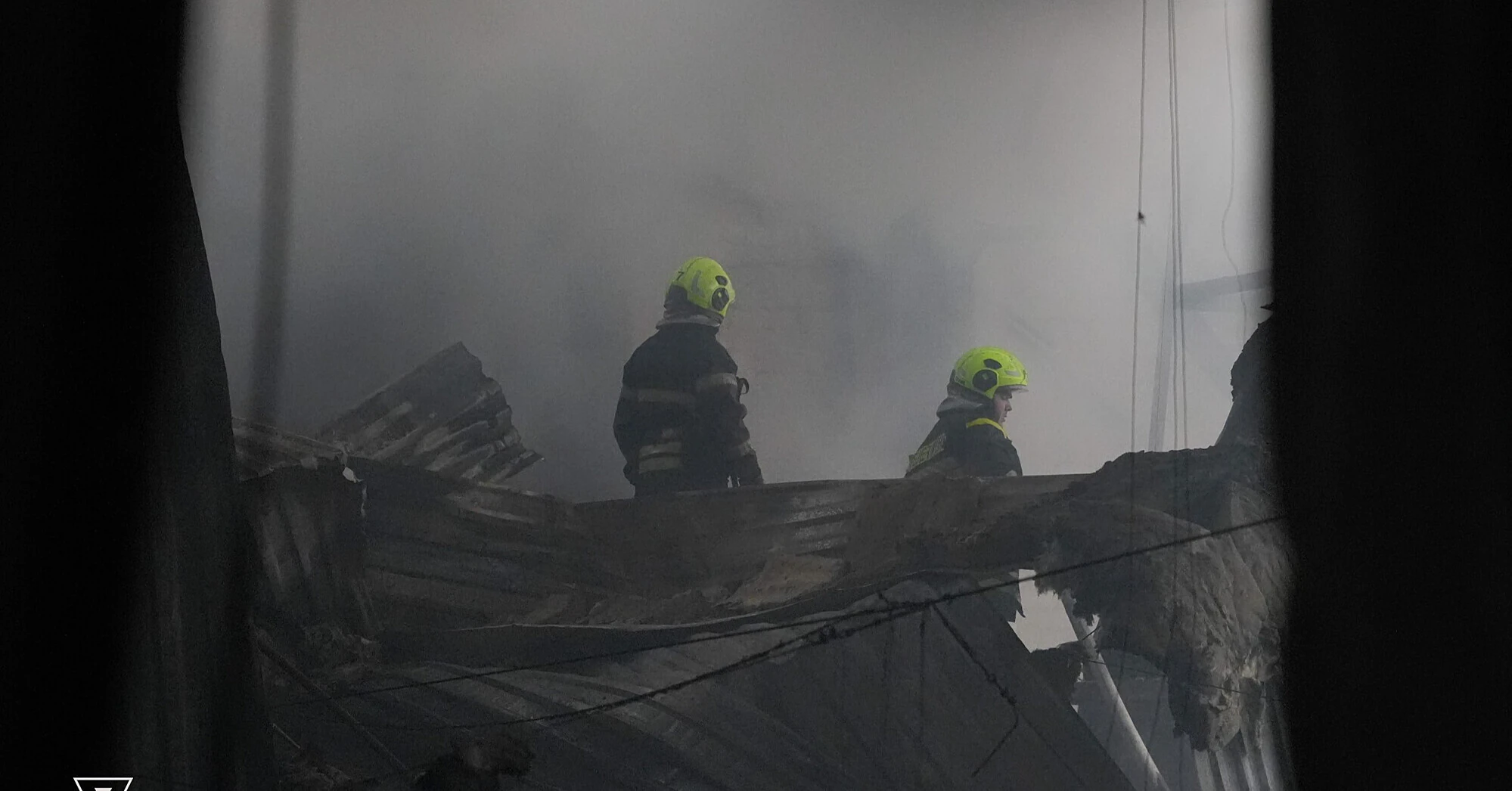
On the night of November 20, Russia carried out one of the most massive combined attacks on Ukraine, using hundreds of drones and over a hundred missiles. Ukrainian air defense neutralized 462 aerial targets. President Volodymyr Zelensky reported that Russian troops also used missiles with cluster warheads and carried out repeated strikes with intervals of 20-30 minutes.
The Air Force of the Armed Forces of Ukraine reported on the results of repelling the attack. New details of the tactics of the Russian troops were made public by the President of Ukraine after a conference call with the military and government officials.
According to the Air Force, the attack began at 18:00 on November 19. Russian troops used 84 air- and sea-launched cruise missiles Kh-101, "Kalibr" and "Iskander-K", as well as ballistic missiles "Iskander-M"/S-400 and anti-ship missiles "Zircon".
In addition, the enemy launched 404 drones of types Shahed, "Gerbera" and decoy drones "Parodiya". Among them were 123 jet-powered strike UAVs. According to Zelensky's clarification, the Russian army used a total of over 110 missiles, of which 27 were ballistic.
As of 10:30, Ukrainian air defense forces shot down or suppressed 462 aerial targets. Among them are 79 cruise missiles Kh-101 and "Kalibr", three missiles from the "Iskander-M"/S-400/"Zircon" group, and 380 drones of various types, including 102 jet-powered drones.
Combat aviation, anti-aircraft missile troops, electronic warfare units, unmanned systems, and mobile fire groups were involved in repelling the aerial attack. Zelensky specifically noted the work of Ukrainian F-16s, Mirages, and MiGs during the interception of cruise missiles.
The special feature of this attack was the use of missiles with cluster warheads and repeated strikes on already attacked areas. According to the president, the Russian military launched several groups of missiles with intervals of about 20-30 minutes. Zelensky stated that such tactics were meant to complicate firefighting, debris removal, and recovery operations.
The president also reported the death of people during repeated attacks when specialists were already inspecting the first damages to the facilities. He did not specify how many people died as a result of the repeated strikes and whether they included emergency workers.
Despite the work of air defense, hits by Russian missiles and strike drones were recorded in 23 locations. Falling debris of downed aerial targets was also detected in ten other places. As of the time of the morning report, the attack was ongoing.
According to Ukrainian authorities, eight people died as a result of the night and morning strikes, and 28 were wounded. In Kyiv, six deaths and 15 injured were reported.
Russian strikes targeted energy, transportation, and other civilian infrastructure. In particular, bridges over the Dnipro, railway facilities, residential buildings, and energy structures were damaged. According to Zelensky, substations and power lines were also hit, which affect the operation of Ukrainian nuclear power plants and energy connections with neighboring EU countries.
Earlier, "Kurs Ukrainy" reported damage to railway, energy, and industrial infrastructure in several regions as a result of this attack.
After the meeting, Zelensky instructed the Ministry of Foreign Affairs to speed up contacts with partners regarding the supply of air defense systems. The issue of receiving PAC-2 and PAC-3 missiles for Patriot systems from the United States was also discussed.
Based on materials: Air Force of the Armed Forces of Ukraine, Volodymyr Zelensky, Serhiy Koretskyi