

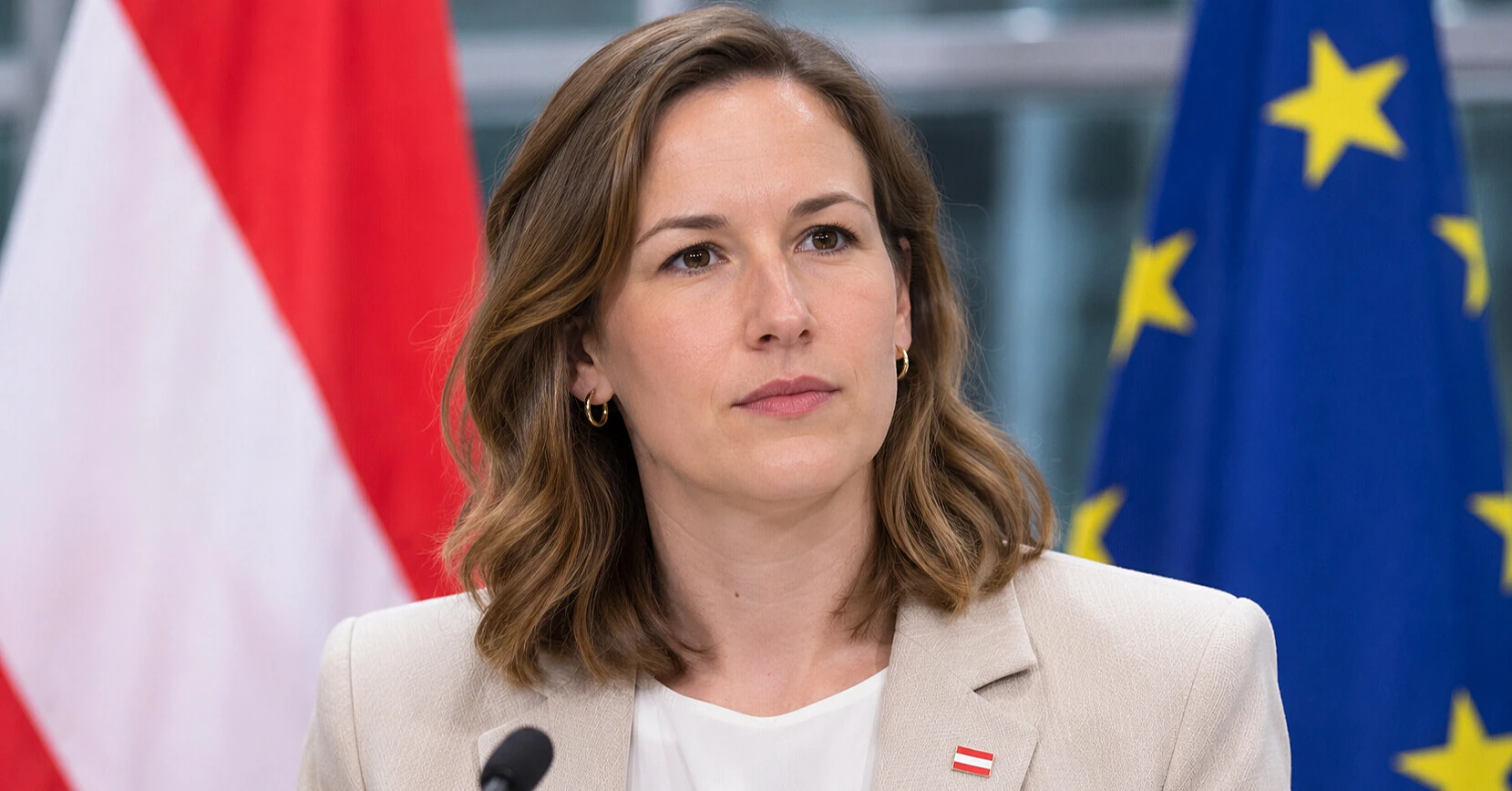
Austria has demanded substantial cuts to the draft multiannual budget of the European Union for 2028–2034. Vienna insists on reducing spending by hundreds of billions of euros and warns that without this it will not support the financial agreement.
This was stated by Austrian Minister for European Affairs Claudia Plass in an interview with Rapporteur, published on November 20.
According to the minister, European Council President António Costa must present a significantly more economical version of the budget. She stressed that setting priorities inevitably implies giving up some spending, even if such decisions prove politically inconvenient.
“I insist on a reduction of several hundred billion euros,” — stated Plass.
The initial draft of the European Commission foresees spending of almost 2 trillion euros over seven years. In October, Ireland, holding the presidency of the Council of the EU, proposed a compromise version reducing the overall funding volume to about 1.8 trillion euros.
However, Austria considers this reduction insufficient. At the same time, Vienna advocates maintaining sufficient funding for agriculture and regional development programs, suggesting looking for additional savings in other areas.
Among potential areas for cuts, Plass mentioned administrative expenses of European institutions and funding for development programs. The minister welcomed the proposal to reduce administrative spending by about 10 billion euros, but noted that even after that the relevant budget will increase significantly compared to the current period.
Separate disagreements concern the search for new sources of revenue for the European Union. The European Commission proposes additional levies, in particular related to large companies, carbon emissions and electronic waste.
According to the European Commission, changes to existing financing mechanisms and the introduction of new levies could bring in about 66 billion euros annually.
Plass stressed that new European taxes will not be a universal solution to budgetary problems. According to her, even adopting all the proposed additional revenue mechanisms will not fully cover the planned increase in spending.
Austria is among the group of countries that are the largest net contributors to the EU budget, demanding stricter financial discipline. Germany, the Netherlands, Sweden, Denmark and Finland hold a similar position.
At the same time, another group of EU member states opposes reducing funding for agriculture and regional programs, since a significant part of these funds goes to less well-off regions.
A new compromise budget draft Costa is to present on November 21. The discussion will continue at a special summit of EU leaders on November 26–27.
The negotiations also matter for Ukraine. The original European Commission draft foresees the possibility of mobilizing up to 100 billion euros in financial support for Ukraine in 2028–2034. Austria has not stated a demand to cut this specific amount.
Approval of the multiannual budget requires unanimous agreement of EU member states. European leaders expect to conclude negotiations by the end of 2026 so that the new financial mechanism can enter into force on January 1, 2028.
Based on materials from: Rapporteur, Federal Chancellery of Austria, Council of the European Union.