

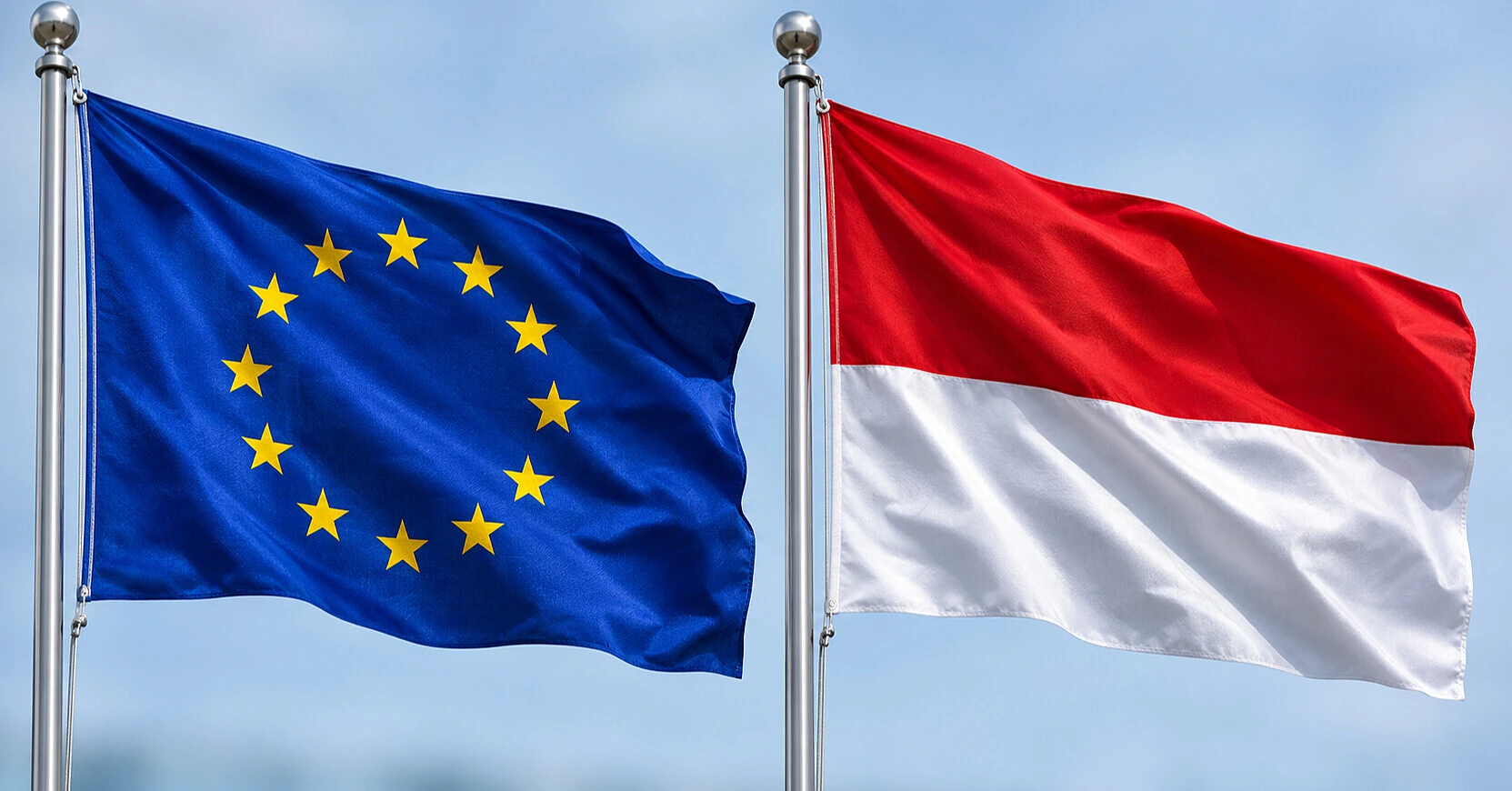
The European Union and Indonesia signed a Comprehensive Economic Partnership Agreement (CEPA) and a separate investment protection agreement in Brussels on November 21. Upon full implementation of the trade agreement, tariff reductions or eliminations will cover up to 98.5% of tariff lines. According to the EU Council, within five years after the agreement starts to apply, Indonesia will eliminate tariffs on EU goods for 96% of its tariff lines. European Commission, EU Council.
Indonesian tariffs on European cars currently reach 50%. Most of these tariffs will be eliminated within five years. In the first phase, tariffs will be removed from most industrial equipment and electrical machinery. At the same time, a significant part of tariffs on dairy products is scheduled for elimination. The EU Council estimates future savings on customs duties at approximately €600 million per year. Agreement terms, EU Council.
Indonesian suppliers will gain broader access to the EU market for textiles, footwear and palm oil. Rice, sugar and ethanol are among the goods for which the EU maintains its current tariff regime. To benefit from preferences, suppliers will need to prove the origin of goods under the agreement's rules. In 2025, trade in goods between the parties amounted to €28.9 billion. The EU exported goods worth €10.2 billion to Indonesia and imported €18.7 billion. European Commission data, Rules of origin, EU Council.
Negotiations began in July 2016 and concluded in September 2025. Among the contentious issues were access of Indonesian palm oil to the EU market, deforestation related to its production, and conditions for biodiesel trade. A separate protocol on promoting sustainable palm oil trade was included in the agreement. European Parliament briefing, Agreement texts.
The first tariff preferences can take effect from the start of provisional application of the trade agreement. According to EU Council decisions, provisional application of both agreements is envisaged from the first day of the month following the exchange of notifications on completion of the necessary internal procedures. After the exchange, the parties may agree on an earlier date. The official date will be published separately. Full entry into force of the agreements will require the consent of the European Parliament, a decision of the EU Council and ratification by Indonesia. Decision on the trade agreement, decision on investment protection, EU Council.
The parties aim to accelerate the launch of the agreements because on January 1, 2027 Indonesia will exit the current EU tariff preferences system and its exports will lose benefits under this program. EU Regulation.