

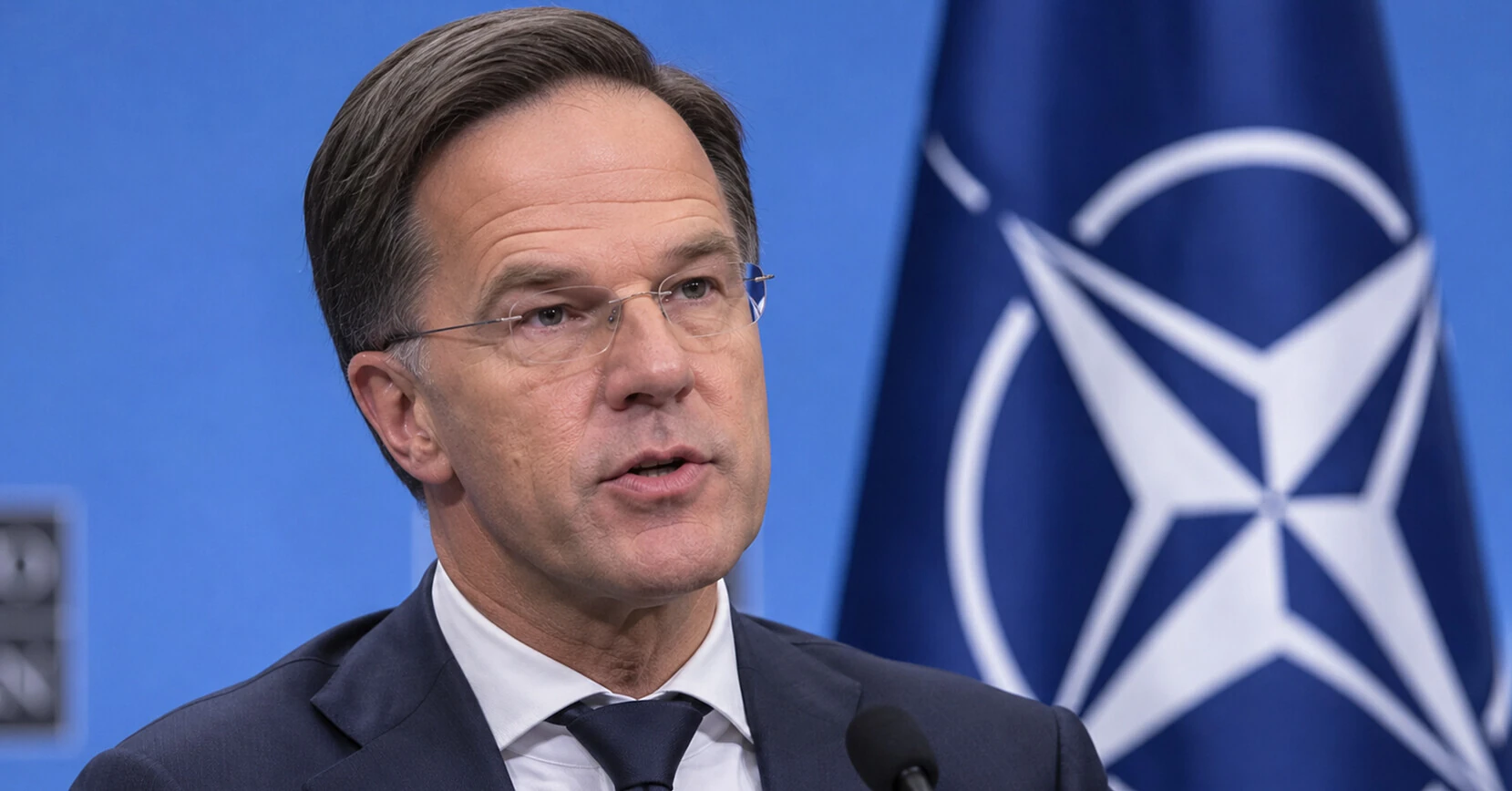
There is still no unanimity within the North Atlantic Alliance regarding Ukraine's accession. Despite the previously confirmed membership perspective, several NATO states continue to hold back the process. This was stated by NATO Secretary General Mark Rutte on Monday, November 23, during the annual session of the NATO Parliamentary Assembly in Berlin.
According to Handelsblatt, Rutte acknowledged that allies are currently not ready to make a unanimous decision on Ukraine's membership. He stressed that the issue of Alliance enlargement is exclusively within the competence of its member states.
"Who can become a NATO member is decided only by NATO. Within the Alliance, there is complete clarity on this issue," — said the Secretary General.
Answering questions from parliamentarians, Rutte clarified that Ukraine's accession is being held back by several allies, not only the United States. However, he did not name the states currently hindering consensus.
"This remains our position. But this does not mean that membership has already occurred. The issue arises again because we know that several allies — not only the United States, but also others — are still holding back the process," — Radio Svoboda quotes Rutte as saying Radio Svoboda.
Ukraine's accession discussed amid peace talks
According to the NATO Secretary General, the issue of Ukrainian membership has again come to the fore in connection with diplomatic efforts to end the Russia-Ukraine war. The United States is working on organizing negotiations and coordinating its actions with Ukraine and European partners.
Rutte noted that achieving sustainable peace requires solving two interconnected tasks. The first is to establish a long-term ceasefire or conclude a full-fledged peace agreement. The second is to create mechanisms that will ensure Ukraine's security after the end of hostilities.
The Secretary General stressed that reaching agreements requires readiness not only from Ukraine and its Western partners, but also from the Russian leadership.
Commenting on the possibility of including the issue of Ukraine's NATO membership in negotiations with Moscow, Rutte did not rule out such discussions. However, he cautioned against premature assumptions about the content of future talks.
"To talk about such negotiations, they first need to take place," — the alliance's leader noted.
Rutte also stated that if it is impossible to admit Ukraine into NATO, international partners must provide it with other reliable security guarantees. In particular, he mentioned the work of the Coalition of the Willing led by France, the United Kingdom and Germany, which is preparing such mechanisms with the support of the United States.
At the same time, the Secretary General rejected Russia's demands to return NATO military infrastructure to its 1997 configuration. According to him, no alliance country supports such an initiative. Decisions on the deployment and structure of NATO forces can only be made by its members.
Zelenskyy proposed accepting Ukraine instead of creating separate guarantees
Earlier on November 23, President of Ukraine Volodymyr Zelenskyy addressed participants of the NATO Parliamentary Assembly via video link. He called on allies to consider full NATO membership for Ukraine as a more reliable and cost-effective alternative to separate post-war security guarantees.
According to Ukrinform, Zelenskyy drew attention to the discussion of guarantees that should resemble obligations under Article 5 of the North Atlantic Treaty. In the Ukrainian president's opinion, direct accession to the Alliance could be more effective than creating a separate security system.
He stressed that Kyiv has not yet received concrete answers to a number of fundamental questions about possible security guarantees. In particular, the Ukrainian side wants to understand which states will be obliged to provide assistance in the event of another Russian attack, what actions they will take and what military forces may be pre-positioned in Ukraine.
In addition, Zelenskyy raised the question of the cost of the proposed mechanisms and their ability to actually prevent new aggression. According to him, Ukraine continues to discuss these aspects with international partners, but no final agreements have been reached yet.
The President also stated that Ukraine's membership would be in NATO's own interests. He pointed to the combat experience of the Ukrainian military, the development of the defense industry and joint weapons production with Western partners.
"Ukraine must be in NATO. And not only does Ukraine need it. NATO itself needs Ukraine," — Zelenskyy emphasized.
NATO maintains Ukraine's membership perspective
Despite the lack of unanimity, the Alliance has not officially abandoned the prospect of admitting Ukraine. Back at the 2008 Bucharest Summit, NATO nations agreed on the principled position that Ukraine will become a member of the organization in the future.
At the 2023 Vilnius Summit, allies removed the requirement for Ukraine to complete a Membership Action Plan, simplifying the procedure for Euro-Atlantic integration.
In Washington in July 2024, NATO leaders confirmed that Ukraine's path to full membership is irreversible. The final declaration stated that a formal invitation will be issued once allies agree and the necessary conditions are met.
Thus, political recognition of the membership perspective is not yet accompanied by a decision to invite Ukraine. NATO enlargement requires the consent of all 32 member states, and no timelines have been announced for Ukraine's accession.
At a meeting of the Coalition of the Willing in Berlin on November 19, the leaders of Ukraine and European countries also confirmed the need to provide Kyiv with reliable and legally binding security guarantees after a ceasefire.
Among the mechanisms under discussion are long-term military and financial assistance, international monitoring of the ceasefire, the creation of multinational forces and partners' commitments to respond to a possible renewed Russian attack. It is expected that such guarantees will be coordinated with the United States.
The final structure of guarantees has not yet been approved. Rutte's statement confirms that allies have not yet reached political agreement on Ukraine's full membership, so work is continuing in parallel on alternative mechanisms to ensure its security.