

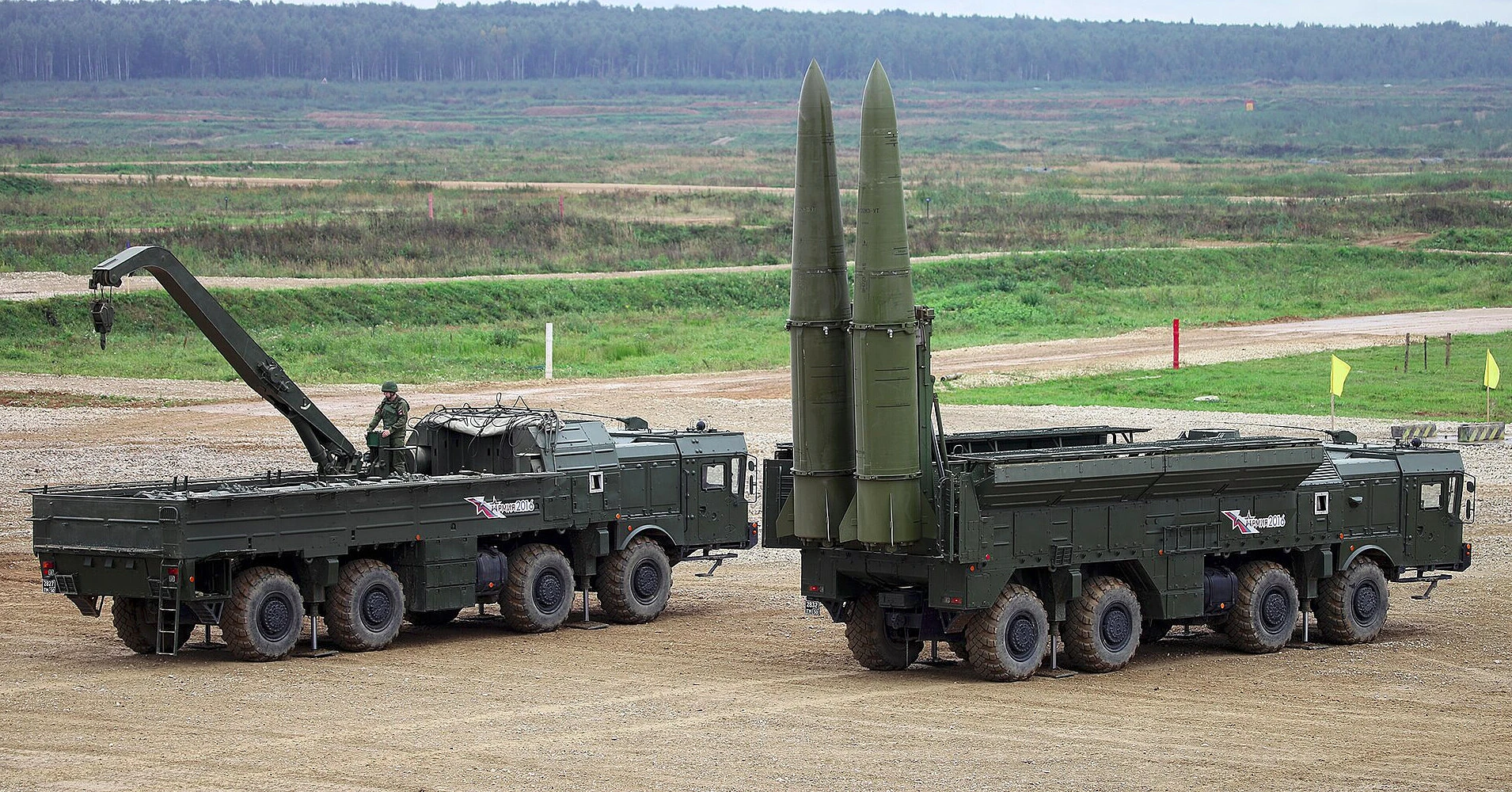
The Russian defense industry produces one ballistic missile approximately every five hours and continues to increase output. At the same time, Russia is intensifying missile strikes on Ukraine, placing additional strain on Ukrainian air defense.
Ukraine's Defense Minister Yevhen Khmara said this on November 23 during a speech at a meeting of the NATO Parliamentary Assembly in Berlin, reports Business Insider.
According to the head of the Defense Ministry, Russian enterprises continue to expand missile production despite international sanctions. At the same time, Moscow is not only replenishing its own arsenals but also increasing the number of ballistic and cruise missiles used against Ukraine.
In October alone, Russian troops fired 153 ballistic missiles at Ukraine. Khmara also reported a sharp increase in the number of jet-powered strike drones: if at the beginning of the year Russia used fewer than 300 such drones per month, in October their number exceeded 4,000.
As an example of the scale of air attacks, the minister cited one of the recent combined strikes, during which Russian troops used 111 missiles, including 27 ballistic missiles, as well as 404 drones.
Khmara emphasized that the main targets of Russian attacks remain civilians and civilian infrastructure. Russian forces pay special attention to energy facilities, the damage of which leads to prolonged power outages.
What missile stockpiles has Russia accumulated
The minister's new statements supplement the data of Ukrainian military intelligence on the capabilities of the Russian defense-industrial complex.
According to the assessment of the Main Intelligence Directorate of the Ministry of Defense of Ukraine, as of October 2026, Russia had stockpiles of up to 700 ballistic missiles and several thousand cruise missiles of various types.
Earlier, intelligence estimated Russian production capacity at approximately 110 ballistic missiles per month. Of these, about 65 units were 9M723 missiles for Iskander-M operational-tactical systems, and about 40 were RM-48U missiles used by S-400 systems.
The indicator voiced by Khmara — one missile every five hours — corresponds to a higher pace than the previous GUR estimate. At the same time, the minister did not specify over what period the new indicator was calculated and whether it means a sustainable increase in monthly production.
In addition to expanding production of existing missiles, Russian enterprises continue to modernize weapons. In particular, according to Ukrainian intelligence, an updated version of the Iskander-M missile system is being developed with an estimated range of up to 550–700 kilometers.
Ukraine asks to speed up deliveries of missiles for Patriot
The growth of Russian ballistic missile production increases Ukraine's need for specialized missile defense systems. Such targets are particularly difficult to intercept due to their high speed in the terminal phase of flight.
In the Ministry of Defense of Ukraine they reported that countering missile threats remains one of the main areas of international military assistance.
Kyiv proposes that partners transfer interceptor missiles from existing stockpiles, receiving in return new missiles under contracts already concluded by Ukraine. Such a mechanism, according to the Ukrainian side, would allow faster replenishment of air defense systems' ammunition.
Especially important remain the American PAC-3 interceptors for Patriot systems, designed to combat ballistic targets.
At the same time, Ukraine seeks to reduce Russia's ability to launch missile strikes. According to Khmara, over the past few months the Defense Forces have hit 16 Russian Iskander and S-400 systems.
The minister also stated his intention to continue countering Russian arms production. According to him, facilities of the Russian defense-industrial complex remain among the targets of the Ukrainian Defense Forces.
In addition to strengthening air defense, Ukraine asks international partners to provide an additional 40 fighter jets, ensure pilot training, arms supplies and aircraft maintenance. The third priority remains expanding production and use of unmanned systems, including interceptor drones.