

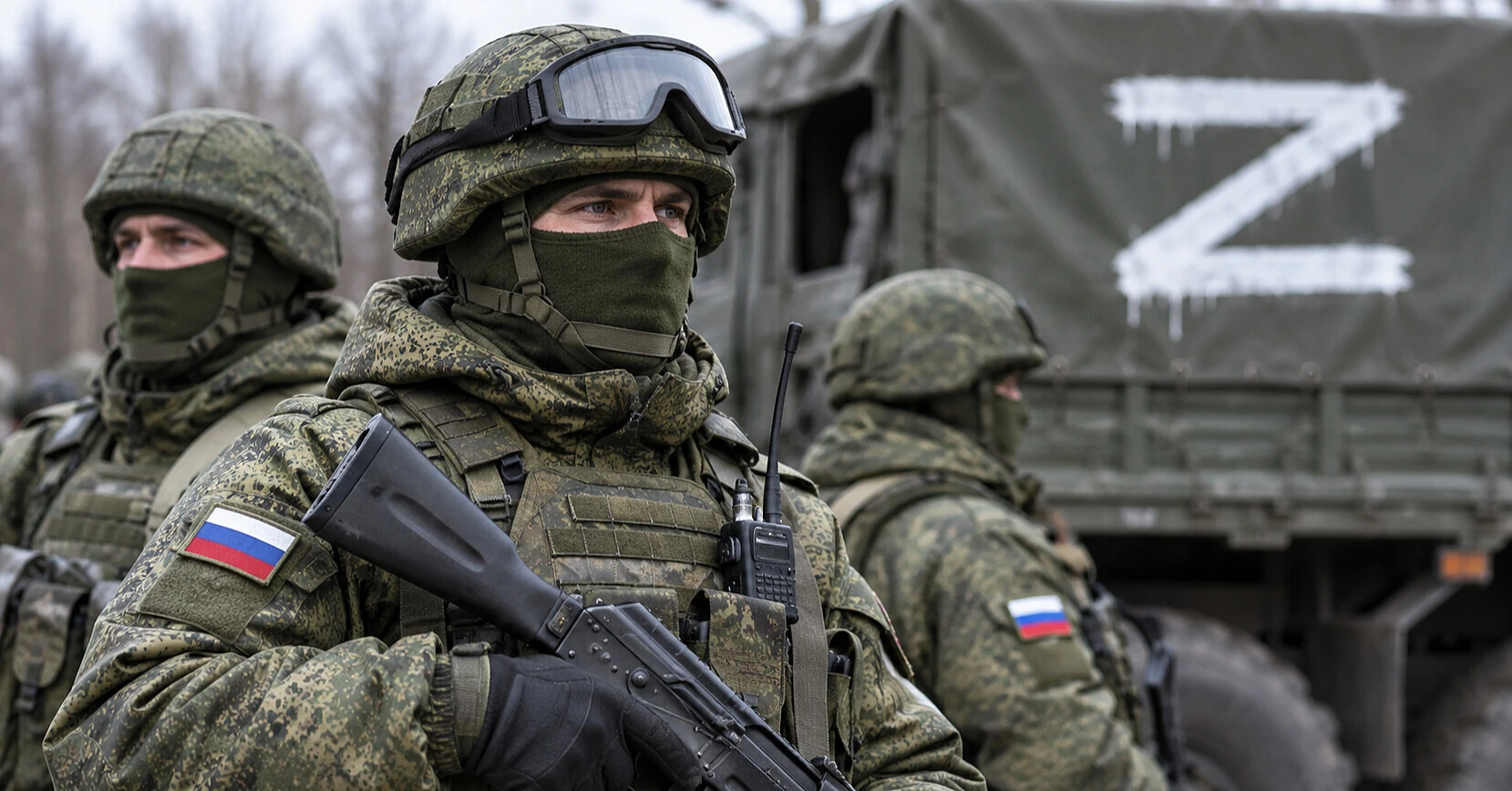
After the start of Russia's full-scale invasion of Ukraine, the overwhelming majority of registered deaths of Russian servicemen turned out to be related to combat operations. According to an analysis of a Rosstat data leak conducted by the independent publication "Agentstvo", combat losses account for 92.9% of deaths of people identified in documents as military personnel.
This was reported on November 23 by Agentstvo, which examined information from the database of the Russian statistical agency.
In the dataset obtained by journalists, covering the period from 2022 to the end of September 2026, records of the deaths of 209,870 people identified as military personnel were found.
Of these, 194,885 were classified as combat losses, and 14,985 as non-combat losses. Thus, almost 93% of registered deaths in this category are related to military operations.
In documents for 177,009 of the deceased, the code Y36.2 from the International Classification of Diseases is indicated. It is used to denote injuries resulting from explosions or fragment impacts during military operations.
From what causes do Russian military die outside of combat
Among the 14,985 registered non-combat deaths, journalists identified several main categories.
7,320 servicemen died as a result of illnesses. The most common causes were diseases of the cardiovascular system.
In particular, 2,292 cases are linked to chronic heart diseases and cardiomyopathies, and another 1,067 to acute ischemic conditions and heart attacks. Together, these diseases account for about 46% of all deaths from illnesses in the studied group.
Another 4,921 deaths, or 32.8% of non-combat losses, are related to external causes. Among them, journalists found 950 records of road traffic and other ground accidents, as well as 866 cases of poisoning and overdoses.
Separately, researchers identified 656 deaths from gunshot wounds, the circumstances of which were not established.
The documents also contained 540 cases of suicide. Another 69 records journalists attributed to possible suicides, but the circumstances of these deaths could not be definitively established.
In addition, for 2,744 servicemen, the initial cause of death could not be determined. In most such cases — 2,412 records — the corresponding information is absent from the database.
Real losses of the Russian army may be significantly higher
The Agentstvo analysis is based on records in which the deceased are directly identified as military personnel. Therefore, the cited 209,870 cases do not reflect all Russian losses in the war.
Other independent newsrooms that studied the same dataset used additional indicators to identify the deceased: place and circumstances of death, medical codes, and other information from the documents.
In particular, the investigative outlet Vazhnyye Istorii (iStories) identified more than 499,000 death records that may be related to participation in the war against Ukraine. Of these, journalists attributed 474,000 to military losses with a high degree of confidence.
However, even such figures may be underestimated. Months often pass between the actual death of a serviceman and the registration of the death. Some of the missing are also not yet included in official registries of the deceased.
According to a separate estimate by Meduza and Mediazona, taking into account those killed whose deaths have not yet been registered or documented, Russia's total losses killed by autumn 2026 could have exceeded 700,000 people.
These estimates were obtained by different methods and are not official statistics of the Russian Ministry of Defense.
The Rosstat archive became available to journalists after the hacker groups Silent Crow and "Cyber Partisans of Belarus" reported hacking the agency's information systems.
Russian Rosstat confirmed the fact of cyberattacks on its resources, but denied the leak of protected data. Independent journalistic teams that examined the obtained documents stated that they were able to confirm the authenticity of the dataset by cross-checking with other sources.
At the same time, the research results describe the structure of registered military deaths during the war years. They do not mean that Russian servicemen literally stopped dying from natural causes.