

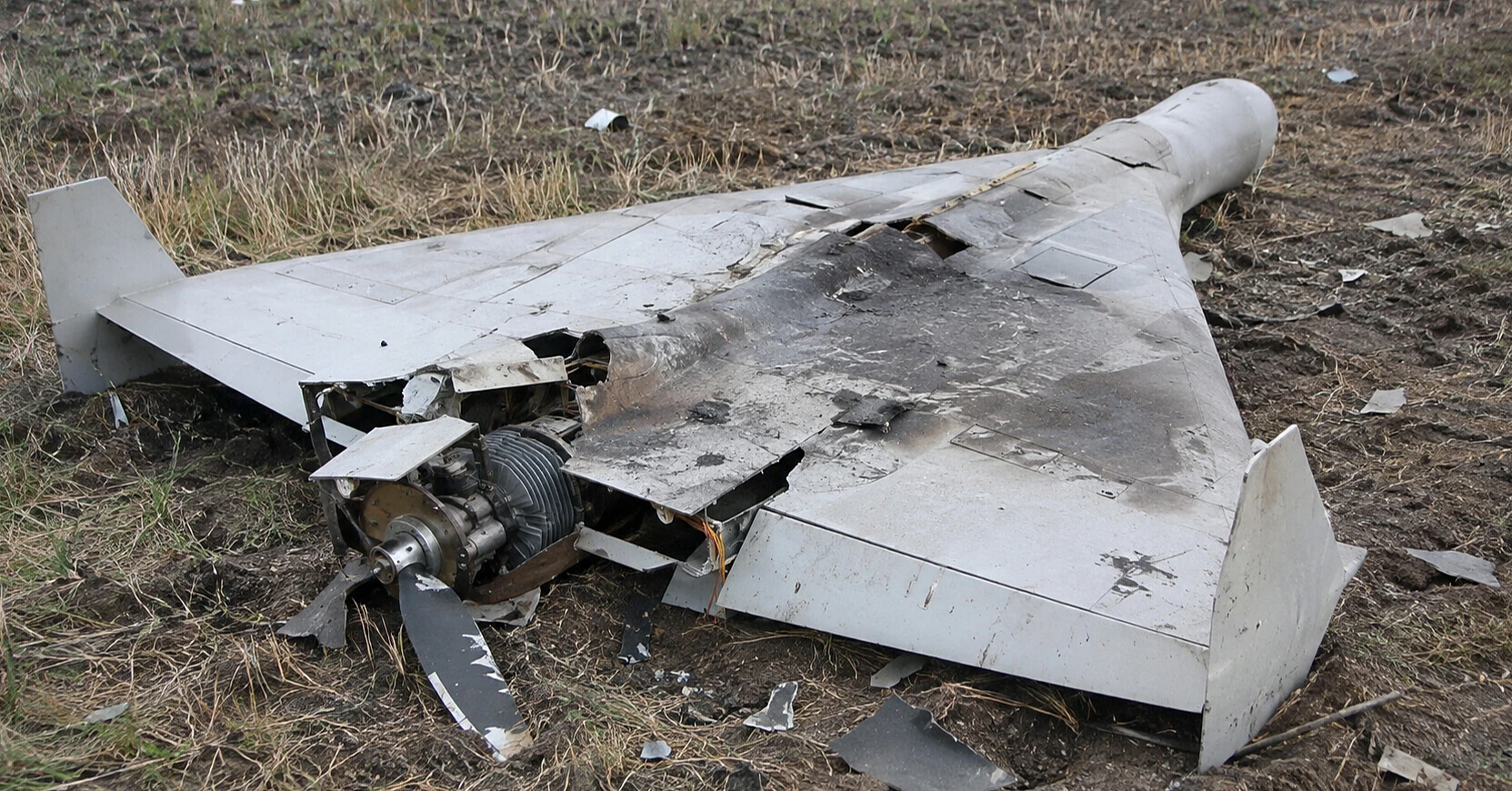
Russia continues to receive electronic components from American and European manufacturers for its defense industry despite international sanctions. Research on Russian drones shot down in Ukraine has shown that only a few months pass between the manufacture of individual parts and their use in Russian weapons.
This is reported in a joint investigation by The Kyiv Independent, OCCRP, the Belgian publication De Tijd, the Lithuanian 15min, and the German Paper Trail Media, published on November 24.
According to Ukrainian intelligence data reviewed by the journalists, one of the Russian attack drones shot down in August 2026 contained about a hundred foreign components. Among the 12 parts whose production dates could be established, seven were made in 2026, three in 2025, and two in 2024.
Among the manufacturers of the identified electronics are the American companies CTS Corporation and Vishay Intertechnology, as well as the European STMicroelectronics. The latter two companies stated compliance with export restrictions, but did not explain how their products reached Russia. CTS Corporation did not respond to journalists' inquiries.
According to the Office of the Prosecutor General of Ukraine, since the beginning of the full-scale invasion, investigators have identified over 16,000 foreign components in Russian missiles, drones, and other types of weapons. They bear markings of manufacturers from more than 30 countries. To establish supply channels, the Ukrainian side has sent 28 requests for international legal assistance.
The scale of dependence of the Russian military-industrial complex on imported electronics is also confirmed by materials from the Main Intelligence Directorate of the Ministry of Defense of Ukraine (GUR). In the open database of the War&Sanctions portal, information has already been published about 6,377 foreign components found in 214 weapon samples.
In particular, on November 9, the GUR reported the discovery of 93 foreign electronic components in a new modification of the Russian "Geran". Most of them are products of American manufacturers - 52 components, and 10 each from Chinese and Swiss manufacturers.
According to the Ukrainian President's Commissioner for Sanctions Policy, Vladyslav Vlasiuk, Kyiv does not accuse Western manufacturers of direct supplies to Russia, but insists on strengthening their control over product distribution channels.
The Ukrainian side also advocates for criminal prosecution of intermediaries involved in sanctions evasion, and strengthening financial monitoring of transactions with dual-use goods, including with the involvement of banks.
At the same time, the GUR notes that current sanctions already create difficulties for Russian procurement: the cost and delivery times of components are increasing, as are the risks of supply disruptions.
Sources: The Kyiv Independent, War&Sanctions, GUR