

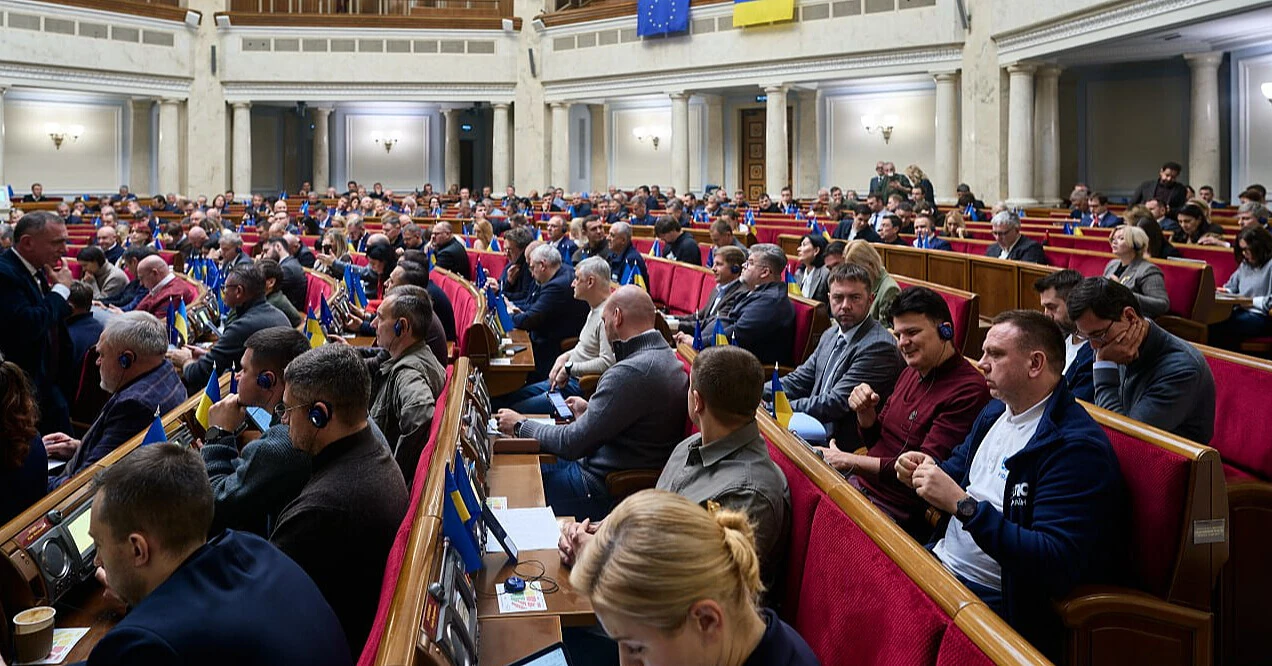
The Verkhovna Rada on November 24 adopted in the first reading the presidential bill No. 16220, which provides for the restoration of asset and income declarations by certain categories of SBU employees and other security forces, and also limits the ability of officials to hide declarations during martial law.
According to the document, 287 people's deputies voted, reported people's deputy Yaroslav Zheleznyak. The parliament also supported reducing the deadline for submitting amendments to the second reading.
The bill was registered by Volodymyr Zelensky on November 9, 2026 and designated it as urgent.
For whom declaration will be restored
The document provides for narrowing the circle of military personnel of the security forces who have the right to postpone filing declarations until the end of martial law or discharge from service.
In particular, military personnel of the SBU and other state bodies who are subjects of declaration and do not take direct part in hostilities will have to file declarations within the general deadlines.
For employees of the relevant bodies who at the time of the deadline for declaration are directly participating in hostilities, the postponement will be preserved. They will have to file declarations within 90 calendar days after cessation of participation in hostilities, end of martial law, or discharge from service.
At the same time, re-engagement in hostilities within the specified 90 days will not be a ground for extending or restarting this period.
For certain categories of military personnel of the Armed Forces of Ukraine, the National Guard, the State Border Guard Service, the State Special Communications Service, the State Security Administration, the State Special Transport Service, and special purpose police officers, a separate declaration procedure will be preserved.
Declarations for previous years
Military personnel who are subjects of declaration and have not filed declarations after 2021 will have to file the missed declarations within 90 calendar days from the day the law enters into force. Exceptions are provided for persons who retain the right to postponement in accordance with the law.
Separate transitional provisions are also provided for declarants whose family members fall under the specified norms.
Limitations on hiding declarations
The bill establishes a list of officials whose declarations and notices of substantial changes in property status will not be subject to removal from open access.
This list includes, in particular:
- ministers, their deputies, heads of executive power bodies and civil servants;
- heads of law enforcement agencies and their territorial units, first deputies and deputies;
- judges and prosecutors;
- heads of military and military-civilian administrations and their deputies;
- the head of the Office of the President and his deputies;
- the Secretary of the NSDC and his deputies;
- people's deputies of Ukraine;
- the parliamentary and military ombudsmen.
In addition, the general declaration procedure is proposed to be extended to deputies of heads of special services, heads of structural units and their deputies, if the relevant appointment acts do not constitute state secrets.
Meanwhile, a special financial control procedure with protection of information constituting state secrets will be preserved.
Strengthening control over closed declarations
Heads of bodies authorized to initiate removal of declarations from open access will have to annually by April 1 check the existence of grounds for maintaining restrictions. In case such grounds disappear, they will be obliged to notify the National Agency on Corruption Prevention (NACP) within 10 working days.
The NACP, for its part, will have to annually by February 1 publish statistics on the number of declarants whose documents have been removed from open access and the results of checks on the justification of such restrictions.
As noted in the explanatory note, the current procedure allows certain categories of servicemen of rear, administrative and support units to postpone filing declarations for years, which impedes timely financial control.
The bill still has to pass the second reading. Until the final adoption and entry into force of the law, the existing declaration rules continue to apply.
According to materials: Verkhovna Rada of Ukraine (bill, explanatory note and comparative table), Yaroslav Zheleznyak