

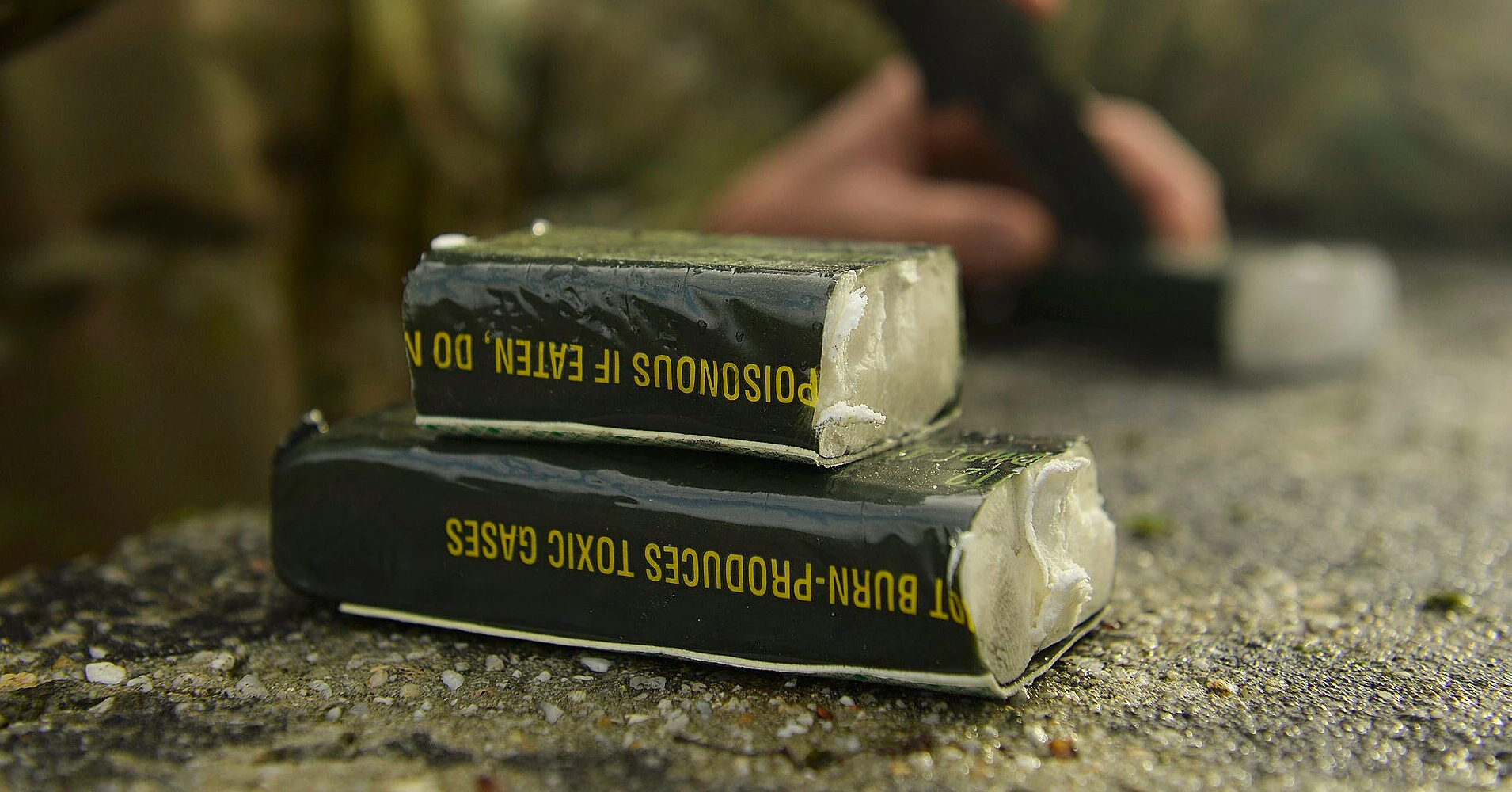
The United Kingdom for several years purchased from an American company for Ukraine explosives that the supplier positioned as an improved version of the military plastic explosive C4. However, laboratory tests revealed a discrepancy between the actual composition of the product and the declared one, and journalists discovered violations in the accompanying documentation.
This is stated in the investigation by Financial Times, published on November 24.
The supplier was the American company Tripwire South LLC, founded by a former police sergeant from Pennsylvania, Ryan Morris. Contracts were concluded as part of the British program Task Force Kindred, created to accelerate the supply of weapons to Ukraine.
The company sold to the British Ministry of Defence an explosive called EDC-4, claiming that it surpasses standard C4 in characteristics. However, independent laboratory tests conducted after the first delivery did not detect hexogen in the product — the main component of classic C4. Instead, the supplied material contained a cheaper industrial-grade explosive substance.
Purchase cost could exceed 26 million pounds
According to the documents examined by journalists, deliveries were carried out since the end of 2023. In April 2025, the British Ministry of Defence supported an application for further export of the product to Ukraine. The potential cost of deliveries under this application was estimated at 26.3 million pounds sterling.
According to sources of Financial Times, Tripwire purchased products from an American manufacturer and resold them to the British military department with a significant markup. The company explained the difference in cost by expenses for transportation, storage, testing, and other related services.
Journalists also established that Morris's previous company, which was engaged in selling explosive substances, went bankrupt in 2022, having obligations of almost 5 million dollars. In April 2024, the entrepreneur himself filed for personal bankruptcy, already cooperating with the British government.
UK Ministry of Defence did not acknowledge contract violation
Particular concern of the authors of the investigation was caused by the product safety documentation. According to FT, the documents provided by the supplier contained inaccurate information about the composition of the material and did not include a number of necessary warnings, which could create additional risks for Ukrainian military personnel.
The British Ministry of Defence confirmed the results of laboratory tests, but stated that the product was recognized as suitable for use. The department emphasized that the contract terms did not provide for the mandatory presence of specific chemical components, and positive feedback was received from the Ukrainian side.
Tripwire denied accusations of providing false information, insisting that the product met the declared characteristics. The supplier also denies the existence of safety threats, financial losses for the British military department, and claims from customers.
Member of the UK Parliament's Defence Committee Mike Martin expressed concern that the actions of the Ministry of Defence could have exposed Ukrainian military personnel to additional risk and led to unjustified expenditure of budgetary funds.
The Ministry of Defence of Ukraine did not respond to Financial Times' questions regarding these deliveries.
Based on materials from: Financial Times, LB.ua, Hromadske.