

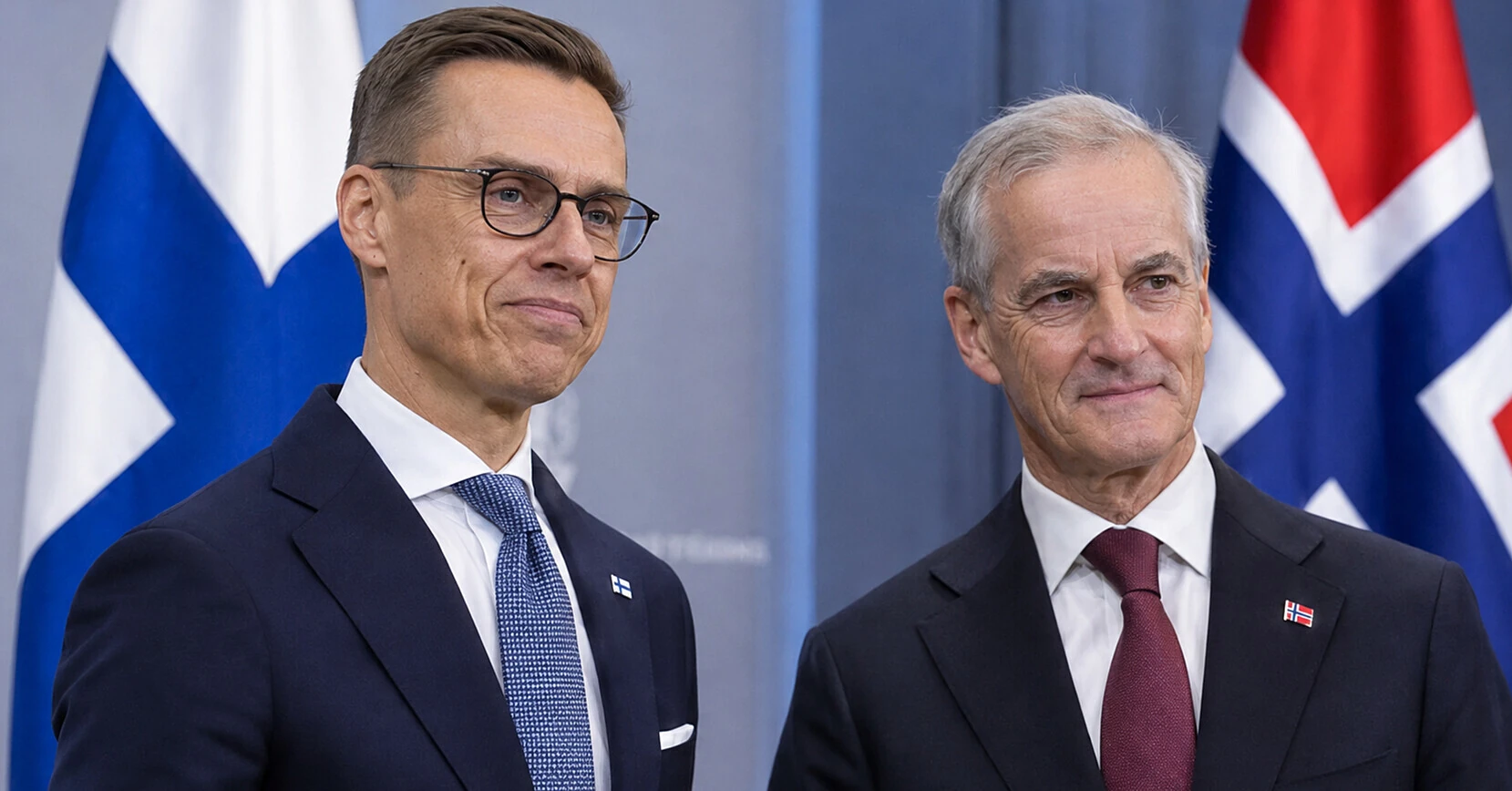
President of Finland Alexander Stubb and Prime Minister of Norway Jonas Gahr Støre initiated a phone call with Vladimir Putin in late October not only to discuss ending the war in Ukraine, but also to prevent a direct military clash between Russia and NATO countries in the Baltic Sea.
On November 25, this was reported by The Wall Street Journal, citing informed sources.
According to the publication, European leaders sought to convince Moscow that there was no intention to block the maritime trade route, which is of strategic importance for the Russian economy. More than 60% of Russia's oil exports by sea pass through the Baltic Sea.
Negotiations via a Russian oligarch
Before the conversation with Putin, Western diplomats tried to convey NATO's position on freedom of navigation in the Baltic to the Russian leadership. The Finnish Ministry of Foreign Affairs, in particular, summoned the Russian ambassador to discuss the situation.
However, Stubb feared that diplomatic messages were not reaching Putin directly. As a result, the European side decided to use an unofficial communication channel.
According to WSJ, the intermediary was a Russian oligarch with direct contacts in the Kremlin. He visited Norway, where he held consultations with high-ranking officials, after which he conveyed their message to the Russian leadership. The publication does not disclose the businessman's name.
A few days later, on October 27, Stubb and Støre had a phone conversation with Putin. According to two sources of the newspaper who were present during the conversation, the Finnish president assured the Russian leader that his country had no intention of blocking the Baltic Sea in peacetime and would comply with international law.
Why the situation in the Baltic has escalated
As WSJ notes, several decisions by Moscow caused the concern of Western states. Russia began to use warships to escort oil tankers of its shadow fleet, and also adopted a law allowing the use of military force to protect commercial vessels.
At the same time, the Russian leadership strengthened the defense of the Kaliningrad region and sent NATO a warning about the possible use of nuclear weapons to protect its interests in the Baltic region.
The risk of a direct clash was demonstrated by a summer incident involving a Russian warship, the German coast guard, and activists from the environmental organization Greenpeace, who approached a tanker of the shadow fleet. German military personnel later characterized the situation as involving a high risk of escalation.
Tensions were also heightened by statements from European politicians. In September, Polish Foreign Minister Radosław Sikorski proposed large-scale NATO exercises near the Kaliningrad region, and Estonian Foreign Minister Margus Tsahkna spoke about the possibility of closing the Gulf of Finland.
According to the publication, in late October, American military officials called on representatives of the Baltic states to soften their rhetoric toward Moscow.
After the conversation with the leaders of Finland and Norway, Putin publicly stated that he would not want the Baltic Sea to turn into an analogue of the Strait of Hormuz, where the war in the Middle East led to disruptions in oil supplies and a rise in global energy prices.
New incident with a Russian vessel
The situation in the region escalated again on November 21, when the Russian cargo ship Sparta II came under a drone attack. A fire broke out on board, after which the ship ended up in Finnish territorial waters.
Finnish authorities organized a rescue operation. After stabilizing the situation, Russian rescuers were allowed to tow the damaged vessel.
Ukrainian President Volodymyr Zelenskyy confirmed in an interview with Bloomberg on November 24 Ukraine's involvement in the attack. According to him, the ship was transporting weapons, and the attack itself took place in Russian territorial waters.
Zelenskyy also acknowledged the concern of some European partners over the events in the Baltic and said he had instructed Ukrainian officials and the military to strengthen communication with allies.
Official position of Finland and Norway
According to a statement published on October 27 by the Office of the President of Finland, the conversation with Putin took place after consultations with Ukraine and was related to preparations for peace talks in Abu Dhabi.
At the same time, the official statement separately emphasized the interest of Finland and Norway in stability and predictability in the Baltic Sea and the Arctic region.
Stubb and Støre confirmed their intention to continue supporting Ukraine. Both leaders spoke on behalf of their own countries, not Europe as a whole.
The Kremlin did not confirm the details of the negotiations revealed by WSJ. Russian presidential press secretary Dmitry Peskov said Moscow does not disclose the content of such phone conversations.