

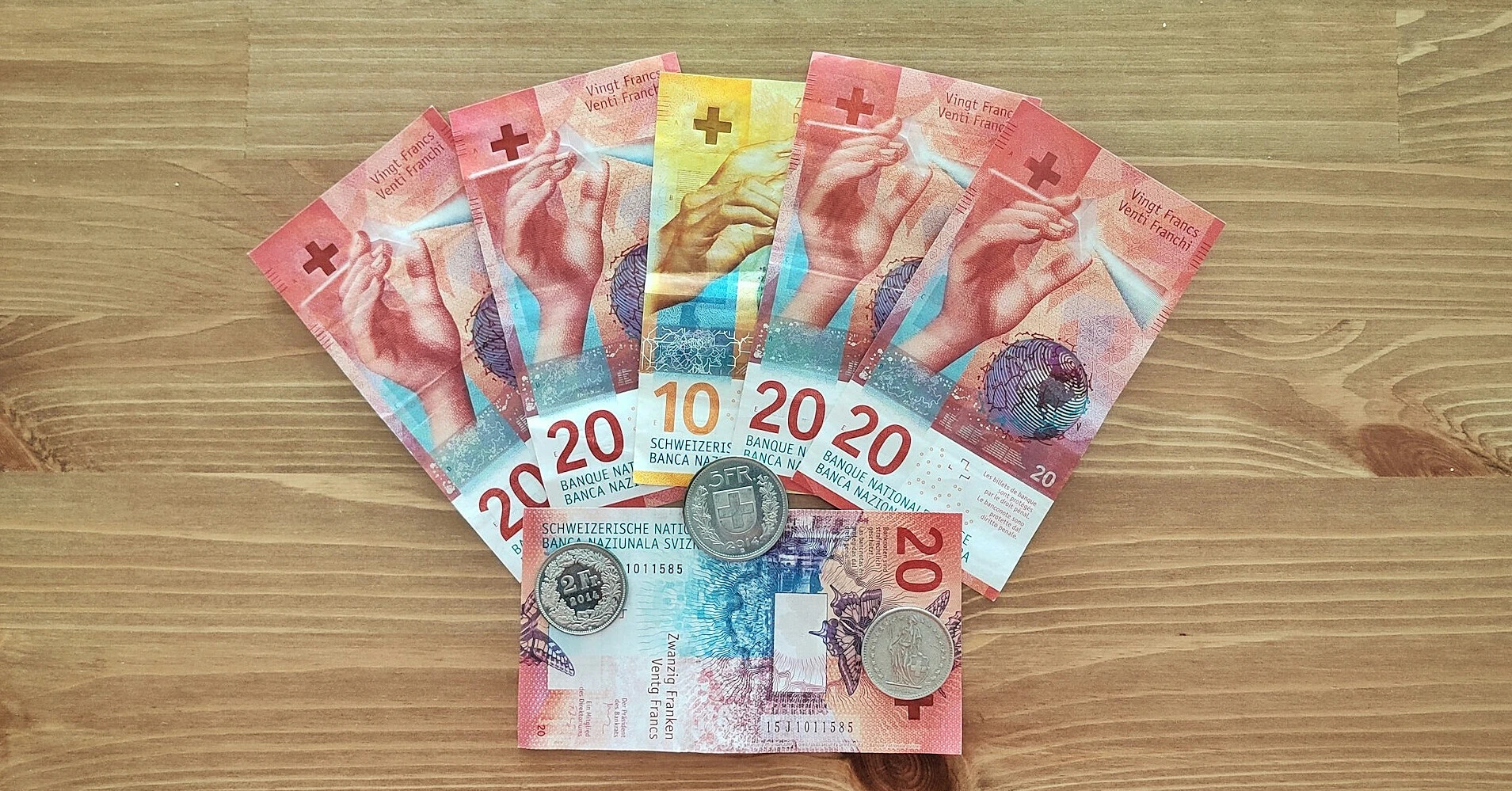
In recent days, the Swiss franc has been showing notable strengthening on the international forex market. It has been gaining not only against the US dollar but also against the euro. Amid heightened investor nervousness, problems in stock markets, and uncertainty about the future policies of major central banks, the Swiss currency is once again confirming its reputation as one of the world’s main safe-haven assets.
Interestingly, the franc’s strengthening is also visible in Ukraine. In particular, on November 25, its official exchange rate against the hryvnia rose, moving in the opposite direction to many other foreign currencies.
What is happening with the Swiss franc on FOREX
The main feature of the latest trading sessions is growing demand for the Swiss franc. Investors traditionally view it as a safe-haven currency, that is, an asset into which funds can be moved during periods of economic and political instability.
According to FOREX.com data from November 26, the franc strengthened against several major currencies simultaneously. The USD/CHF pair moved down, and EUR/CHF also showed a decline. This suggests that it is not just a depreciation of the dollar but a fairly broad demand for the Swiss currency.
One factor was nervousness on the US stock market. In November, investors began to reassess the prospects of companies related to artificial intelligence, and concerns about the scale of investment in this sector increased fluctuations in stock prices. Against this background, demand for more reliable financial instruments grew.
The franc received additional support from renewed concerns about US trade policy and the international economy.
Franc versus dollar: the dollar is losing its advantage
In the USD/CHF pair, a fairly clear trend towards a stronger Swiss currency is observed. When the franc gains, the quote of this pair falls: fewer francs are given per dollar.
As of November 25, the USD/CHF pair was near 0.8304, losing about 0.68% during the day. Over the week, the decline was approximately 1.5%. At the same time, since the beginning of the year, the dollar still held an advantage against the franc—the pair remained about 4.8% higher than at the start of the year.
Thus, the current strengthening of the franc does not yet mean a definitive reversal of the long-term trend. Rather, the market is experiencing another phase of capital reallocation in favor of safe-haven currencies.
Several factors affect the dynamics of USD/CHF:
- The state of the American economy. Investors are assessing inflation, the prospects for Federal Reserve interest rates, and the likelihood of further monetary tightening.
- The US stock market. If American stocks continue to fall, some investors may shift funds into Swiss francs.
- Washington's trade policy. New tariff threats and uncertainty in international trade increase the attractiveness of safe-haven currencies.
- The difference in interest rates. Higher US rates can support the dollar, while changing expectations regarding the Swiss National Bank's policy could work in favor of the franc.
Important point: the Swiss National Bank (SNB) maintains a very accommodative monetary policy, but accelerating imported inflation makes market participants watch its future decisions more closely.
Franc versus euro: the European currency is also losing ground
An equally interesting situation is unfolding in the EUR/CHF pair. Here the Swiss franc is also strengthening, and in recent days its performance looks even more convincing than against the US dollar.
On November 25, EUR/CHF was around 0.9094, down about 0.76% on the day. Over three months, the decline was about 2.8%. This indicates fairly stable demand for the franc relative to the European currency.
The reasons for this dynamic are not only the attractiveness of the Swiss currency. The euro has to compete with the franc amid persistent economic uncertainty in Europe. Investors are assessing prospects for eurozone industry, economic growth, inflation, and possible decisions by the European Central Bank.
It should be noted that the increased attractiveness of the franc does not necessarily mean that the European economy has faced a new large-scale crisis. Largely this is a result of changing investor preferences: when risks rise, they are more willing to choose the Swiss currency.
Interestingly, even expectations of a possible ECB rate hike in December have not yet managed to turn the situation in EUR/CHF around.
What to expect from the Swiss franc in the near future
In my view, in the short term, the franc retains good chances for further strengthening, especially if the US stock market continues to be under pressure and investors reduce positions in riskier assets.
In USD/CHF, the nearest target for the market is the 0.8290–0.8200 area. A break below it could strengthen the franc's position. However, American inflation and expectations regarding Fed actions can periodically bring back demand for the dollar.
In EUR/CHF, there are also conditions for further strengthening of the Swiss currency. However, much will depend on eurozone economic statistics and ECB decisions.
There is also a factor that could limit the franc's rise. An overly strong national currency is disadvantageous for Swiss exporters: it makes the country's products more expensive for foreign buyers. Therefore, it cannot be ruled out that the SNB will carefully monitor excessive franc strengthening and, if necessary, use available instruments of currency and monetary policy.
In addition, on November 26, the US celebrates Thanksgiving. American financial markets operate on a holiday schedule, and activity of currency traders may be lower than usual. This means that some currency pair movements may turn out to be sharper on relatively small trading volumes.
Swiss franc in Ukraine: why it is gaining against the hryvnia
Special attention deserves the behavior of the Swiss franc in the Ukrainian currency market. Here its dynamics also differ from many other foreign currencies.
According to official NBU data, on November 25, the franc's exchange rate was 53.9763 UAH, compared to 53.7485 UAH a day earlier. Thus, the Swiss currency gained 22.78 kopiykas.
For the Ukrainian market, this is an interesting signal. The franc is not among the most popular currencies for everyday payments, like the dollar or euro. However, it has its own audience:
- Ukrainians working in Switzerland and receiving salaries there;
- citizens planning trips, study, or relocation to Switzerland;
- investors who prefer to diversify currency savings;
- people who view the franc as an additional tool to protect savings from currency risks.
At the same time, the Ukrainian CHF exchange rate depends on two factors: the value of the franc against the dollar and euro on the international market and the dynamics of the hryvnia itself.
That is why the franc can rise in Ukraine even when the domestic market shows declines in most other foreign currencies.
Conclusion: is it worth paying attention to the franc now
The Swiss franc remains one of the most interesting currencies to watch at the end of November 2026. Its strengthening against the dollar and euro reflects investors' desire to reduce risk amid stock market instability and uncertainty about the global economy.
In the coming weeks, the franc may retain its advantage, especially if nervousness in financial markets does not subside. However, one should not count on uninterrupted strengthening: decisions by the Fed and SNB, US statistics, and the situation in Europe can change the balance of power quite quickly.
For Ukrainians, the franc can be interesting as an additional currency for diversifying savings. But buying it solely because of a few days of growth would be a hasty decision. It is important to consider the relatively limited liquidity of the franc in Ukrainian exchange offices and the spread between buying and selling rates.
The main trend right now: the Swiss franc is once again becoming one of the favorites of the currency market, and its attractiveness is supported primarily by its status as a safe-haven currency.