

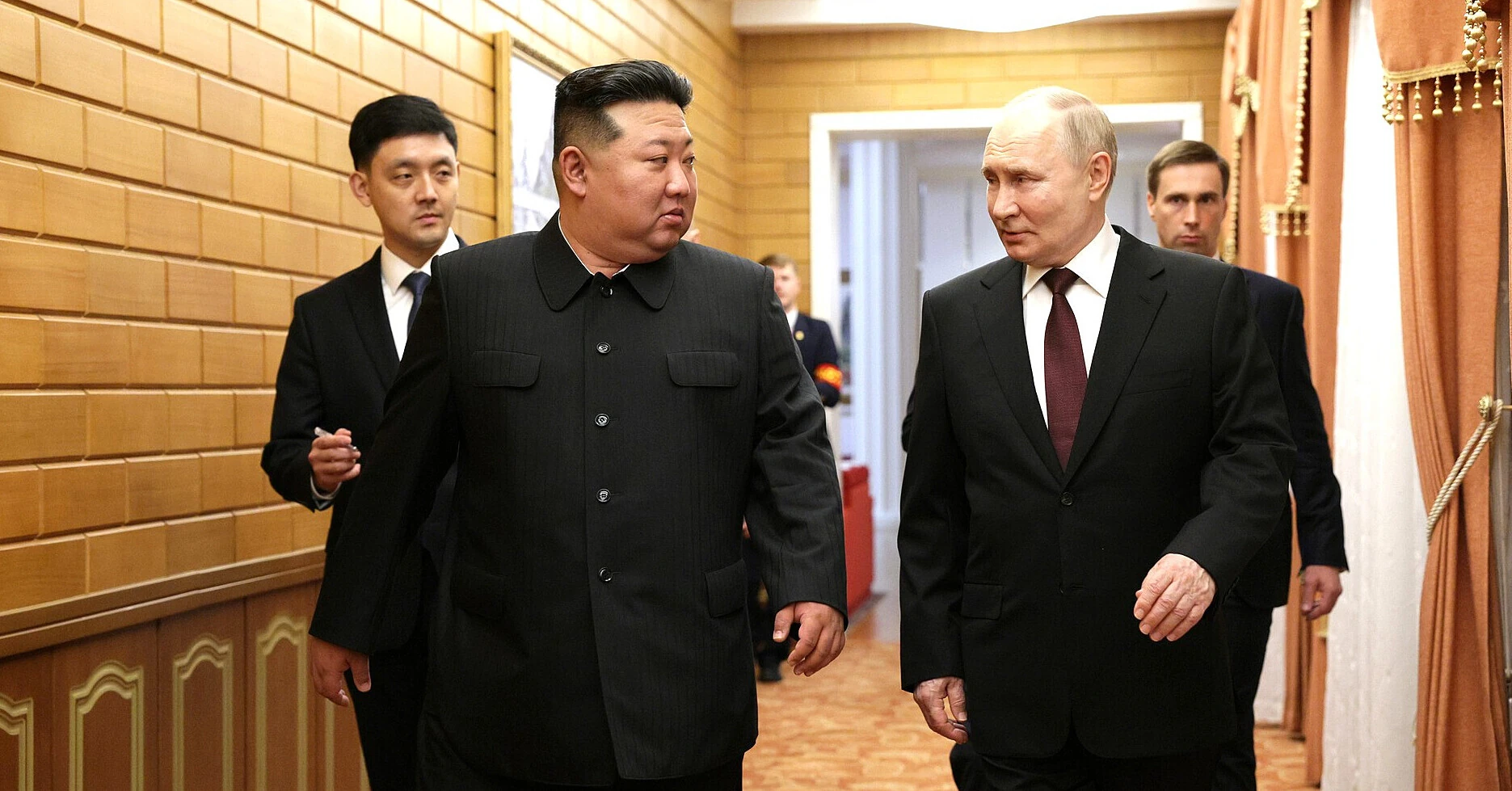
North Korean leader Kim Jong-un has decided to temporarily suspend military support for Russia due to disagreements between Moscow and Pyongyang over policy towards South Korea.
The Main Intelligence Directorate of the Ministry of Defence of Ukraine reported this on 26 November.
According to Ukrainian intelligence, tensions in relations between the two countries arose in October after Russian Deputy Foreign Minister Andrey Rudenko said Moscow was ready to contribute to easing relations between North and South Korea in the future.
At the end of October, North Korean Foreign Minister Choe Son-hui said that this position contradicts allied agreements between Pyongyang and Moscow, and demanded clarification on Russian policy towards Seoul.
According to the HUR, the restrictions imposed by North Korea include:
- suspension of ballistic missile supplies and an upcoming batch of artillery ammunition;
- ban on the use of DPRK airspace by Russian military transport aircraft.
In addition, Pyongyang is currently holding back the implementation of Moscow's request to increase the size of the North Korean military contingent on Russian territory. At the same time, DPRK service members previously sent to Russia continue to carry out their tasks.
Among other factors hindering the deepening of military cooperation between the two countries, Ukrainian intelligence cites the language barrier, logistics problems and low interoperability of troops. The HUR also reports the contemptuous attitude of the Russian command towards North Korean soldiers.
A significant factor restraining cooperation is the significant losses of the DPRK contingent. According to Ukrainian intelligence estimates, they exceeded 7,000 service members, of which 2,251 are irrecoverable losses.
Meanwhile, Moscow and Pyongyang continue to develop economic ties. Russia is interested in obtaining North Korean weapons, while the DPRK expects supplies of Russian equipment, raw materials, technology and financial support.
Significance of North Korean missiles for Russia
North Korea supplies Russia with KN-23 and KN-24 ballistic missiles, which Russian forces use to strike Ukraine. Back in August 2026, the HUR reported Moscow's interest in obtaining new, more powerful North Korean KN-30 missiles.
On 16 November, Ukraine's President Volodymyr Zelenskyy said Russia had increased the volume of ballistic missiles received from the DPRK to several dozen per month.
North Korean supplies allow Russia to replenish its missile stockpiles regardless of its own production capabilities. They pose a particular threat to Ukraine against the backdrop of systematic attacks on energy infrastructure and a shortage of interceptor missiles for Patriot systems.
Suspension of missile supplies from the DPRK, if restrictions persist for a long time, could complicate replenishment of Russian arsenals and reduce the intensity of ballistic attacks on Ukraine. At the same time, it does not eliminate the threat of Russia using previously accumulated missiles.
Source materials: HUR, HUR, Office of the President of Ukraine