

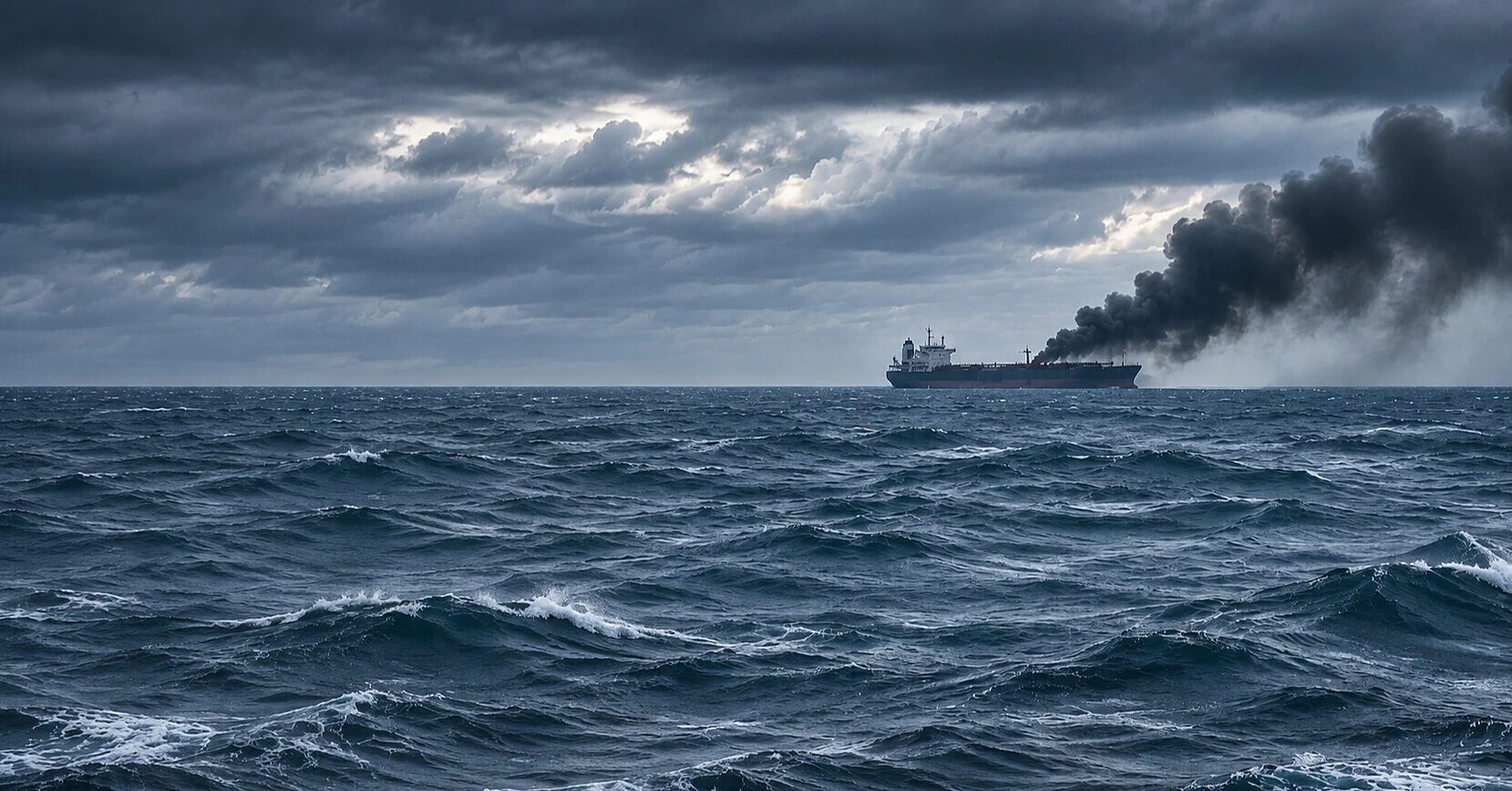
The number of incidents involving drones, sea mines, and commercial vessels in the Black Sea in 2026 increased roughly tenfold. The spread of hostilities to the waters of NATO countries creates a risk of involving the North Atlantic Alliance, including the United States, in Russia's war against Ukraine.
CBS News reported this on November 26, citing NATO representative Colonel Martin O'Donnell.
According to him, while fewer than 50 dangerous incidents were recorded in the Black Sea in 2025, their number reached 400–500 in 2026.
The increase in incidents poses a threat to one of the world's most important routes for transporting grain, fuel, and other goods. Disruption of supplies along this route could have economic consequences far beyond the Black Sea region, including for the United States.
The Black Sea has become one of the most dangerous trade routes
According to data from the International Transport Workers' Federation (ITF), at least 40 seafarers have died in attacks in the Black Sea since the beginning of 2026.
This figure exceeds the number of seafarers killed in incidents in the Strait of Hormuz amidst the U.S. war with Iran. According to the International Maritime Organization (IMO), 25 seafarers died there during the year.
In November, the second Ukrainian Maritime Forum took place in London, bringing together representatives of international organizations, shipping companies, trade unions, and educational institutions.
Forum participants discussed ensuring the safety of Ukrainian seafarers, preserving jobs in the maritime industry, professional training, and social support for transport workers in wartime.
Ukraine's Ambassador to the United Kingdom, Valerii Zaluzhnyi, stressed that the work of Ukrainian seafarers is vital for international supplies of food, fuel, and other goods. He called on international partners to strengthen measures to protect maritime transport workers.
Despite the attacks, Ukrainian maritime enterprises continue to service vessels, load and unload goods, and train new personnel for international shipping.
Romania faces growing threats in the Black Sea
The situation is of particular concern to Romania, Bulgaria, and Turkey – three NATO states with Black Sea coastlines.
The Romanian Navy is regularly involved in detecting and neutralizing dangerous objects that appear in the sea as a result of hostilities.
Captain Mihai Iordache of the Romanian Navy told CBS News about the increasing burden on the fleet due to the need to ensure the safety of commercial shipping and respond to the consequences of the war.
In late October, the defense ministers of Romania, Bulgaria, and Turkey held a trilateral meeting in Sofia, where they discussed strengthening cooperation in light of the increasing attacks on civilian commercial vessels.
The Romanian Ministry of Defense stressed the need to preserve freedom of navigation and protect civilian vessels and maritime infrastructure.
The parties also agreed to continue cooperation within the joint Black Sea counter-mine initiative MCM Black Sea.
Back in July 2026, Romania, Bulgaria, and Turkey expanded the mandate of this group, including protecting critical underwater infrastructure among its tasks.
The European Union allocates additional funds for Black Sea security
Amid the increasing attacks on commercial vessels, European Commission President Ursula von der Leyen visited Romania and Bulgaria on November 9–10.
According to information from the European Commission, additional support measures for the Black Sea region were announced during the visit.
In particular, the European Union intends to allocate:
- 50 million euros – to accelerate the creation of the Black Sea Maritime Security Hub;
- 10 million euros – to strengthen Romania's search and rescue capabilities;
- 10 million euros – for similar purposes in Bulgaria.
The European Commission also advocates for enhanced maritime surveillance, increased defense capabilities of regional countries, and improved crisis response mechanisms.
Von der Leyen stressed that the security of the Black Sea is a matter of pan-European security, as the attacks occurring in the region threaten international trade, food security, and the civilian population.
Under what conditions could NATO become involved in the conflict
Concerns about the spread of hostilities beyond Ukraine have intensified following recent incidents in other European regions.
Earlier, Poland proposed that NATO allies consider intercepting Russian missiles over Ukrainian territory if they pose a threat to alliance countries.
Under Article 4 of the North Atlantic Treaty, any NATO state may initiate consultations with allies if it believes its territorial integrity, political independence, or security is threatened.
Article 5 of the Treaty provides for the principle of collective defense, according to which an armed attack on one ally is considered an attack on all members.
However, as NATO explains, the application of Article 5 requires an assessment of the specific circumstances of the incident. Not every incident in the territory or territorial waters of an alliance state automatically qualifies as an armed attack.
If Article 5 is invoked, each state is obliged to assist the ally under attack but determines the form of such assistance itself. It may include the use of armed force but is not limited to military measures.
Thus, U.S. involvement in a potential conflict will depend on the nature of the specific incident, its qualification, and subsequent decisions by NATO states.
As a reminder, on November 26, U.S. President Donald Trump and NATO Secretary General Mark Rutte, following talks in Florida, stressed the need for a speedy peaceful settlement of the war in Ukraine and called for preventing its further expansion.
On the same day, German Foreign Minister Johann Wadephul warned Ukraine against a geographical expansion of the war, while reaffirming Kyiv's right to self-defense.