

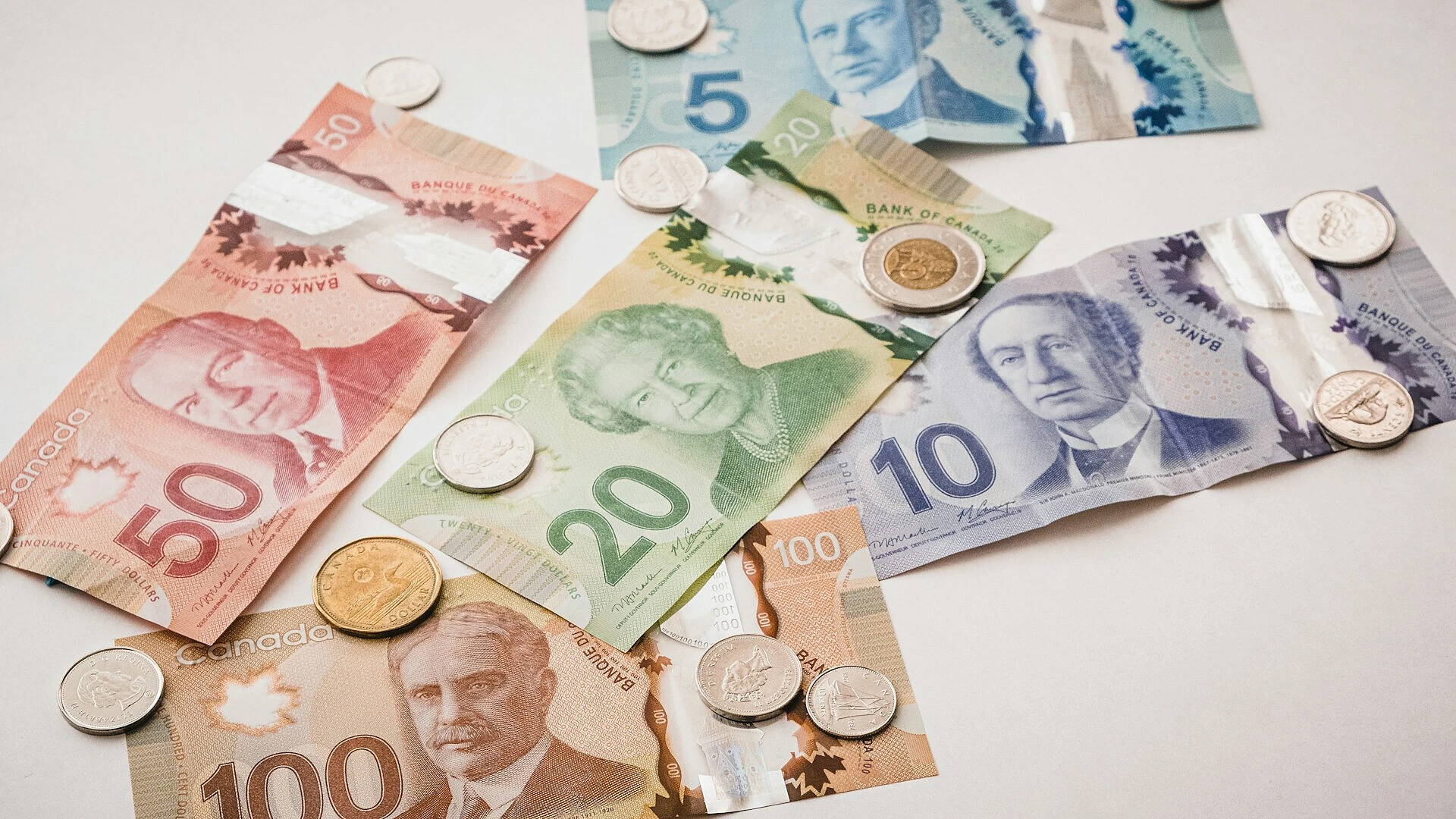
The Canadian dollar is one of the most interesting currencies among the major world monetary units. It is often called a commodity currency because the value of CAD is closely linked to commodity exports, primarily oil. Therefore, the Canadian dollar reacts not only to decisions by the Bank of Canada and the US Federal Reserve, but also to the situation on the energy market, the state of the US economy, and the prospects for global trade.
At the end of November 2026, the attention of FOREX participants was particularly focused on the relationship between the Canadian and US dollars, as well as the dynamics of CAD against the euro. This is especially important for Canada: the US remains its main trading partner, and any changes in the American economy directly affect the prospects of the Canadian currency.
Canadian dollar vs US dollar: oil helps, but the economy restrains growth
In the USD/CAD pair, the Canadian currency has recently shown mixed dynamics. After several sessions of strengthening, on Thursday, November 26, it weakened slightly again.
According to Reuters, the Canadian dollar lost about 0.2%, falling to 70.21 US cents. The USD/CAD exchange rate was around 1.4242 Canadian dollars per one US dollar. Thus, more Canadian dollars were needed to buy one US dollar.
Several factors influence the situation:
1. Monetary policy of central banks.
The Bank of Canada raised its key rate by 0.25 percentage points in October — to 2.5%. At the same time, the US Fed maintains a more hawkish stance, and inflationary risks in the US support expectations of further rate hikes. This creates an advantage for the American currency: higher yields on dollar instruments make them more attractive to investors.
2. State of the Canadian economy.
The Canadian labor market does not yet provide convincing grounds to expect a rapid strengthening of the national currency. In October, the number of jobs declined, unemployment rose, and the pace of wage growth slowed.
Investors are waiting for the publication of Canada's GDP data for the third quarter and the November employment statistics. These indicators could significantly change expectations regarding the next decisions of the Bank of Canada.
3. Oil factor.
Canada is a major oil exporter, so energy prices traditionally affect the attractiveness of the Canadian dollar.
On Thursday, oil prices received support amid concerns about supply disruptions in the Middle East. US WTI crude rose to about $84.63 per barrel.
However, even rising oil prices do not yet guarantee a sustainable strengthening of CAD: domestic economic problems and the interest rate differential continue to put pressure on the currency.
Canadian dollar vs euro: calmer dynamics
Against the European currency, the Canadian dollar looks somewhat more stable.
As of November 27, one Canadian dollar was worth about 0.6398 euros. Accordingly, one euro cost about 1.5630 Canadian dollars.
Over the past few days, there have been virtually no significant changes. For comparison: on November 23, one CAD was worth about 0.6381 EUR. Thus, over several trading sessions, the Canadian currency strengthened slightly against the euro.
Here the situation differs from the USD/CAD pair. The European economy is also experiencing difficulties. In particular, problems in industry persist, economic growth in the eurozone countries is uneven, and inflationary risks related to the energy market remain.
The European Central Bank is forced to take into account contradictory signals: inflation requires caution, but weak economic activity limits the possibilities for tightening monetary policy. Therefore, the euro does not yet have an obvious advantage over the Canadian dollar.
However, it is too early to count on a significant strengthening of CAD against EUR either. The Canadian currency remains sensitive to changes in commodity prices and the state of the global economy.
What to expect from the Canadian dollar in the near future
In the short term, the situation for CAD remains mixed. On the one hand, rising oil prices and the possibility of further tightening of the Bank of Canada's monetary policy could support the currency. On the other hand, a strong US dollar and weakness in the Canadian labor market limit its strengthening potential.
An additional factor is the situation in the US stock market. In recent days, concerns about excessive valuations of artificial intelligence-related companies have increased investor nervousness. However, on Thursday, amid Thanksgiving in the US, global stock markets received some respite.
An interesting forecast was presented by the National Bank of Canada in its November foreign exchange market review. The bank's analysts expect the USD/CAD pair to end 2026 around 1.43, then fall to 1.40 in the first quarter of 2027 and approach 1.35 by the third quarter.
If this scenario materializes, the Canadian dollar will have the opportunity to strengthen noticeably against the American dollar. The main prerequisites should be a narrowing of the interest rate differential between the US and Canada and a reduction in trade tensions.
Against the euro, the prospects for the Canadian dollar will depend on the relationship between the economic indicators of Canada and the eurozone, as well as on the decisions of the two central banks. So far there are no grounds to expect a sharp change in the balance of power. Conclusion: the Canadian dollar has not yet determined its direction
The Canadian dollar ends November in a difficult situation. It is supported by the oil market and hopes for a tighter policy from the Bank of Canada, but a strong US dollar, problems in the domestic labor market, and uncertainty in global trade work against it.
In the coming days, the publication of Canadian GDP for the third quarter and November employment statistics will be of particular importance. They could give a clearer signal about the future movement of CAD.
The main conclusion: the Canadian dollar has the potential to strengthen in the medium term, primarily against the US currency. However, this is more a scenario for 2027 than an already formed trend. Against the euro, the Canadian currency looks relatively stable, but for confident growth it needs more convincing signs of improvement in the Canadian economy.