

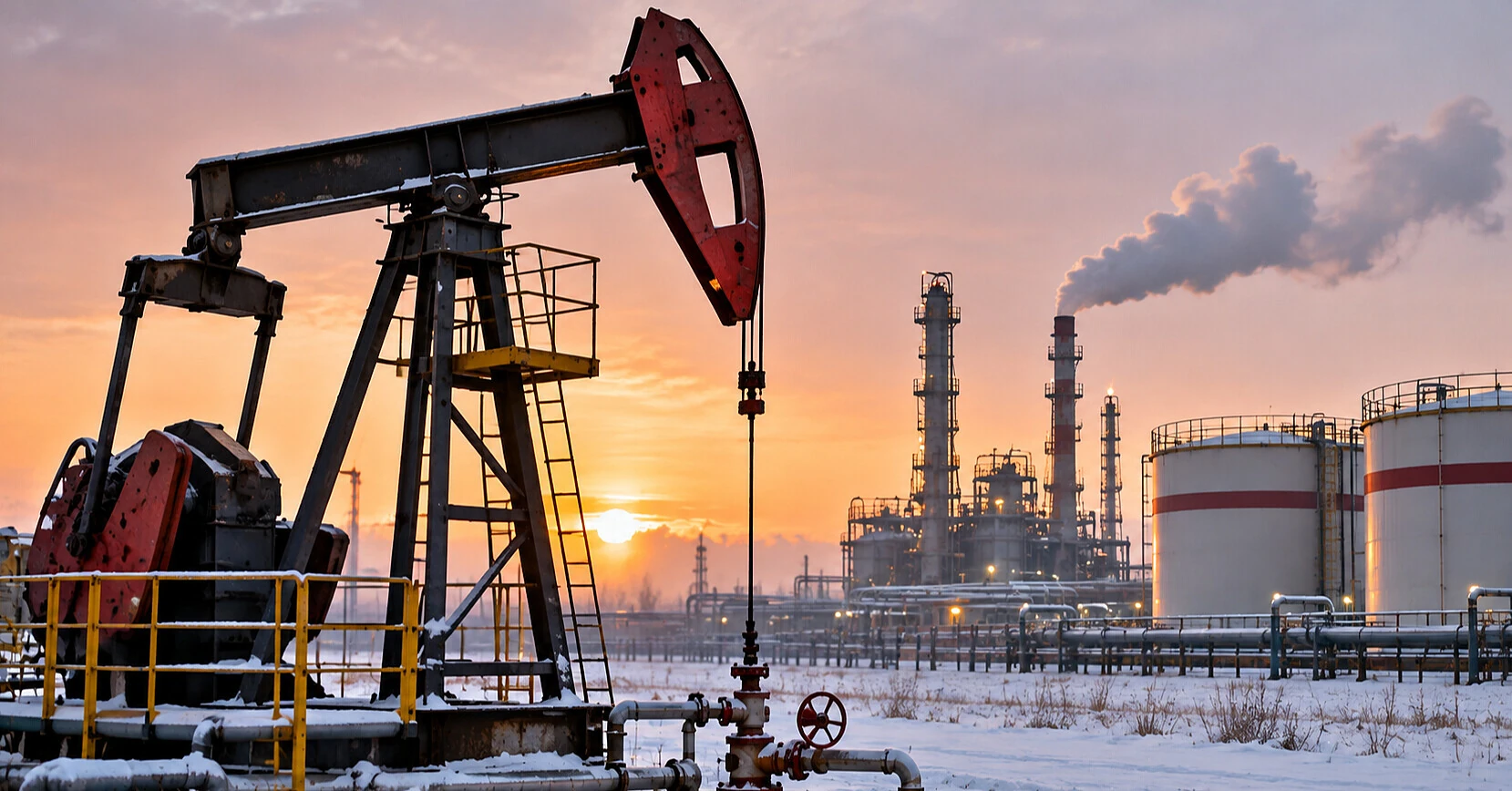
In 2026, Russia's oil output is expected to total about 494 million tons, the lowest since 2008. The Russian oil industry continues to lose production volumes amid sanctions, depletion of fields, and Ukrainian strikes on refineries.
This is reported by The Moscow Times, citing a statement by Russian Deputy Prime Minister Alexander Novak and estimates by industry experts.
Compared to 2025, oil production in Russia will decrease by 3.4%. This marks the fourth consecutive year of decline.
Russia's oil production dynamics in recent years:
- 2022 – 535 million tons;
- 2023 – 530 million tons;
- 2024 – 516 million tons;
- 2025 – 511.5 million tons;
- 2026 – approximately 494 million tons (forecast).
Compared to the record post-Soviet year 2019, annual oil output will decrease by 66 million tons, or almost 12%. Even in the crisis year 2020, when the pandemic caused a sharp decline in global energy demand, Russia produced more oil – 512.7 million tons.
Russia is not meeting its original oil production forecast
Originally, the Russian government expected to produce 525 million tons of oil in 2026. The forecast was later lowered to 511 million tons, but even that figure appears unattainable according to the latest estimate by the Russian Energy Ministry.
According to UBS analyst Giovanni Staunovo, disruptions at refineries due to Ukrainian attacks also pressure the industry. Limited ability to redirect crude for export forces Russian companies to reduce output.
Field depletion and investment gap
Beyond the war's impact, the Russian oil industry faces long-term structural challenges.
According to research by Gabriel Collins, energy expert at the Baker Institute at Rice University, about 40% of Russian oil is produced in the Khanty-Mansi Autonomous Okrug. However, reserves at the largest West Siberian fields are gradually depleting.
Despite a significant increase in drilling and the spread of horizontal well technologies, oil companies have not been able to halt the decline in production. New fields in East Siberia and the Caspian region don't yet offset losses.
Western sanctions restricting Russian companies' access to modern equipment, technology, and capital pose additional obstacles.
According to Sergey Vakulenko at the Carnegie Berlin Center, maintaining or increasing current production levels requires developing reserves with a full-cycle breakeven cost above $35–40 per barrel. The Russian oil industry lacks funds for such investments.
Russia allows oil production to fall threefold by 2050
Under the inertial scenario of Russia's energy strategy to 2050, annual oil production could shrink to 287 million tons, with exports falling from 234 million to 79 million tons.
In a stress scenario involving stronger sanctions and faster decline in global hydrocarbon consumption, output could drop to 171 million tons per year, and oil exports stop entirely.
Collins notes that oil and product exports bring Russia around $120 billion in annual revenue. He says a long-term decline in oil output could significantly limit Moscow's financial capacity and weaken its international influence.
Sources: The Moscow Times, Baker Institute, Carnegie Berlin Center.