
András Baka elected new President of Hungary: What is known about him
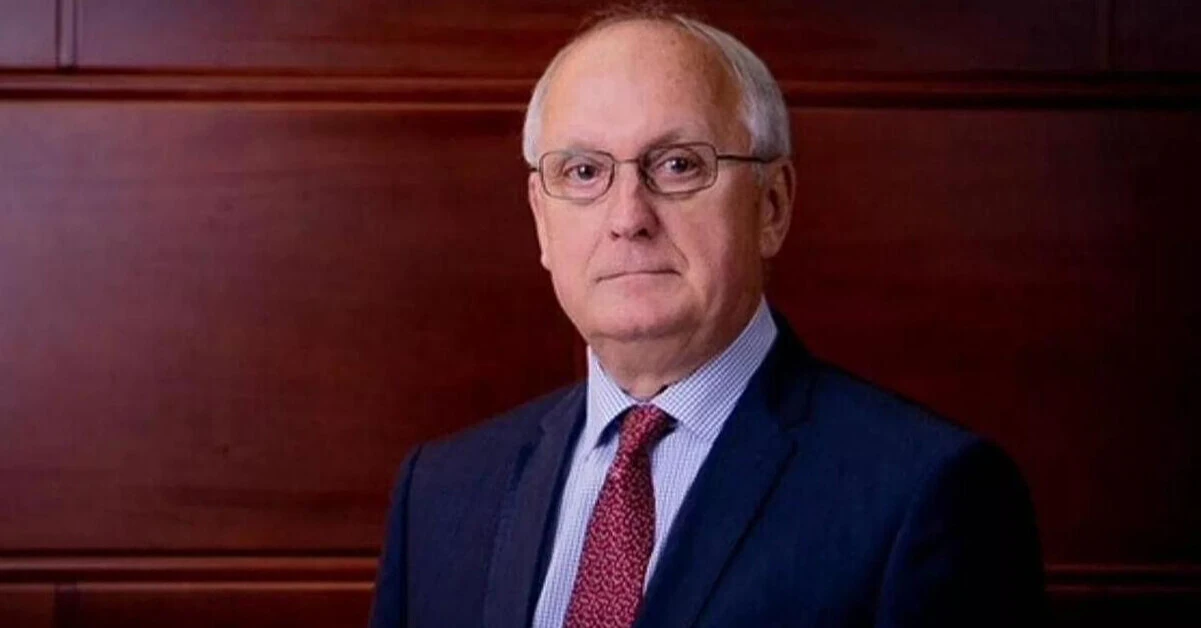
The Hungarian Parliament has elected 73-year-old lawyer and former Supreme Court President András Baka as the country's new head of state. The candidate, nominated by the ruling Tisza party, was supported by 140 deputies, with six voting against. There were no abstentions or invalid ballots.
Baka was already elected in the first round of secret balloting at an extraordinary session of parliament on 11 August. A total of 146 deputies took part in the vote. Under Hungarian rules, a candidate must receive the votes of at least two-thirds of deputies in the first round, so the result achieved by Baka was sufficient for election.
The new head of state took the oath immediately after the results were announced but will officially assume office on 19 August – on the eighth day after the election. Until then the duties of president will continue to be exercised by Speaker of Parliament Ágnes Forsthoffer.
How the election unfolded
András Baka was the only candidate allowed to stand. To be officially nominated a contender required a written endorsement from at least one fifth of the members of parliament – 40 persons. The Mi Hazánk party did not gather the required number of recommendations for its candidate, whereupon parliament declared its nomination invalid.
Fidesz and KDNP deputies announced in advance that they would not take part in the presidential election. They consider the early termination of the mandate of previous head of state Tamás Sulyok illegitimate and, accordingly, challenge the political legitimacy of the procedure for electing his successor. During the voting Fidesz representatives attended an event commemorating the 1956 Hungarian Uprising.
Baka’s candidacy was announced by the Tisza party a few days before the session. Initially the renowned Hungarian chess player Judit Polgár was mentioned among the possible contenders for the post, but she declined the offer. Afterwards the Tisza leadership held consultations with several candidates, and the parliamentary group chose Baka by secret ballot from three finalists.
Why Hungary changed president
Baka’s election was preceded by an acute political conflict around Tamás Sulyok. Following the April parliamentary elections the new administration led by Tisza sought the early departure of the president, but Sulyok did not resign voluntarily and stated that the matter should be decided exclusively by constitutional means.
Previously the Fundamental Law of Hungary provided for the removal of the president before the expiry of the term in cases where he or she violated the Constitution or legislation while exercising office or committed an intentional criminal offence. As these grounds did not apply to Sulyok, the parliamentary majority took the path of amending the Fundamental Law itself.
On 13 July the parliament, in which the Tisza party holds a majority, approved the 17th amendment to the Fundamental Law. A transitional provision was inserted, according to which the term of the serving president would end on the day following the amendment’s entry into force. Sulyok, after several days of deliberation, signed the document, after which his presidential mandate ceased. During the transitional period, the functions of head of state passed to Ágnes Forsthoffer.
Who is András Baka
András Baka was born in Budapest in 1952. In 1978 he earned a doctorate in law at Eötvös Loránd University. Baka worked as a research fellow at the Institute for Legal Studies of the Hungarian Academy of Sciences for more than two decades and later headed the College of Public Administration.
From 1991 to 2008 Baka served two terms as judge at the European Court of Human Rights. In June 2009 the Hungarian parliament elected him President of the Supreme Court for a six-year term that was due to expire in the summer of 2015.
In early 2012, however, Baka’s mandate as Supreme Court President was terminated roughly three and a half years prematurely. This happened after a judicial reform and the entry into force of a new Fundamental Law, under which the Supreme Court was transformed into the Curia. Before that Baka had publicly criticised a number of changes to the judicial system proposed by the government, including initiatives affecting the independence of the courts and the retirement age of judges.
Baka challenged his early dismissal at the European Court of Human Rights. In 2016 the Grand Chamber of the ECtHR ruled that Hungary had violated his right of access to a court and his freedom of expression. The court concluded that the premature termination was linked to Baka’s professional criticism of the judicial reform and could have a chilling effect on other judges engaging in a public discussion about the independence of the judiciary.
The ECtHR ordered Hungary to pay Baka 70,000 euros in respect of pecuniary and non-pecuniary damage, plus 30,000 euros in costs and expenses.
What Baka said after the election
In his first speech following the vote, Baka concentrated on the rule of law and the role of the president in a politically divided society. According to him, an electoral victory alone is not enough to restore the rule of law: that requires independent courts, free elections, an effective Constitutional court, free public debate and the accountability of those in power to the public.
The new president said that the head of state should observe party-political neutrality, but that does not mean neutrality of values. He believes the presidential task is not to produce an artificial unity but to recognise that people with different opinions must remain equal members of the same political community.
Baka also stressed that the president must monitor compliance with the Fundamental Law and safeguard constitutional limits on power. At the same time he warned against responsibility for past violations not becoming political revenge, stressing the need to audit the use of public funds and to investigate any breaches of law within the framework of legal procedures.
Source: Based on materials from Telex, Hungarian National Assembly, European Court of Human Rights
